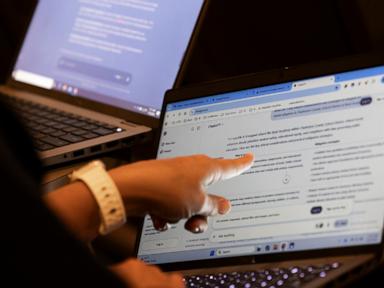
Ask Maya what she learned in school today, and she will likely tell you about the migration patterns of monarch butterflies or how to balance a chemical equation. Ask her what the invisible servers in the corner of her digital student portal learned about her today, and she would have no idea.
Maya is twelve. She wears scuffed sneakers, chews the plastic tip of her blue pen when she is stuck on a fraction, and writes poetry about abandoned bicycles in her school-issued Google Doc. She types fast, deletes faster, and leaves a trail of digital breadcrumbs that stretch back to kindergarten. Every hesitation, every backspace, every essay draft where she confessed her anxiety about middle school, every search query typed in a moment of panic—it is all captured. If you enjoyed this post, you should look at: this related article.
For years, we told ourselves a comforting fiction. We believed that schools were safe harbors, walled gardens insulated from the data-hungry machinery of the modern internet. We believed that when a child sat down at a laptop provided by the district, their inner life belonged to them, their parents, and their teachers.
We were wrong. For another angle on this story, see the latest coverage from CNET.
When Microsoft recently announced its sweeping commitments to student AI privacy—pledging to wall off student data from commercial advertising models and training datasets—it was framed as a corporate milestone. Tech news outlets reported on compliance matrices, policy shifts, and boardroom ethics. But behind the corporate announcements lies a starker, quieter reality: the digital footprint of a generation has grown too large to ignore, and the people building the algorithms finally realized we were watching.
Consider what happens next in an average public school classroom. A teacher introduces an artificial intelligence writing assistant to help students structure their persuasive essays. On paper, it is a magnificent tool. It catches spelling errors, suggests stronger verbs, and helps a struggling writer find their footing.
Now, look closer.
To help that student, the software must read the student's mind—or as close to it as text can get. It reads the frantic midnight revisions. It notes the sudden spike in keystroke errors that signal frustration or exhaustion. It builds a behavioral profile of a developing human being during their most vulnerable years.
Data collection in education is not new. Grades have always been recorded; attendance has always been tracked. But the shift from ledger books to predictive algorithms changes the nature of the archive entirely. We are no longer just storing what a student accomplished; we are recording how they thought, hesitated, stumbled, and recovered. We are harvesting the raw material of human cognition before the mind has even finished forming.
Let us step back for a moment and look at the architecture of the problem. Why do tech companies want educational data so badly? The answer is simple: children are the ultimate proving ground. If you can train an AI model to understand the cognitive patterns of a developing mind, you gain a master key to human behavior. An adult's habits are calcified, stubborn, and harder to steer. A child's mind is fluid, impressionable, and endlessly revealing.
When a technology giant collects student data, they are not just storing homework assignments. They are mapping the trajectory of human potential.
For a long time, the software industry operated in a Wild West of educational technology. During the rapid, panicked shift to remote learning a few years ago, schools flung open their digital gates. Ed-tech vendors flooded classrooms with free or low-cost software, apps, and platforms. Districts signed terms of service agreements that no administrator had the legal bandwidth to thoroughly vet. Data flowed outward like water through an unsealed dam.
Parents were told that these tools were necessary for 21st-century learning. They were told that personalization was the holy grail—that if an algorithm could track every wrong answer a student typed, it could tailor a lesson plan uniquely suited to their needs.
What the brochures omitted was the commercial gravity of that data. Once information enters the cloud, it has a habit of drifting. It gets aggregated, anonymized (often insufficiently), and fed into pipelines that power commercial prediction engines.
This brings us to the core tension of Microsoft's recent policy pivot. By explicitly drawing a line in the sand—promising that student data generated within AI tools will not be used to train public models or feed commercial advertising engines—they are acknowledging what critics have whispered for a decade: the system was vulnerable.
Other tech giants now face an uncomfortable mirror. Will Apple, Google, and the myriad smaller startups populating the ed-tech ecosystem follow suit? Or will they continue to treat the classroom as an open-pit mine for behavioral data?
The pressure is mounting, but the responsibility cannot rest solely on Silicon Valley boardrooms. School administrators, many of whom were trained to manage budgets and facilities rather than cryptographic privacy protocols, are suddenly cast as data protection officers. They are asked to evaluate machine learning architectures and natural language processing models with the same scrutiny they once applied to textbook purchases.
It is an impossible mismatch of scale.
To understand why this matters on a human level, we must look past the legal jargon of FERPA and COPPA—the aging federal statutes designed for an era of paper report cards and floppy disks. These laws were written before cloud computing, before predictive text, and long before artificial intelligence could infer a student's emotional state from the cadence of their typing.
Imagine a teenager writing a journal entry for a school assignment. They write about feeling isolated, disconnected, or overwhelmed. They use an AI-powered grammar tool to polish the sentences. In the background, telemetry data captures the erratic rhythm of their typing, the frequent deletions, the midnight timestamp. If that data is processed by a third-party model whose boundaries are porous, where does that emotional vulnerability go? Does it become a data point in a psychographic profile that follows them into adulthood?
We have normalized surveillance under the banner of convenience. We track our children's locations on our phones, monitor their screen time through dashboards, and funnel their academic lives through proprietary platforms owned by multinational corporations. We do this out of love, out of a desire to protect and guide them through an increasingly complex world.
Yet, in our quest to protect them from physical harm in the real world, we have exposed them to psychological and informational exposure in the digital one.
When Microsoft says it will wall off student data, it is a welcome retreat from the precipice. But promises written in corporate terms of service are fragile things. They are subject to leadership changes, market pressures, and the quiet erosion of policy over time. Trust cannot be built on corporate altruism alone. It requires enforceable boundaries, radical transparency, and a cultural shift in how we view the sanctity of a child's inner life.
We must begin to treat cognitive privacy as a fundamental civil right. Just as we protect a child's physical body from intrusion, we must protect the developmental workspace of their mind. When a student sits at a desk—real or virtual—they should have the absolute assurance that their struggles, their curiosities, and their mistakes belong to them, not to a ledger in a data center three thousand miles away.
The bell rings. Maya closes her laptop, slides it into the mesh pocket of her backpack, and runs out into the afternoon sun to catch the bus. Her mind is occupied with skateboard tricks, weekend plans, and the lingering mystery of those monarch butterflies.
Back in the classroom, the screen goes dark. The cursor blinks once, twice, and then stops.
What happens next is up to us.


