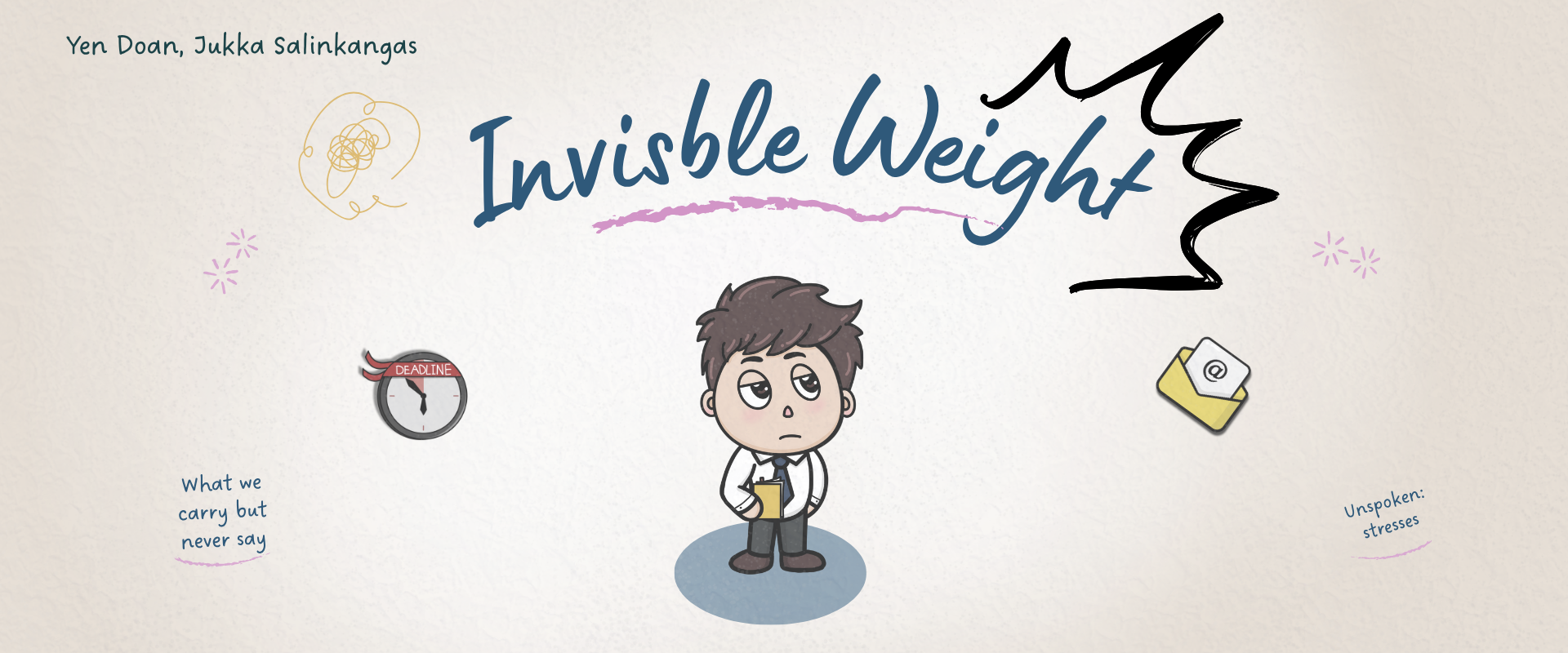
The light from the screen isn't just illumination. It’s a physical weight. On a Tuesday afternoon, as the rain streaked against the window of a cramped home office, a woman named Sarah sat staring at a blinking cursor. She wasn't writing a novel or a manifesto. She was trying to manage her life. To her left, a stack of physical mail gathered dust—the kind of paper trail that used to define our existence. To her right, a smartphone chirped with the rhythm of a frantic heartbeat.
Sarah is a placeholder for all of us. She represents the quiet, collective exhaustion of a society that was promised "frictionless" living but ended up with a digital backpack filled with lead.
We were told that the migration of our daily chores to the digital cloud would set us free. No more lines at the bank. No more physical filing cabinets. No more waiting for the morning paper. The promise was time. Reclaimed, golden hours to spend on hobbies, family, or perhaps just silence. Instead, we found ourselves in a relentless cycle of updates, password resets, and the creeping anxiety of the unread notification.
This is the hidden tax of the modern era. We don't pay it in currency. We pay it in cognitive load. Every "Terms and Conditions" update we click without reading, every multi-factor authentication code we scramble to type in before the timer expires, and every "smart" device that demands a software patch is a tiny withdrawal from our mental bank account. Individually, these moments are trivial. Collectively, they are a bankruptcy of the soul.
The statistics often cited by tech firms focus on "engagement" and "user retention." They brag about the hours spent within an ecosystem. But they rarely measure the cost of that engagement on the human nervous system. Studies in neurobiology suggest that the constant switching between tasks—the "micro-tasking" required to navigate a digital-first world—increases cortisol levels. We are living in a state of low-grade, perpetual fight-or-flight.
Consider the simple act of grocery shopping. Twenty years ago, it was a tactile, linear experience. You walked the aisles, you picked the fruit, you paid, you left. Today, for many, it involves an app, a loyalty QR code, a digital coupon that must be "clipped" in a specific submenu, and perhaps a delivery tracking interface that demands your attention for forty-five minutes. The food tastes the same. The effort has tripled.
This isn't about being a Luddite. It’s about recognizing that "convenience" has been redefined. It no longer means "easier for the human." It now means "more efficient for the system."
When we move our lives online, we trade physical friction for psychological friction. In the physical world, things have boundaries. A book ends. A conversation finishes. A workspace is physically separate from a bedroom. In the digital world, everything is a flat, infinite plane. Your work email lives in the same device as your daughter’s birthday photos and your bank's fraud alerts. There is no sanctuary.
The "Shocking News" that often makes headlines—the data breaches, the outages, the viral scandals—is just the tip of the iceberg. The real story is the tectonic shift happening beneath the surface. We are losing the ability to be present.
Imagine a man sitting at his son’s piano recital. He isn't watching through his eyes; he’s watching through a six-inch screen, worried about the storage capacity of his cloud account or the strength of the Wi-Fi signal. He is there, but he is also everywhere else. He is managing a digital twin of the moment rather than living the moment itself. This is the invisible stake: the loss of the unmediated experience.
We have become the unpaid IT administrators of our own lives.
The logic used to justify this shift is always framed as progress. "Stay connected," they say. But they never define what we are connecting to, or what we are disconnecting from in the process. We are disconnecting from the rhythm of our own thoughts. We are disconnecting from the capacity for deep, uninterrupted focus.
The real problem lies in the design of the systems themselves. They are built on a philosophy of "more." More features, more data points, more integration. But the human brain hasn't had a hardware update in fifty thousand years. We are trying to run 2026 software on Stone Age biological processors. The result is a system crash.
What happens when we can no longer distinguish between an urgent alert and a trivial one? What happens when the "convenience" of a smart home means you can’t turn on your lights because the server is down in a data center three states away? We have traded autonomy for a fragile, interconnected dependence.
It is a slow-motion surrender. We gave up the map for the GPS, and now we don't know which way is North. We gave up the address book for the contact list, and now we don't know our best friend's phone number. We gave up the silence for the stream, and now we don't know how to be alone with ourselves.
The solution isn't to throw the smartphone into the river. That’s a fantasy. The reality is much harder. It requires a conscious, daily reclamation of our boundaries. It means choosing the "inconvenient" path because it preserves our humanity. It means writing a letter by hand. It means walking to the store without a podcast. It means looking at the rain against the window without feeling the urge to document it for an audience.
Sarah eventually closed her laptop. She looked at the stack of mail. She picked up a physical pen. The ink felt heavy and permanent. It didn't need an update. It didn't ask for a password. It just worked.
The screen stayed dark, reflected in her eyes, a black mirror that finally had nothing to say.
Somewhere in that silence, she started to breathe again.


