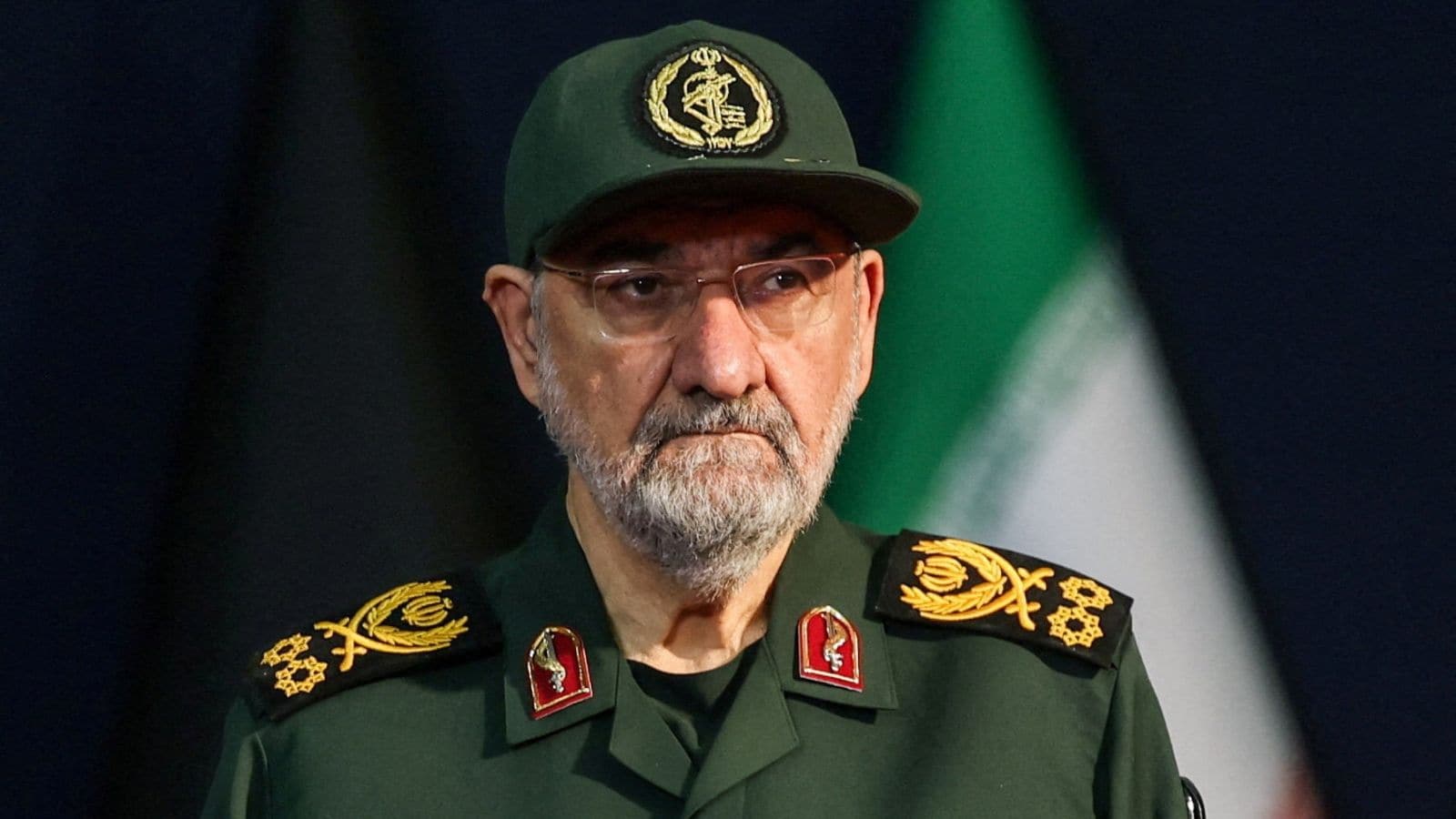
Tehran will not ship its enriched uranium out of the country. That red line, reiterated by Iran’s top security officials, shuts the door on the exact diplomatic mechanism Western negotiators spent years trying to revive. By keeping every gram of processed nuclear material inside its own borders, Iran preserves immediate breakout leverage, eliminates reliance on foreign custodians, and forces Washington and European capitals to negotiate on Tehran’s terms rather than under the framework of the 2015 nuclear accord.
Most surface-level coverage treats this announcement as routine diplomatic posturing. It is not. Having watched non-proliferation negotiations stall and fracture over the past two decades, the refusal to transfer nuclear material abroad represents a fundamental shift in how Tehran calculates survival, deterrence, and economic relief. Exporting enriched uranium used to be the centerpiece of compromise. Today, from the perspective of Iran’s Supreme National Security Council, shipping that material away is seen as unilateral disarmament without a binding guarantee in return.
The Ghosts of 2015 and the Trust Deficit
To understand why Iran’s security apparatus refuses to let enriched uranium cross its borders, you have to look at what happened the last time they agreed to do it. Under the Joint Comprehensive Plan of Action, commonly known as the JCPOA, Tehran shipped roughly 98 percent of its enriched uranium stockpile to Russia in late 2015. At the time, Iranian moderates argued that physical removal of the material was the fastest route to lifting crippling banking and oil sanctions.
Then came May 2018. The United States withdrew from the agreement and reimposed maximum pressure sanctions.
From the vantage point of hardliners in Tehran, that sequence of events proved a simple, brutal point. Once physical nuclear material leaves Iranian soil, it cannot be recovered quickly when a foreign government changes its mind. Economic sanctions, by contrast, can be reapplied with the stroke of a pen in Washington. European signatories tried to build alternative financial channels to keep trade alive, yet major corporations still fled the Iranian market to protect their access to the American financial system.
Iranian security planners took a hard lesson from that asymmetry. Physical assets beat paper promises. If you surrender tangible nuclear capability in exchange for reversible legal waivers, you end up with neither the nuclear hedge nor the economic relief. Keeping the uranium inside hardened domestic facilities ensures that any future diplomatic breakdown leaves Tehran holding real leverage rather than empty diplomatic assurances.
What Enriched Uranium Actually Represents on the Ground
Public debate often blurs the line between raw nuclear fuel and a finished weapon. The reality is far more technical, and the physics dictate the politics.
Natural uranium mined from the earth contains mostly uranium-238, which cannot sustain a rapid nuclear chain reaction. Only about 0.7 percent is the fissile isotope uranium-235. Enrichment is the industrial process of spinning uranium hexafluoride gas in cascades of high-speed centrifuges to increase that concentration of uranium-235.
- Low-enriched uranium (3 to 5 percent) powers commercial electricity reactors.
- Medium-enriched uranium (20 percent) fuels medical research reactors that produce isotopes for cancer treatment.
- High-enriched uranium (60 percent and above) sits just a short technical step away from weapons-grade material, which typically requires enrichment around 90 percent.
The physics of enrichment are non-linear. Getting from natural uranium up to 20 percent requires the vast majority of the heavy centrifuge work. Moving from 20 percent to 60 percent takes significantly less effort, and jumping from 60 percent to 90 percent requires only a fraction of the remaining separative work.
Consider a hypothetical example to see why physical custody matters so much to security officials. Imagine an industrial vault holding enough 60 percent enriched uranium gas to produce several cores if further refined. If that gas sits inside an underground facility in Natanz or Fordow, domestic engineers can feed it back into advanced IR-6 centrifuges on short notice. If that same gas is loaded onto a cargo plane and flown to a storage depot in Russia or Europe, that rapid conversion timeline disappears entirely. You cannot bluff with centrifuges if the feedstock is sitting in someone else's warehouse.
The Domestic Alternatives to Foreign Export
Western diplomats historically favored shipping stockpiles to third countries—primarily Russia—because physical removal is easy to verify. You weigh the cylinders, seal them, put them on a transport aircraft, and confirm they have left Iranian airspace.
By ruling out foreign transfers, Iran’s security establishment is pushing negotiators toward domestic containment methods instead. Technically, a country does not need to export uranium to neutralize its immediate weapons utility. There are two primary ways to handle enriched material without moving it across a border.
Downblending
Engineers can mix highly enriched uranium with natural or depleted uranium. This chemical and physical blending lowers the overall percentage of uranium-235 back down to reactor-grade levels, typically below 5 percent. Downblending destroys the immediate breakout value of the stockpile while keeping the actual mass of the uranium inside the country.
Oxide Conversion
Uranium is enriched in gas form, known as uranium hexafluoride. Converting that gas into solid uranium oxide powder makes it usable for fabricating civilian fuel plates, while rendering it useless for centrifuge enrichment unless it undergoes a complex reconversion process back into gas.
Both methods allow Tehran to claim it is preserving its sovereign right to peaceful nuclear technology while theoretically addressing proliferation concerns. Yet both options create massive headaches for international inspectors.
Why International Inspectors Hate Domestic Solutions
If enriched uranium stays inside Iran, the entire burden of preventing a sudden dash for a bomb falls on verification and monitoring. That task belongs to the International Atomic Energy Agency (IAEA).
Monitoring material inside a sovereign nation is infinitely harder than verifying its absence. When uranium is shipped abroad, inspectors only need to check that clandestine enrichment facilities are not operating elsewhere. When large stockpiles remain inside domestic bunkers, inspectors must maintain continuous surveillance over every cylinder, conversion line, and storage vault.
Over the past several years, visibility has degraded sharply. Surveillance cameras at key centrifuge manufacturing workshops were disconnected during diplomatic standoffs. Advanced monitoring equipment installed under the 2015 framework was dismantled. Even when IAEA inspectors retain physical access to declared sites like Natanz and Fordow, gaps in historical data make it difficult to account for every centrifuge rotor or gram of processed gas with absolute certainty.
Furthermore, downblending is not irreversible. Unlike shipping material to a foreign power, which physically removes the asset from the theater, downblended uranium remains inside Iranian territory. With modern, high-efficiency centrifuges, domestic technicians could theoretically re-enrich downblended material faster than older generations of equipment ever allowed. Security analysts in Washington and Tel Aviv view domestic dilution as a temporary speed bump rather than a permanent barrier.
The Geopolitical Trap Facing Moscow and Beijing
Iran’s refusal to export enriched material also complicates the role of Russia and China, two countries that have historically acted as intermediaries between Tehran and the West.
In 2015, Moscow played an indispensable logistical role by accepting Iran’s excess enriched uranium and providing natural uranium ore in exchange. That arrangement worked because Russia maintained functional diplomatic channels with both Washington and Tehran.
The geopolitical environment looks entirely different today. Deepening defense ties between Moscow and Tehran have altered how Western capitals view Russian custody of sensitive materials. At the same time, Iranian officials have grown wary of becoming overly dependent on any single foreign partner, even a friendly one. Surrendering strategic nuclear assets to Moscow gives the Kremlin massive leverage over Iranian foreign policy at a moment when Tehran wants maximum strategic autonomy.
China, meanwhile, buys the bulk of Iranian crude exports at steep discounts, keeping the Iranian economy afloat despite American sanctions. Beijing wants regional stability in the Persian Gulf to protect its energy supply lines, yet it has shown zero appetite for serving as an offshore storage facility for Iranian nuclear material. Beijing prefers diplomatic de-escalation without taking on physical custody of proliferation-sensitive stockpiles.
With Russia entangled in its own confrontations with the West and China unwilling to act as a nuclear custodian, the old third-party export model lacks a viable destination anyway. Tehran’s security chief is simply codifying a geopolitical reality that diplomats in Vienna and Geneva have struggled to admit.
Nuclear Latency as a Survival Strategy
To grasp the full picture, you have to look beyond technical enrichment percentages and examine Iran’s broader regional doctrine. For decades, Tehran relied on a network of regional militias—often referred to as the Axis of Resistance—to project power and deter direct attacks on Iranian soil.
Recent regional conflicts have severely tested that forward-defense strategy. Heavy military strikes against allied groups in Lebanon and Gaza, combined with direct exchanges of missile and drone fire between Iran and Israel, exposed the limits of conventional deterrence. Air defense networks proved vulnerable. Ballistic missile salvos demonstrated reach, yet failed to stop adversaries from striking high-value targets.
When conventional proxies lose deterrent punch, nuclear latency becomes far more attractive.
Nuclear latency—sometimes called the Japan option—means possessing all the technical expertise, enrichment infrastructure, and fissile material required to build a nuclear weapon quickly, without actually crossing the threshold to assemble and test a device. It allows a state to enjoy a shadow of nuclear deterrence while officially maintaining that its program remains peaceful and compliant with religious decrees against weapons of mass destruction.
Exporting enriched uranium directly undermines nuclear latency. Without a domestic stockpile of enriched feedstock, latency evaporates. By declaring that enriched material will never leave the country, Iran’s security leadership is signaling that nuclear latency is no longer a bargaining chip to be traded away for temporary sanctions relief. It has become a permanent pillar of national security.
The Hard Limits of Diplomacy Going Forward
Where does this leave future negotiations? Every major capital involved in the nuclear file now faces an uncomfortable reality.
Washington cannot realistically expect Tehran to repeat the 2015 export model without offering something the American political system cannot deliver—a permanent, treaty-level guarantee that future presidents will never reimpose sanctions. Because no US administration can bind its successor through an executive agreement, Tehran will not surrender physical assets that cannot be quickly replaced.
At the same time, Western leaders cannot simply ignore a growing domestic stockpile of near-weapons-grade uranium sitting inside fortified underground complexes. Allowing an unchecked accumulation of enriched material invites regional proliferation, risking a cascade where Saudi Arabia or Turkey seek matching enrichment capabilities of their own.
Diplomats are left with a narrow, treacherous path. Any viable arrangement will have to focus on verifiable caps, strict IAEA camera and sensor monitoring, and domestic downblending protocols rather than physical exports. Even then, verification will remain fragile, subject to political shocks and regional crises.
The era of loading Iran’s nuclear leverage onto cargo planes and flying it out of the country is over. Negotiators who keep demanding an export deal are fighting the last diplomatic war, while the material itself stays locked deep beneath Iranian mountains.


