Sports and politics aren't supposed to mix, but tell that to the Iranian women’s national soccer team. What started as a standard trip to Australia for the 2026 Women’s Asian Cup quickly spiraled into a high-stakes diplomatic nightmare. It’s the kind of story that makes you realize how thin the ice is for athletes living under repressive regimes. One minute you're worrying about a low block defense, and the next, you're at the center of a tug of war between global superpowers.
If you followed the headlines, you saw the highlights. Players stayed silent during the national anthem. Protesters surrounded buses. The Australian government swooped in with humanitarian visas. Then, in a twist that left everyone's heads spinning, most of the women who sought asylum changed their minds. They went back to Tehran to be paraded in front of cameras as "loyal" revolutionaries. It's messy, it's heartbreaking, and honestly, it’s a masterclass in how not to handle a delicate human rights situation.
The silent protest that started it all
Everything kicked off at Gold Coast Stadium. Before their opening match against South Korea, the Iranian players stood like statues while their anthem played. In the world of international soccer, this is the ultimate "we’re not okay with this" move. It wasn't just a sports story anymore. Back in Iran, conservative pundits weren't talking about the 3-0 loss; they were calling the players "wartime traitors."
The timing couldn't have been worse. With tensions already boiling over between Iran and the West, the Iranian diaspora in Australia saw a window of opportunity. Fans didn't just show up to cheer; they showed up to rescue. By the time the team reached their final group match against the Philippines, the atmosphere was electric and terrifying. People were throwing themselves at the team bus, chanting "save our girls." Inside the bus, some players were reportedly making international hand signals for distress. You don't do that unless you’re genuinely afraid of what's waiting for you at the airport.
Why the Australian government’s hero moment backfired
The Albanese government clearly thought they were doing the right thing. Home Affairs Minister Tony Burke flew to Brisbane, signed the papers, and posed for photos with five of the women. "They are safe here," he told the press. It looked like a PR win for a country that prides itself on being a safe haven. But critics, including some refugee advocates, say the government played right into the regime's hands by making it so public.
By turning the asylum process into a televised event, Australia gave Tehran exactly what it needed to cry "foul." The Iranian government claimed the women were being held hostage or coerced. More importantly, it put a massive target on the backs of the families left behind in Iran. Reports suggest that while the players were in a safe house on the Gold Coast, their parents back home were being summoned for interrogations.
The pressure cookers at the hotel
Think about the psychological toll. You’re in a foreign country, you’ve just been offered a new life, but you know that if you take it, your mother or brother might pay the price. It’s an impossible choice.
- Constant surveillance: Iranian security minders were reportedly stationed on the players' hotel floors.
- Isolation: Players couldn't leave their rooms or even use public bathrooms without an escort.
- The Trump Factor: Even Donald Trump weighed in on social media, adding another layer of geopolitical heat to an already burning situation.
When you're caught between the Australian Federal Police and the Iranian Revolutionary Guard, "choice" is a relative term.
The propaganda victory in Tehran
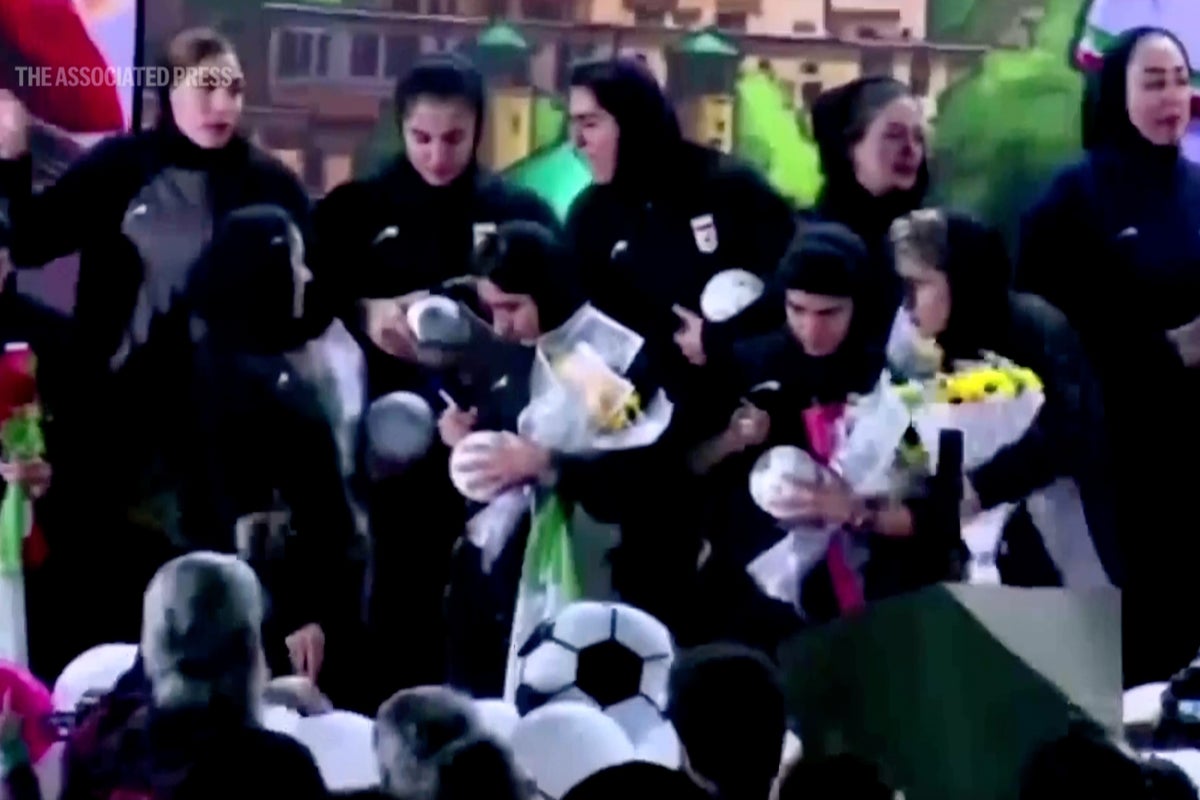
By the time the dust settled, only two members of the squad stayed in Australia. Five of the seven who initially asked for protection decided to head home. The sight of them being "feted" at Valiasr Square in Tehran upon their return was stomach-turning for anyone who knew the backstory. Giant billboards featured the team with the slogan "My Choice. My Homeland."
It was a total propaganda victory for the regime. They used the women’s return to show that the "malice of the enemies" had failed. But was it really a choice? Experts like Kylie Moore-Gilbert, who spent years in an Iranian prison, argue that the public nature of the Australian intervention made it impossible for the women to stay without endangering their families. In the end, the "tug of war" didn't save most of the players—it just made them pawns in a bigger game.
What FIFA and hosting nations need to do differently
This whole debacle proves that the current "business as usual" approach for hosting teams from authoritarian states is broken. You can't just host a tournament and ignore the fact that one team has minders following them to the buffet. If we’re going to let these teams compete on the world stage, the safety protocols need to be as rigorous as the drug testing.
- Independent Legal Counsel: Athletes should have access to lawyers who aren't affiliated with any government or the sporting body itself from day one.
- Discreet Protection: Governments need to learn that a quiet exit is often safer than a loud one. The photo ops might look good for the minister, but they’re a death sentence for family back home.
- FIFA Accountability: Football Australia and FIFA need to answer why a team was allowed to be "imprisoned" in their own hotel rooms during a major tournament.
If you're an athlete from a country like Iran, the pitch is the only place you're truly free, and even that's debatable. The next time a team like this lands on Australian soil, we need to be ready with more than just a camera and a visa application. We need a strategy that actually puts the person before the politics.
Don't wait for the next crisis to demand better standards for visiting athletes. Reach out to your local MP or sports organizations and ask what their specific protocols are for protecting the human rights of international competitors. Silence is what the regime wants—don't give it to them.