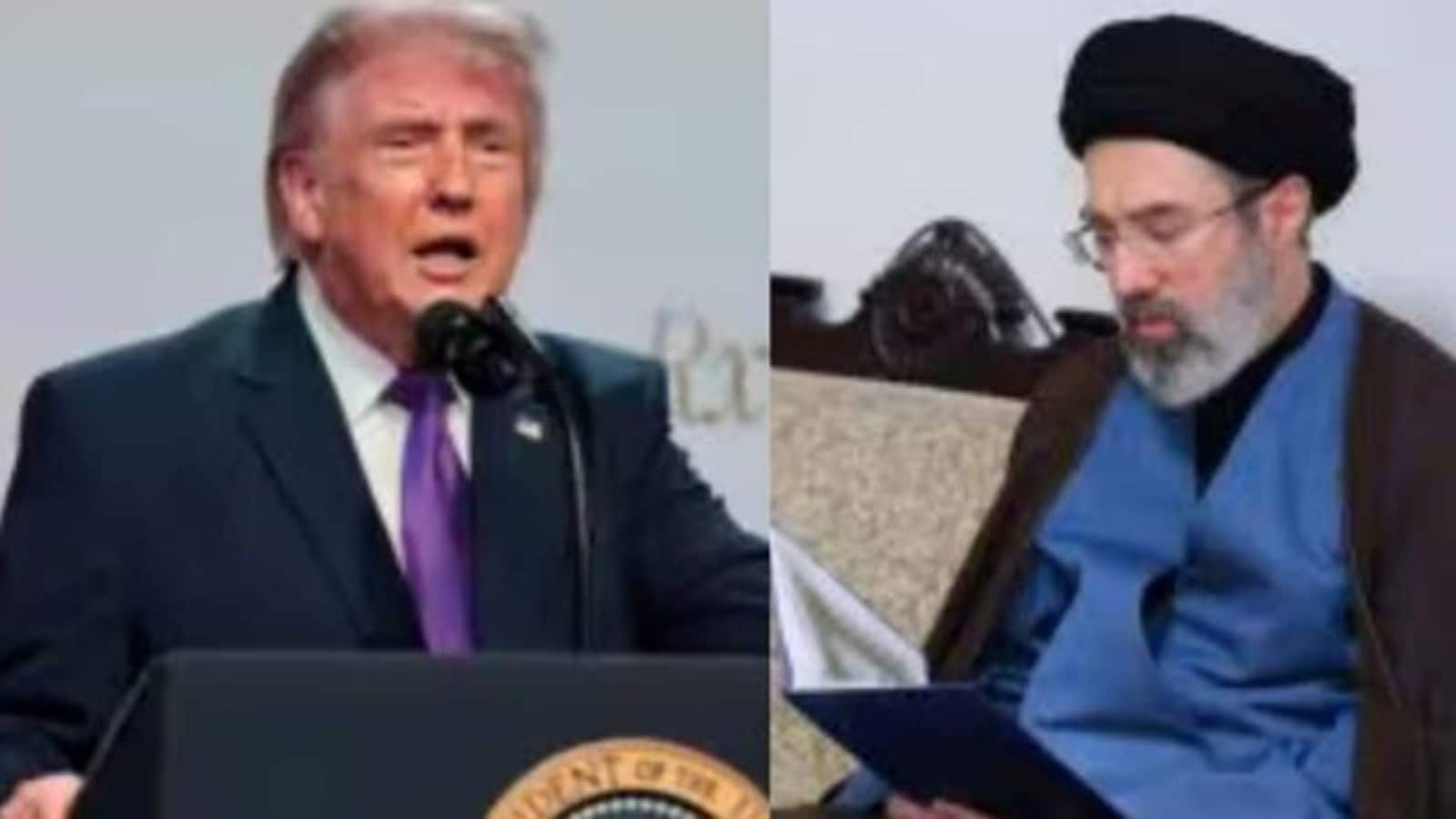
Every four years, Western pundits obsess over how a new American president might reset relations with Tehran. Ayatollah Ali Khamenei doesn't buy it.
He's spent decades watching Democrats and Republicans trade keys to the Oval Office, and from his perspective, the policy remains identical. Whether a moderate democrat or a hardline conservative sits behind the Resolute Desk, Iran's Supreme Leader insists that American hostility is baked into the system itself. It isn't personal. It's structural.
When Khamenei makes statements arguing that US antagonism will persist regardless of which party holds power, he isn't just throwing red meat to his domestic base. He's articulating a core pillar of the Islamic Republic’s foreign policy doctrine—one rooted in forty-five years of grievance, broken agreements, and deep ideological mistrust. If you want to understand why diplomacy between Washington and Tehran constantly hits a brick wall, you have to stop looking at individual election cycles and start looking at how Khamenei views the American political machine.
The Illusion of the Two-Party Reset
Most Western observers treat US foreign policy like a pendulum. You get a Barack Obama who signs the Joint Comprehensive Plan of Action (JCPOA) in 2015, followed by a Donald Trump who rips it up in 2018. To someone in Washington or London, those look like polar opposite approaches.
Khamenei sees two sides of the exact same coin.
In his public addresses, including speeches marking the anniversary of the 1979 US Embassy takeover in Tehran, Khamenei repeatedly frames the Democratic and Republican parties as different masks worn by the same underlying power structure. He argues that the White House's ultimate goal hasn't shifted since the Pahlavi monarchy fell. That goal, in Tehran's view, is total submission or regime collapse.
Think about how the 2015 nuclear deal played out from an Iranian vantage point. Khamenei reluctantly allowed President Hassan Rouhani’s administration to negotiate with the Obama team, though he publicly warned they couldn't trust American promises. Three years later, the Trump administration walked away from the agreement, reimposed crippling sanctions under its "maximum pressure" campaign, and later assassinated Quds Force commander Qasem Soleimani in January 2020.
Then Joe Biden entered the White House in 2021. He campaigned on reviving the nuclear deal. Yet years of indirect talks in Vienna went nowhere, the Trump-era sanctions stayed largely intact, and new penalties piled on over Iran's drone sales to Russia and domestic crackdowns.
For Khamenei, that sequence wasn't an accident. It was proof. Why invest political capital in a deal with one administration if the next one can erase it with a single executive order? Even worse, from his standpoint, the Democrats never fully delivered the economic relief promised under the 2015 accord while they were in power. Banks in Europe remained terrified of secondary US sanctions, leaving Iran's economy choked off despite the ink drying on the paper.
Why US Hostility Feels Structural to Tehran
To grasp why Khamenei’s rhetoric resonates inside Iran's leadership circles, you have to look past the slogans. There's a cold, hard geopolitical logic driving this worldview.
First, there's the history nobody in Tehran forgets. You can't talk about US-Iran relations without mentioning Operation Ajax—the 1953 CIA- and MI6-backed coup that overthrew Prime Minister Mohammad Mossadegh after he nationalized Iran's oil industry. For twenty-six years afterward, Washington propped up Shah Mohammad Reza Pahlavi, supplying weapons and intelligence training while his secret police, SAVAK, crushed dissent.
When the 1979 Islamic Revolution swept the Shah from power, the new clerical establishment built its entire identity around resisting foreign domination. The phrase "Neither East nor West" wasn't just a catchy motto. It became a survival strategy.
Second, Khamenei views American opposition not as a reaction to Iran's nuclear program or regional militias, but as a clash over regional hegemony. The United States maintains tens of thousands of troops across the Middle East, sells billions of dollars in advanced weaponry to Gulf monarchies, and backs Israel unconditionally. Meanwhile, Iran leads the "Axis of Resistance"—a network spanning Hezbollah in Lebanon, Hamas in Gaza, the Houthis in Yemen, and various militias in Iraq and Syria.
Those two visions for the Middle East cannot peacefully coexist without one side backing down. Khamenei knows this. Whether a Democrat talks about "diplomacy first" or a Republican promises "peace through strength," neither party is going to abandon Israel, dismantle US bases in Qatar and Bahrain, or accept Iranian dominance in the Levant.
The Sanctions Trap
Sanctions are where Khamenei's thesis hits hardest for everyday Iranians. Since 1979, successive US administrations—Jimmy Carter, Ronald Reagan, Bill Clinton, George W. Bush, Obama, Trump, and Biden—have all expanded the web of economic restrictions targeting Iran.
- 1979–1984: Carter freezes Iranian assets during the hostage crisis; Reagan designates Iran a state sponsor of terrorism, triggering automatic arms and aid bans.
- 1995–1996: Clinton signs executive orders banning US trade and investment in Iran, followed by the Iran and Libya Sanctions Act targeting foreign energy firms.
- 2006–2013: Bush and Obama spearhead sweeping multilateral banking and oil sanctions that cut Iran off from the SWIFT financial network.
- 2018–2024: Trump exits the JCPOA and targets Iran's central bank and oil exports; Biden maintains the core architecture while adding sanctions over human rights and military transfers.
Notice the pattern? Every single president, regardless of party affiliation, added bricks to the wall. Almost none ever took them down permanently. When Khamenei tells his audience that changing presidents in Washington changes nothing for Iran, he has four decades of the US Treasury Department's own records backing him up.
What Khamenei Actually Gains From This Narrative
Politicians rarely say things just to hear themselves talk, and Khamenei is one of the most calculating survivors in modern geopolitics. Pushing the idea that US hostility is permanent serves several immediate, practical purposes for him at home and abroad.
First, it neutralizes domestic political rivals. Inside Iran, there has long been a tug-of-war between hardliners (principlists) and moderates or reformists. Reformist politicians often argue that easing tensions with the West is the only way to fix Iran's broken economy, tame rampant inflation, and stop the rial from plummeting further. By declaring that America is inherently untrustworthy no matter who wins in November, Khamenei pulls the rug out from under anyone advocating for fresh concessions to Washington. If the US will never keep its word, negotiating isn't pragmatic—it's naive.
Second, it justifies the "Resistance Economy" and pivots Iran eastward. If Western markets and financial systems are permanently off-limits, Tehran has to look elsewhere. Under Khamenei's guidance, Iran has poured energy into deepening ties with Russia and China. Tehran joined the Shanghai Cooperation Organization (SCO) in 2023 and officially entered the BRICS bloc in 2024. It signed a 25-year strategic cooperation agreement with Beijing and expanded defense ties with Moscow. Framing US hostility as an unchangeable fact of life helps Khamenei sell this eastern pivot to a skeptical public that might otherwise prefer Western trade and cultural ties.
Third, it lowers public expectations. Iran faces severe internal pressures—economic mismanagement, water shortages, corruption, and recurring waves of anti-government protests like the massive 2022–2023 demonstrations following the death of Mahsa Amini. By pinning the country's economic pain squarely on unyielding American aggression, the leadership deflects blame away from its own policies.
Where Khamenei’s Argument Breaks Down
Look closely, though, and you'll spot massive flaws in the Supreme Leader's deterministic worldview. Treating Washington as a monolithic, unchanging machine ignores real shifts that have radically altered Iran's fortunes over the years.
Take the 2003 US invasion of Iraq. Whatever Washington's intentions were, the Bush administration's decision to topple Saddam Hussein eliminated Iran's deadliest regional enemy and handed Tehran unprecedented political and military influence in Baghdad. A different president—say, Al Gore, had he won in 2000—almost certainly wouldn't have invaded Iraq. That single presidential election reshaped Iran's regional power for a generation.
Or look at the immediate aftermath of the 2015 nuclear deal. Between early 2016 and May 2018, before Trump pulled out, Iran's oil exports rebounded sharply, jumping by roughly a million barrels per day. Inflation dropped into single digits for the first time in years, and foreign companies from Airbus to Total started signing contracts in Tehran. That breathing room existed solely because a Democratic administration prioritized diplomacy over confrontation. Pretending there was zero difference between Obama's 2016 and Trump's 2019 requires serious historical amnesia.
Even more importantly, Khamenei's framing conveniently erases Iran's own agency. Washington didn't dream up sanctions in a vacuum. Tehran's covert nuclear enrichment sites discovered in the early 2000s, its ballistic missile proliferation, its hostage-taking of dual nationals, and its arming of regional proxies have repeatedly given US hawks all the ammunition they need to keep the pressure on. Hostility isn't a one-way street, even if state media in Tehran portrays it that way.
How to Read Signals From Tehran Moving Forward
If you follow Middle Eastern geopolitics, watch markets, or simply want to cut through the noise whenever Iran and the US make headlines, stop taking public speeches at face value. Khamenei’s insistence that US party politics don't matter is his public baseline, not necessarily an absolute ban on backchannel deals.
History shows that when the Islamic Republic faces existential economic or military pressure, pragmatism overrides ideology. Ayatollah Ruhollah Khomeini famously described accepting the 1988 UN ceasefire to end the Iran-Iraq War as "drinking a chalice of poison." Khamenei himself signed off on the secret Oman backchannel talks with the Obama administration in 2012 and 2013 while publicly denouncing American arrogance the entire time.
Pay attention to three concrete indicators rather than fiery rhetoric:
- Indirect prisoner swaps and asset unfreezes. Even during periods of intense hostility, Washington and Tehran regularly negotiate quiet exchanges via intermediaries like Qatar or Oman, such as the September 2023 deal that freed five Americans and unlocked $6 billion in frozen Iranian oil funds in South Korea.
- Enrichment levels and IAEA access. Watch what Iran's Atomic Energy Organization actually does at Natanz and Fordow. Ramping uranium enrichment up to 60 percent or restricting International Atomic Energy Agency inspectors is Tehran's real way of building leverage before testing a new US administration.
- Who controls the diplomatic portfolio. When Khamenei empowers seasoned diplomats like Abbas Araghchi or Javad Zarif to speak publicly or travel to European capitals, it signals a tactical opening—even if the Supreme Leader continues to declare that Washington can never be trusted.
Don't fall into the trap of thinking a new face in the White House will magically thaw relations between Washington and Tehran. Khamenei has spent forty years preparing his system to outlast American presidents, not accommodate them. Track the actions on the ground, watch the sanctions enforcement, and ignore the wishful thinking every election season.