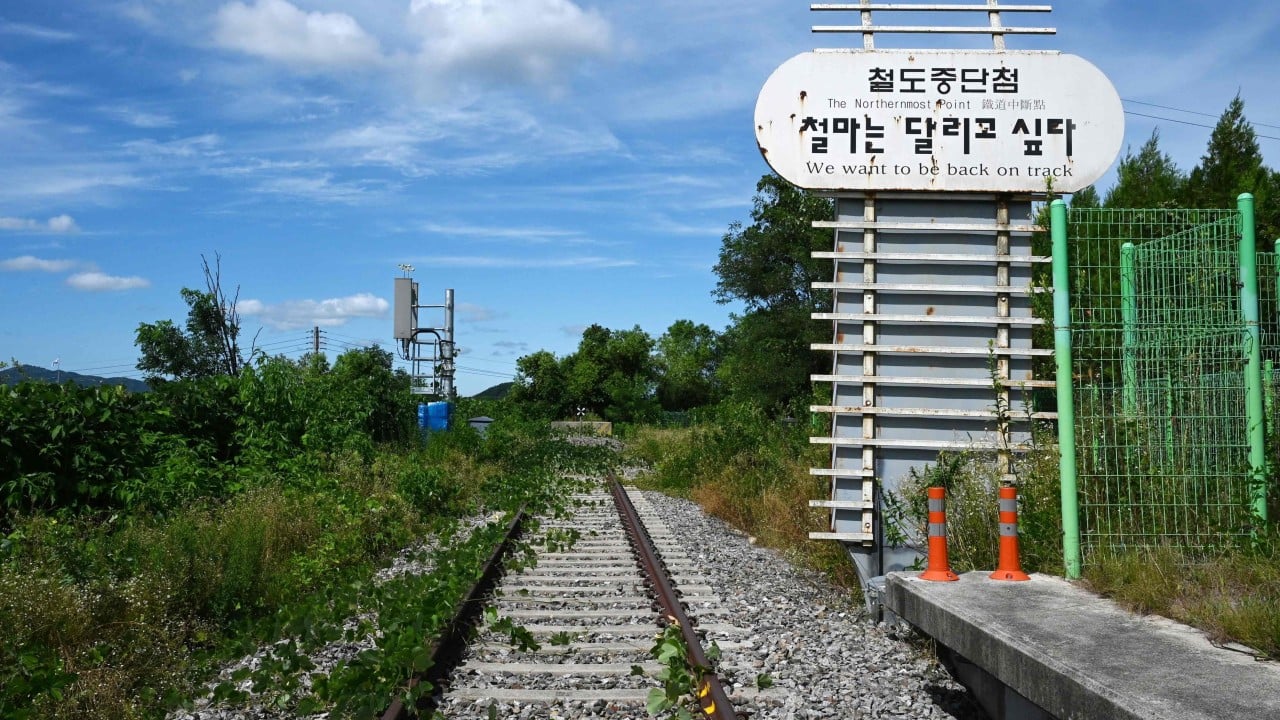
Dawn breaks over the Demilitarized Zone, painting the razor wire in a cold, metallic silver. For over seven decades, this scar across the Korean Peninsula has been defined by what it separates. Concrete markers, listening posts, and silent minefields carved a permanent fracture through families, histories, and geographies. Yet beneath the overgrown weeds and rusted spikes of the Gyeongui Line, a quiet ambition refuses to die. Engineers and visionaries in Seoul still look at those severed steel ribbons and see something else entirely: a bridge to the future.
Consider what happens next when geopolitics freezes while human geography aches to move.
On maps, the distance between Seoul and Pyongyang is a mere commuter hop. In reality, it spans an ideological chasm. For years, grand proposals for trans-continental railways floated through international summits, promising cargo journeys from Busan all the way to London. Officials drafted timetables, polished commemorative plaques, and even ran symbolic test trains across the border, only for the diplomatic door to slam shut once more. The current political climate in Pyongyang remains frosty, characterized by official cold shoulders and a distinct turning away from inter-Korean reconciliation.
Yet, infrastructure has a stubborn memory.
I stood near the border fence years ago, listening to the rhythmic clicking of migratory birds completely indifferent to the geopolitical theater below. An old station master, retired from the Korail network, pointed toward the northern horizon where the tracks simply vanished into a wall of fog. He spoke not of treaties or denuclearization deals, but of rust. Iron, he explained, does not care about political speeches. Left unattended, it oxidizes, weakens, and breaks. But the desire to travel, to trade, and to reunite? That only thickens with time.
South Korea continues to quietly maintain its side of the trans-peninsular equation. Budgets are allocated for station upkeep, tracks are periodically cleared of encroaching brush, and contingency plans are updated. Critics call this exercise futile, pointing to missile tests and fiery rhetoric from the northern capital as proof of wasted effort. But looking closer at the persistent planning reveals a profound calculation. Bridges are not built when rivers are calm; they are engineered to withstand the flood, constructed slowly and deliberately in anticipation of a sudden shift in the weather.
The real problem lies elsewhere, hidden in the psychological architecture of division. Generations are growing up on both sides of the parallel with entirely separate lexicons, distinct cultural idioms, and a widening empathy gap. A railway alone cannot stitch those fractures together. Steel can carry freight and passengers, but it cannot manufacture trust. That heavy lifting belongs to the slow, agonizing work of diplomacy and the inevitable softening of hardline stances.
Still, the physical layout of the peninsula demands connection. In an era dominated by maritime choke points and volatile global supply chains, an overland rail route linking East Asia directly to the heart of Europe represents an economic imperative of staggering proportions. Goods moving from South Korean factories onto a train in Seoul could theoretically bypass congested container ports entirely, rolling straight through Pyongyang, across the vast expanse of Siberia or China, and deep into European markets.
South Korea's persistence in keeping the iron dream alive is less about immediate pragmatism and more about stubborn hope. It is an acknowledgment that historical anomalies, no matter how deeply entrenched, eventually fracture. When the diplomatic frost finally thaws, whether through generational change or unforeseen geopolitical alignment, the reconstruction of the DMZ railway will not start from scratch. It will begin with the flick of a switch on tracks that were kept oiled, watched, and waiting in the dark.