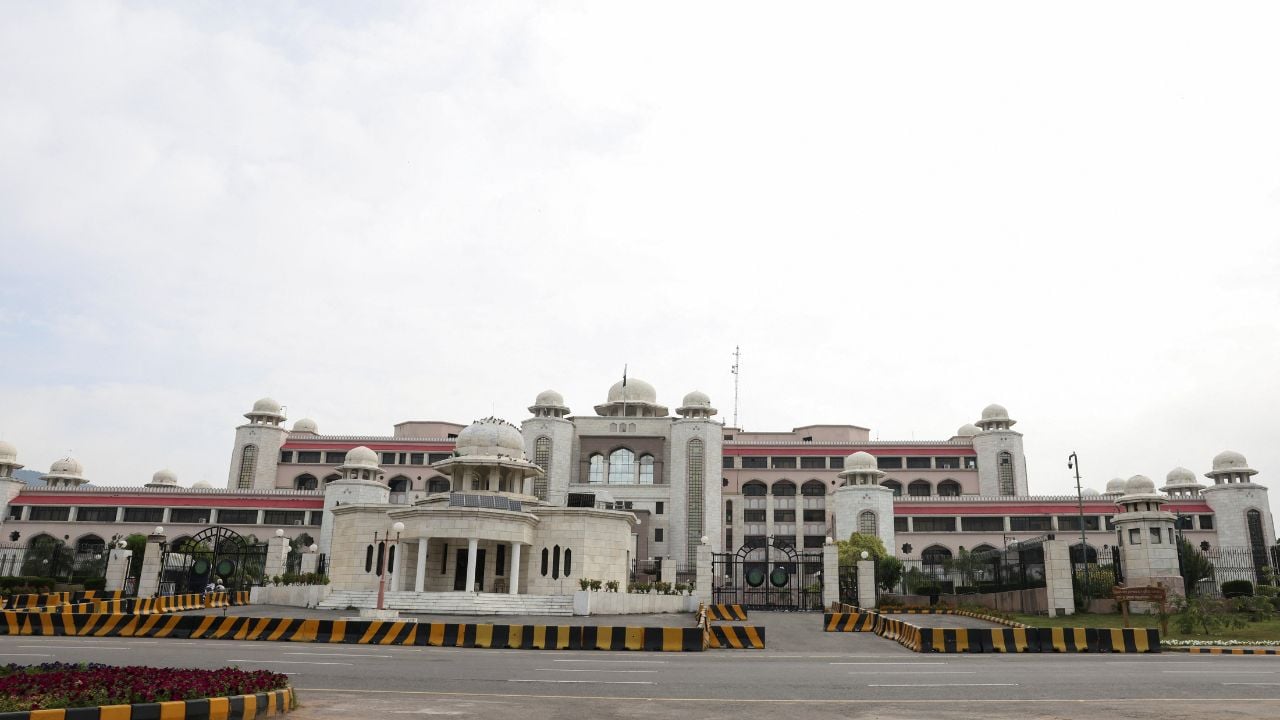
A nondescript U.S. government aircraft touched down at Islamabad International Airport under the cover of a standard flight manifest, but its arrival has set off alarm bells across the intelligence corridors of South Asia. While official channels remain tight-lipped, the presence of a specialized American team in the Pakistani capital—specifically tasked with brokering a dialogue with Iran—signals a desperate and high-stakes pivot in Middle Eastern diplomacy. This isn't a routine diplomatic visit. It is a calculated gamble using Pakistan as a neutral ground to bypass the frozen formal channels of Washington and Tehran.
The choice of Islamabad as the theater for these quiet overtures is no accident. Pakistan has long occupied the uncomfortable space between its heavy reliance on American security cooperation and its porous, culturally complex border with the Islamic Republic of Iran. By landing here, the U.S. team is betting that Pakistan’s Inter-Services Intelligence (ISI) can provide the necessary "buffer" and security guarantees that a direct meeting in a European capital like Geneva or Vienna cannot afford.
The Mechanics of the Backchannel
The logistics of this landing tell a story that the press releases won't. When a U.S. delegation moves with this level of discretion into a region currently simmering with anti-Western sentiment, the agenda is rarely about "broad cooperation." It is about a specific, urgent crisis.
Sources within the Pakistani aviation and security apparatus suggest the delegation is composed of mid-level State Department officials and regional specialists from the National Security Council. These are the "track two" diplomats—the people who do the grinding work of drafting memorandums of understanding before the politicians arrive to take the credit. Their presence suggests that the U.S. is seeking a way to de-escalate the "shadow war" currently playing out in the Red Sea and across the Levant, using Pakistan’s unique leverage as a Sunni-majority state with a pragmatic, if tense, relationship with the Shia powerhouse next door.
Why Pakistan and Why Now
The timing is critical. We are seeing a shift in how the U.S. views the role of regional intermediaries. For years, Oman and Qatar were the preferred couriers for messages to Tehran. However, the current volatility in the Gulf has made those channels predictable and, in some ways, compromised by the sheer volume of traffic they handle.
Islamabad offers a different set of tools.
- Proximity and Border Security: The 900-kilometer border between Pakistan and Iran is a hotbed of militant activity, including groups like Jaish al-Adl. The U.S. knows that Iran is deeply concerned about its eastern flank. If Washington can offer intelligence sharing or border stabilization through the Pakistani military, it provides a powerful bargaining chip that doesn't involve the usual nuclear rhetoric.
- China’s Shadow: Pakistan is the crown jewel of China’s Belt and Road Initiative. By conducting talks in Islamabad, the U.S. is also subtly signaling to Beijing that it can still operate effectively within China’s primary sphere of influence.
- The Nuclear Question: While the JCPOA is effectively on life support, the technical progress of Iran’s enrichment program remains the primary driver of U.S. anxiety. Pakistan, a nuclear-armed state itself, understands the technical and political nuances of "breakout capacity" better than almost any other intermediary.
The Risks of the Islamabad Connection
This strategy is fraught with potential for disaster. The Pakistani government is currently navigating an internal political minefield, dealing with an economic collapse and a resurgence of domestic TTP (Tehrik-i-Taliban Pakistan) terrorism. Hosting a secret U.S.-Iran summit is a high-reward, high-risk play for a government desperate for international legitimacy and IMF support.
If the details of these talks leak prematurely—or if they are perceived by the Pakistani public as "doing the bidding" of the Great Satan—the resulting domestic backlash could topple an already shaky administration. Furthermore, Iran’s hardliners in the Islamic Revolutionary Guard Corps (IRGC) are notoriously suspicious of Pakistani intentions, often viewing Islamabad as a proxy for Saudi and American interests.
Beyond the Nuclear Horizon
While the world watches the centrifuges, the U.S. team in Islamabad is likely focused on more immediate "kinetic" concerns. The surge in drone and missile technology transfers across the Middle East has changed the cost-benefit analysis of traditional diplomacy. Washington needs a "stop-gap" agreement to prevent a regional conflagration that would force a massive, unwanted American military re-entry into the Middle East.
This isn't about a grand bargain. It is about a "freeze-for-freeze" arrangement. The U.S. wants Iran to reign in its proxies in exchange for limited, perhaps unstated, sanctions relief or the unfreezing of specific assets held in third-party accounts. Using Islamabad as the clearinghouse for these negotiations allows both sides to maintain plausible deniability. If the talks fail, they were "just regional security consultations." If they succeed, they become the foundation for a new, more localized framework of containment.
The Invisible Players
One must look at the role of the Pakistani military, specifically the "establishment" at GHQ in Rawalpindi. In Pakistan, the civilian government signs the papers, but the military holds the pen. The U.S. team's arrival is a clear indication that General Asim Munir and the senior leadership have given the green light. This suggests a quid pro quo that likely involves increased military-to-military cooperation or a softening of U.S. pressure on Pakistan regarding its internal democratic challenges.
We should also consider the intelligence value of the "ground truth." Being in Islamabad allows U.S. officials to interface directly with regional actors who have "eyes on" Iranian movements in Sistan and Baluchestan. This is raw, actionable intelligence that you don't get sitting in a hotel room in Doha.
The Failure of Traditional Diplomacy
The very existence of this mission is an admission of failure. It proves that the traditional avenues of Western diplomacy are no longer sufficient to contain the complexities of the modern Middle East. The move to Islamabad is a pivot toward a more transactional, "realpolitik" approach where geography and military leverage matter more than shared values or international treaties.
The U.S. is essentially acknowledging that to talk to Iran, it must speak the language of the region—a language of backrooms, military intermediaries, and localized trade-offs. The high-minded rhetoric of the UN and the EU has been replaced by the pragmatic necessity of the Islamabad tarmac.
What Happens When the Plane Leaves
The success of this mission won't be measured by a signed treaty or a joint press conference. It will be measured by what doesn't happen in the next six months. If the frequency of attacks on shipping lanes decreases, or if certain militia groups in Iraq and Syria suddenly go quiet, we will know the Islamabad talks bore fruit.
However, the danger of this "ad hoc" diplomacy is its fragility. Without a formal structure, these agreements can vanish with a single stray missile or a change in leadership in any of the three capitals involved. The U.S. is building a house of cards in a windstorm, hoping the Pakistani security umbrella provides just enough cover to get the job done.
The geopolitical landscape of 2026 demands this kind of agility, but it also exposes the diminishing influence of the United States. A superpower that once dictated terms from the Oval Office is now forced to play a game of "telephone" through a debt-ridden intermediary in South Asia.
Investors and regional analysts should watch the Pakistani rupee and the gold markets in Tehran more closely than the statements from the State Department. Those are the real indicators of whether this secret mission is buying peace or simply delaying the inevitable. The Islamabad landing is a symptom of a world where the old rules are dead, and the new ones are being written in the shadows of airports that the rest of the world isn't supposed to be watching.
The mission is a stark reminder that in the current international order, the shortest distance between two points is no longer a straight line—it is a flight path through a third-party capital that knows how to keep a secret. Keep your eyes on the flight trackers; the next plane to land in Islamabad might tell us more about the future of the Middle East than any televised speech ever could.