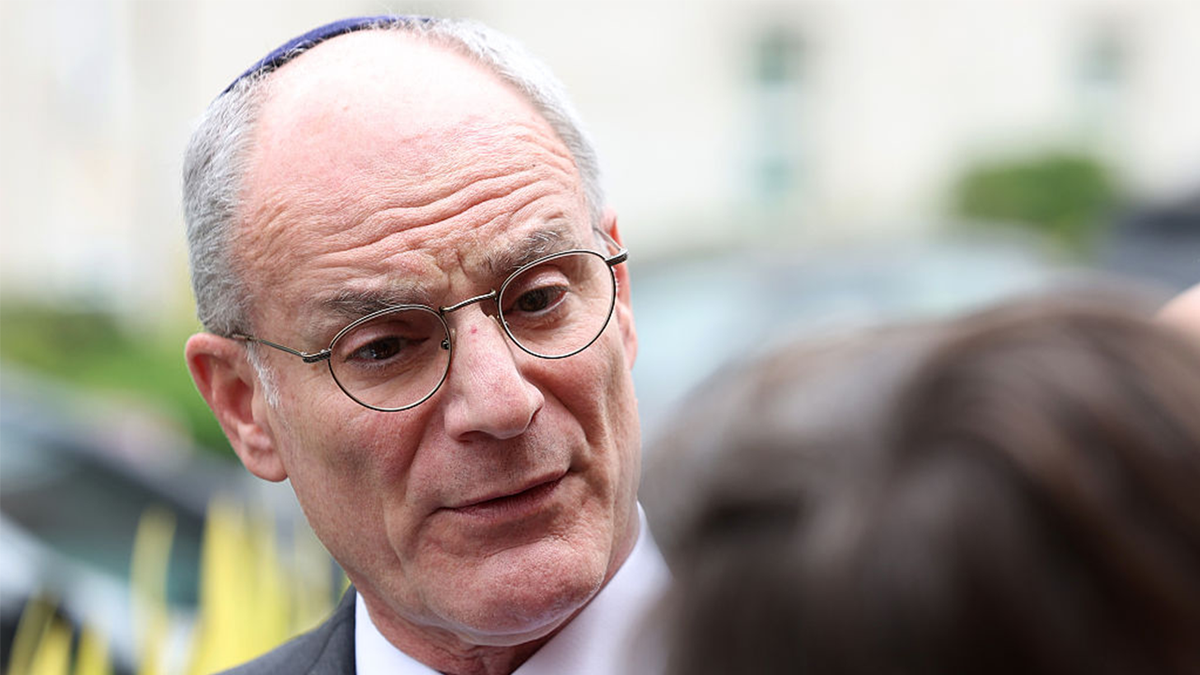
Israel doesn’t just send diplomats to Washington; it sends signals. When Yechiel "Michael" Leiter took over as the Israeli Ambassador to the US in early 2025, it wasn't a standard rotation. It was a tactical shift. If you want to understand where the Jerusalem-Washington alliance is heading right now in 2026, you've got to look at the man sitting in the embassy on International Drive.
Leiter isn't a career bureaucrat. He’s a philosopher, a rabbi, and a former chief of staff to Benjamin Netanyahu. Most importantly, he’s a Scranton-born American who chose to make Israel his home decades ago. That dual identity isn't just a fun trivia fact. It’s the engine behind his diplomatic strategy. He speaks the language of the American heartland because he’s from it, but he represents the iron-clad resolve of a nation that’s been on a war footing for years.
The American Born Diplomat Redefining the Role
Leiter’s background is a massive departure from his predecessor, Michael Herzog. While Herzog was the consummate military man and quiet negotiator, Leiter is a public intellectual with a PhD in political philosophy. He didn’t just study John Locke; he wrote the book on how the Hebrew Bible influenced Locke’s theories of government.
This matters because Leiter doesn't just argue for Israel's security. He argues for its moral necessity. In 2026, as the Middle East undergoes a massive structural realignment, Leiter is the one translating Israeli policy into terms that resonate with both the White House and the American public.
- Born: Scranton, Pennsylvania (1959)
- Education: PhD in Political Philosophy from the University of Haifa
- Career Highlights: Chief of Staff at the Finance Ministry, Advisor to Ariel Sharon
- Current Focus: Disarming Hezbollah and curbing Iranian influence
He’s currently managing the most direct talks between Israel and Lebanon in over thirty years. Just yesterday, Leiter was at the State Department alongside Secretary of State Marco Rubio, pushing a narrative that Israel and the Lebanese government are actually "on the same side" when it comes to removing Hezbollah’s grip on the region. That’s a bold take. It’s also classic Leiter—reframing a decades-old conflict as a shared struggle for liberation.
Dealing with the Eighth Front
Most people talk about Israel fighting on seven fronts—Gaza, Lebanon, Yemen, and so on. Leiter introduced the concept of the "eighth front." He’s talking about the war of ideas. After the tragic shooting at the Capital Jewish Museum in 2025, where embassy staffers were targeted, Leiter didn't just issue a standard press release. He labeled the delegitimization of Israel as a physical security threat that starts with rhetoric in the West.
He’s been aggressive in the US media, calling out what he sees as the "industry of demonization." He doesn't shy away from confrontation. If you’re looking for a diplomat who will sit quietly and take notes, Leiter isn’t your guy. He’s there to win the argument.
Why the Trump-Leiter Connection is Different
Leiter’s appointment coincided perfectly with the return of the Trump administration. He’s gone on record calling Trump a "true friend," and that relationship is paying dividends in 2026. The coordination between Leiter’s office and the State Department is tighter than it’s been in a decade.
We’re seeing this play out in the "Red Sea Dialogue" and the push to expand the Abraham Accords. Leiter isn't just focused on survival; he’s looking for expansion. He’s used his past experience as the Acting Chairman of the Israel Ports Company to talk about trade routes and economic integration, not just missile defense systems.
The Settlement Background and the Bipartisan Tightrope
Let’s be real—Leiter is a controversial figure for some. He’s lived in settlements in the West Bank (Judea and Samaria) for years. For many in the Democratic party, this makes him a tough pill to swallow. However, Leiter has spent his first year in office trying to maintain a bipartisan tightrope.
He’s made it a point to meet with both Republicans and Democrats, arguing that the security of the Jewish state should transcend the American political circus. It’s a hard sell. But Leiter’s "American-ness" helps. He doesn't come across as a foreign official lecturing Americans; he sounds like a guy from Pennsylvania explaining why his kids' safety in Israel matters.
What This Means for You
If you’re watching the news and wondering why the US-Israel relationship feels more assertive lately, it’s because of the guy in the lead chair. Leiter’s strategy is built on three pillars:
- Direct Confrontation of Threats: No more "strategic ambiguity" regarding Iran or Hezbollah.
- Ideological Warfare: Fighting back against the "eighth front" of delegitimization in US cities and universities.
- Economic Integration: Using the Abraham Accords framework to build a Middle East that actually functions.
Moving Forward with the Leiter Strategy
Don't expect Leiter to quiet down. As the 2026 peace talks regarding Lebanon continue, his voice will be the one setting the tone for what Israel is willing to accept. He’s already signaled that any deal must include the total disarmament of non-state terror groups.
If you want to keep track of this, watch his appearances at AIPAC or his briefings at the State Department. He’s not just a messenger; he’s a strategist who has the ear of both Netanyahu and the current US administration. This is the new face of Israeli diplomacy: academic, assertive, and unapologetically American-Israeli.
Keep an eye on the upcoming trilateral meetings in Washington. The way Leiter handles the Lebanese delegation will tell you everything you need to know about the next five years of Middle Eastern history. He’s not just representing a country; he’s trying to rewrite the rules of the game.