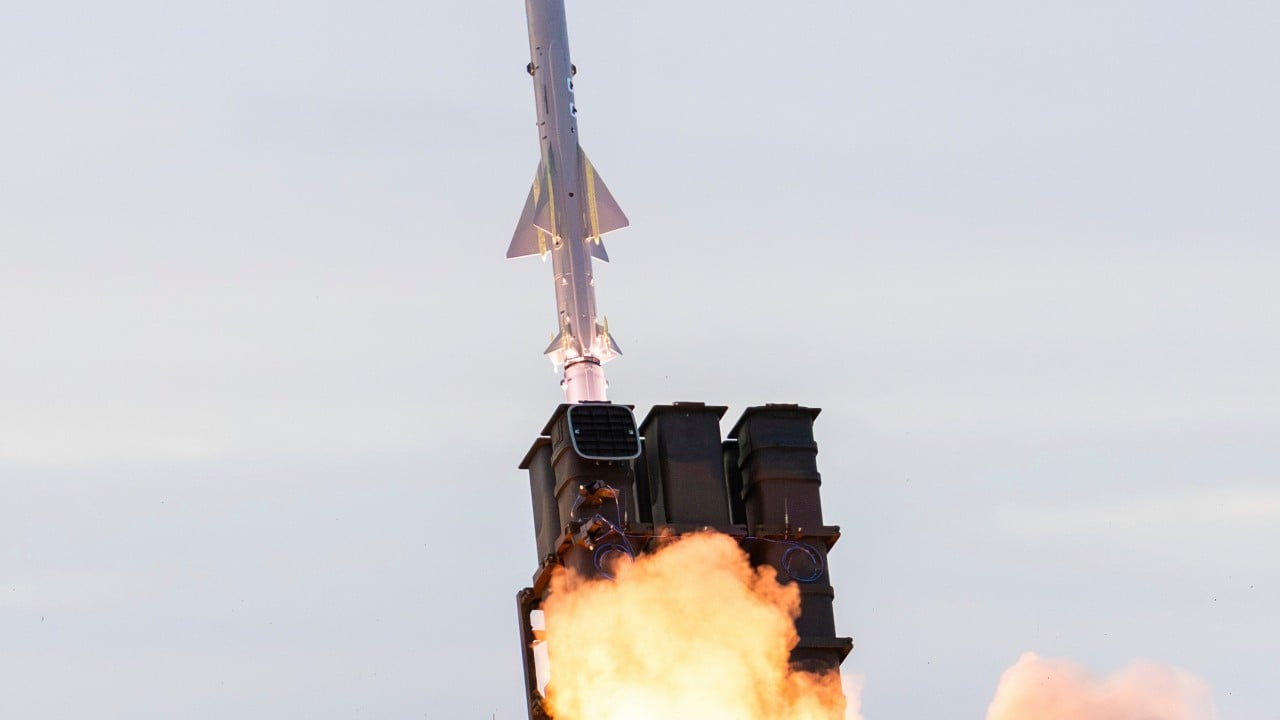
The defense establishment is currently obsessed with the "Sustainment of the First Island Chain." They look at Japan’s upgraded Type-12 Surface-to-Ship Missile (SSM) and see a silver bullet. They see a 1,000km range extension and imagine a Chinese navy pinned behind the Miyako Strait, unable to breathe.
They are wrong.
The consensus view—that long-range standoff capabilities automatically equate to regional stability—is a dangerous fantasy born of spreadsheet warfare. In reality, the Type-12 upgrade is a textbook case of "tactical brilliance, strategic bankruptcy." We are watching Japan double down on an architectural philosophy that assumes static persistence in an era of hyper-kinetic attrition.
I have spent years analyzing procurement cycles where "range" is used as a placeholder for "capability." It is a classic trap. You can build a missile that flies from Kyushu to the Moon, but if you cannot hide the launcher, reload the canisters, or verify the target in a degraded electromagnetic environment, you haven't bought a deterrent. You’ve bought an expensive target.
The Range Fallacy
The Type-12’s leap from a 200km reach to a 1,000km-plus profile is the centerpiece of the Ministry of Defense’s current PR push. The logic seems sound on paper: outrange the enemy’s carrier groups, keep the Japan Ground Self-Defense Force (JGSDF) safely tucked away in the mountains, and create a "no-go" zone.
Here is what the analysts miss: Range increases the search area exponentially, not linearly.
At 200km, the Type-12 is a coastal defense tool. You know where the enemy is because they are literally on your doorstep. At 1,000km, the kill chain becomes a fragile, sprawling mess. To hit a moving destroyer at that distance, the JGSDF requires real-time targeting data from satellites, high-altitude UAVs, or P-1 patrol aircraft.
In a high-end conflict, those assets are the first things to go. If the Link 16 or satellite backhaul is jammed or kinetically neutralized, that shiny new Type-12 is a blind giant. Japan is building a Ferrari engine and hooking it up to a tricycle’s steering column. Without a resilient, multi-domain sensor mesh that can survive the first 48 hours of a peer-level strike, "standoff" is just a fancy word for "guessing."
The Reload Paradox
Modern wargaming often ignores the physical reality of a missile battery. A Type-12 unit isn't just a truck with a launcher. It’s a convoy of command-and-control vehicles, radar units, and, most importantly, reload trucks.
Let’s look at the math of attrition. If China’s People’s Liberation Army Navy (PLAN) pushes a surface action group into the Philippine Sea, they aren't sending one ship. They are sending a swarm of Type 055 and Type 052D destroyers equipped with hundreds of Vertical Launch System (VLS) cells.
To achieve a high probability of kill ($P_k$), Japan needs to overwhelm the PLAN’s Aegis-like air defenses. This requires "saturated salvos"—firing dozens of missiles at once.
- Scenario A: A JGSDF battery fires its full complement of six missiles.
- The Reality: The PLAN’s HQ-9 missiles intercept four; the remaining two are spoofed by electronic warfare.
- The Crisis: The JGSDF battery is now "dry." It must move to a pre-designated reload point, crane six massive new canisters onto the launcher, and relocate before a DF-21 ballistic missile finds its thermal signature.
I’ve seen how logistics fail in the field. Reloading a large-form-factor missile like the Type-12 isn't like swapping a magazine in a rifle. It is a slow, heavy-industrial process. Japan’s current infrastructure for these missiles is concentrated in a handful of vulnerable depots. If the roads are cratered or the depots are leveled, the Type-12 is a "one-and-done" weapon system.
The "lazy consensus" argues that range buys time. I argue that range buys a false sense of security while the underlying logistics remain as brittle as glass.
The Mobility Myth
The JGSDF prides itself on the mobility of its truck-mounted launchers. The idea is to play a game of "shell-shell-hide" among the forested hills of the Nansei Islands.
This ignores the reality of modern multi-spectral persistent surveillance. Between SAR (Synthetic Aperture Radar) satellites that see through clouds and AI-driven pattern recognition, a 20-ton missile truck is not easy to hide. It leaves tracks. It has a massive heat signature when the engine runs. It requires a specific turning radius that limits it to certain roads.
We are entering an era of "transparent battlefields." The assumption that Japan can hide its primary deterrent on small islands like Ishigaki or Miyako is laughable. These islands are small enough that a concentrated drone swarm could map every square inch of them every twenty minutes.
If you can’t hide, you must harden. But Japan isn't building hardened silos; it’s building more trucks. It is prioritizing "agility" that doesn't actually exist against a peer adversary with a dense sensor net.
Why the "Porcupine Strategy" is Flawed
Everyone loves the "Porcupine Strategy" metaphor. Make the cost of ingestion too high for the predator. It sounds noble. It sounds defensive. It’s also a losing strategy for an island nation that relies on 90% of its energy via sea lanes.
The Type-12 upgrade is designed to hit ships. But what if the enemy doesn't lead with ships? What if they lead with a total blockade and a sub-surface campaign? A long-range cruise missile can't kill a submarine. It can't escort an LNG tanker.
By pouring billions into the Type-12, Japan is succumbing to "Gold-Plated Symptom Relief." They are treating the symptom (the PLAN’s surface fleet) rather than the disease (Japan’s geographical vulnerability and lack of integrated offensive-defensive depth).
We should be asking why Japan isn't investing that same capital into massive, low-cost autonomous underwater vehicle (AUV) swarms or distributed "attritable" sensor nodes. Instead, they are buying a small number of very expensive, very sophisticated missiles that the enemy can simply out-produce and out-last.
The Escalation Ladder Nobody Wants to Climb
There is a political dimension here that the "strategic analysts" ignore because it doesn't fit into a Powerpoint slide. By extending the Type-12’s range to 1,000km, Japan is fundamentally changing its posture from "denial" to "strike."
Technically, these are still anti-ship missiles. But a cruise missile doesn't know the difference between a destroyer’s hull and a coastal radar station on the mainland.
The counter-intuitive truth? This range increase might actually lower the threshold for conflict. If an adversary knows that Japan has the capability to strike deep into their littoral waters from the safety of Honshu, their incentive to "strike first and strike hard" against those launchers during a crisis goes through the roof.
It creates a "use it or lose it" dynamic. In a tense standoff, the JGSDF commander knows his launchers are vulnerable. The PLAN commander knows those launchers can reach his home ports. Both sides are now incentivized to escalate before the other can react. This isn't deterrence; it’s an accelerant.
The Hard Truth About Japanese Defense Production
I’ve worked with the industrial bases that build these systems. Mitsubishi Heavy Industries (MHI) is a world-class firm, but Japan’s defense industry is not scaled for a war of attrition.
The Type-12 is produced at a boutique pace. We are talking about dozens of units per year, not thousands. In a real conflict, Japan could exhaust its entire inventory of long-range missiles in the first week. What then?
The US won’t be able to "surge" Type-12s because they don’t use them. Japan will be stuck waiting for a domestic production line that is vulnerable to the same precision strikes it’s trying to deter.
If Japan were serious about deterrence, they wouldn't just be extending the range of a single missile. They would be radically simplifying the design to allow for mass production in non-traditional factories. They would be obsessing over "cost-per-kill" rather than "max range."
Stop Asking if it Works; Ask if it Matters
The question isn't whether the Type-12 can hit a target. It can. It’s a sophisticated piece of engineering.
The question is whether 500 or even 1,000 of these missiles fundamentally change the calculus for a nation that has 400+ VLS-equipped ships and a massive land-based missile force.
It doesn't.
It provides a "security theater" for the Japanese public and a convenient talking point for diplomats. But on the water, in the cold logic of salvos and sensor-to-shooter loops, the Type-12 is an analog solution to a digital problem. It’s a longer spear in an era of drone swarms and orbital lasers.
Japan is playing a game of catch-up using the rules of the 1990s. They are building a defensive wall out of glass bricks—pretty to look at, impressive in scope, but destined to shatter upon the first impact.
Stop buying the range hype. Start looking at the reload trucks. If those aren't protected, the missile doesn't exist.
Deploying the Type-12 isn't a masterstroke. It’s a desperate attempt to maintain relevance in a theater where the "island chain" is becoming a liability rather than an asset. If you think a longer-range missile solves Japan's geographic nightmare, you aren't paying attention to the physics of modern war.