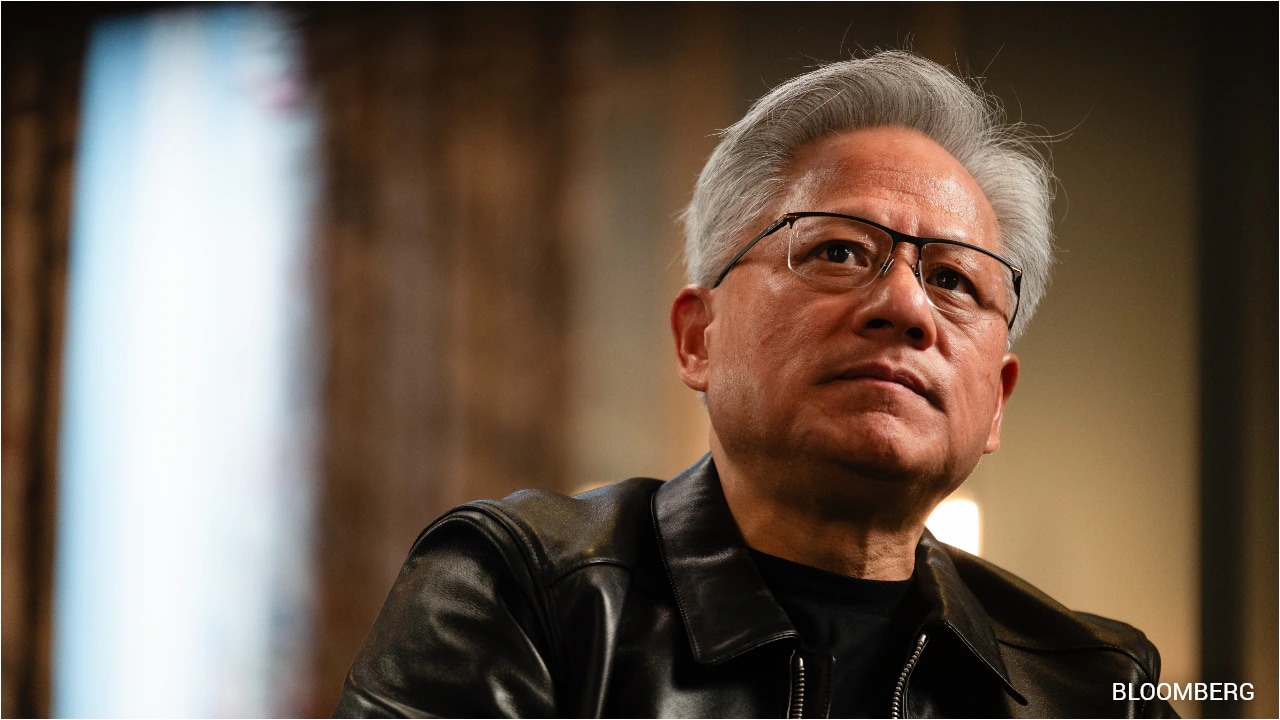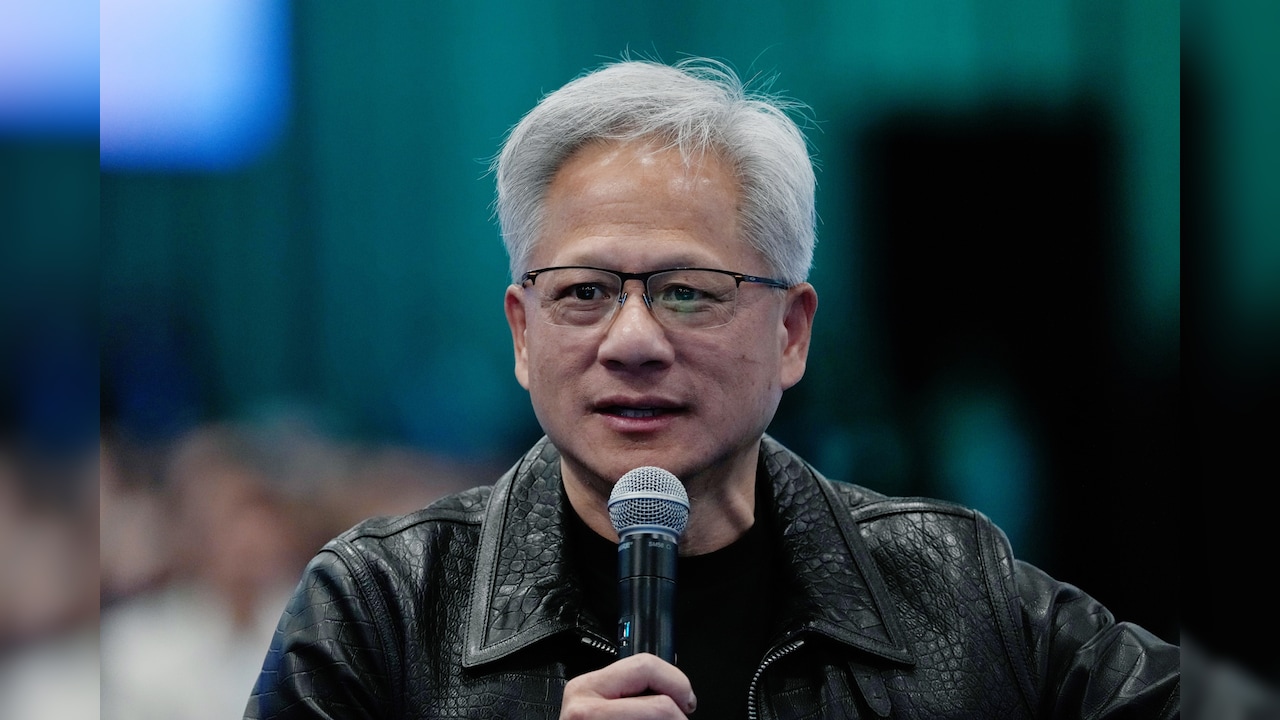
The tech press loves a good nostalgia trip. Every time geopolitics takes a sledgehammer to a Silicon Valley balance sheet, commentators dust off old soundbites from billionaire founders to prove how prophetic they were. Right now, the pundit class is passing around an old interview from Nvidia CEO Jensen Huang, where he warned that turning China into an enemy was "not the best answer" and cautioned that cutting off access to the Chinese market would inflict massive damage on American tech.
They are waving this clip around as an "I told you so" following the collapse of Nvidia’s China business and its forced retreat from the region. They want you to believe that Washington’s export controls were a self-inflicted wound, and that if politicians had just listened to Jensen, Nvidia would still be printing money in Beijing while maintaining a peaceful, interdependent tech ecosystem. For a more detailed analysis into this area, we suggest: this related article.
That narrative is pure, uncut corporate revisionism.
Jensen Huang wasn't offering a sage geopolitical warning in that interview. He was lobbying to protect a $17 billion revenue stream. And the hard reality of the semiconductor supply chain proves that his preferred strategy—keeping China hooked on American silicon—was never going to stop Beijing from trying to destroy Nvidia anyway. For broader background on the matter, extensive analysis can also be found on The Verge.
The Myth of the Benevolent Interdependence
To understand why the mainstream tech commentary on this is completely backwards, you have to look at the lazy consensus driving it. The prevailing wisdom in Silicon Valley for the last thirty years has been that trade equals peace, and dependency equals control. The theory goes like this: if Chinese tech giants like Tencent, Alibaba, and ByteDance build their entire artificial intelligence infrastructure on Nvidia’s CUDA software platform and Hopper or Blackwell architectures, they will never leave. The switching costs are too high. Therefore, selling to them keeps America in the driver’s seat.
I’ve spent two decades watching hardware companies fall for this exact trap. I’ve seen enterprise infrastructure firms blow hundreds of millions of dollars chasing state-backed contracts in emerging markets, convinced their proprietary software lock-in made them untouchable. They always miss the same fundamental truth: sovereign states do not optimize for quarterly shareholder value.
When a nation views a technology as an existential requirement for national security and military dominance, switching costs are irrelevant. They will burn billions of dollars in inefficient capital expenditure just to rip your hardware out of their data centers.
Beijing didn't wake up after the Bureau of Industry and Security (BIS) tightened export rules and suddenly decide to build domestic alternatives. The "Made in China 2025" initiative was published over a decade ago. The Chinese Communist Party explicitly stated its goal of achieving 70 percent self-sufficiency in core components and basic materials long before the first H100 export restriction was ever drafted.
Jensen Huang argued that denying China advanced chips would force them to build their own. The reality is that China was building their own anyway, using the cash and architectural insights they gained from buying American tech in the interim. By continuing to sell high-end compute to Beijing, Nvidia wasn't preventing a competitor from emerging; it was subsidizing the timeline until Huawei and domestic foundries like SMIC were ready to replace them.
What Everyone Gets Wrong About the Nvidia Exit
When people search for why Nvidia lost its footing in China, they usually ask the wrong question: How much money did US sanctions cost Nvidia?
That is the wrong framing. The real question is: How much longer would Nvidia have survived in China without them?
Let’s look at the mechanics of what actually happened on the ground. When the initial export controls hit, Nvidia didn't pack its bags and leave out of patriotic duty. They immediately engineered watered-down chips—the A800 and H800, and later the H20—specifically designed to slip just underneath the performance density thresholds set by the U.S. Department of Commerce.
Jensen tried to play both sides. He tried to satisfy Washington’s letter of the law while keeping the revenue spigot open in Shanghai and Shenzhen. And what happened?
- Washington caught on. Commerce Secretary Gina Raimondo explicitly called out the practice of redesigning chips just to skirt regulatory lines, leading to even tighter, more aggressive restrictions that closed the loopholes.
- Beijing turned on them anyway. Despite Nvidia bending over backward to design bespoke, compliant chips for the Chinese market, Chinese regulators began informally—and then formally—pressuring domestic tech giants to stop buying Nvidia’s nerfed silicon and instead purchase Huawei’s Ascend 910B and 910C processors.
- Antitrust became a weapon. Beijing launched regulatory probes into Nvidia’s past acquisitions, specifically targeting the 2020 Mellanox deal, using antitrust law as a geopolitical cudgel to punish the company for complying with U.S. law.
Nvidia got caught in a vise, and it wasn't because Washington turned China into an enemy. It was because Nvidia’s leadership assumed they could maintain a neutral, commercial Switzerland in the middle of a cold war over compute.
The Cold Hard Math of Compute Sovereignty
To see why Jensen’s "keep selling to them" strategy was doomed, you have to understand the actual architecture of modern AI bottlenecks. It isn't just about the raw FLOPS (floating-point operations per second) of a single GPU. It is about interconnect bandwidth and lithography.
When Nvidia sold stripped-down chips to China, they crippled the chip-to-chip interconnect speeds. In large language model training, if your GPUs can't talk to each other at blazing speeds via NVLink, your cluster efficiency falls off a cliff. You can't just throw ten times as many slow chips at a trillion-parameter model and expect linear scaling; the communication overhead eats your compute alive.
Chinese engineers aren't stupid. They realized they were paying top-tier prices for artificially handicapped hardware that couldn't scale efficiently for frontier models. At the exact same time, Huawei was offering the Ascend ecosystem. Is Huawei’s software stack (CANN) a nightmare compared to CUDA? Yes. Every AI engineer who has had to port PyTorch models onto Ascend hardware knows the pain of dealing with broken documentation, memory leaks, and inferior compiler optimization.
In a normal free market, Huawei wouldn't stand a chance against Nvidia. CUDA is a generational moat. Over four million developers write code specifically for Nvidia’s architecture.
- Nvidia’s Advantage: Mature compiler stack, unmatched tensor core efficiency, seamless multi-node scaling via InfiniBand and NVLink.
- Huawei’s Reality: Inferior yields at SMIC due to reliance on older Deep Ultraviolet (DUV) lithography with multi-patterning, clunky software tooling, and high power consumption per compute unit.
Yet, Huawei took massive market share from Nvidia in China anyway. Why? Because when the state mandates procurement quotas and subsidizes the electricity costs to offset inefficient chips, market economics cease to exist. Jensen Huang’s thesis relied on free-market gravity pulling Chinese developers back to CUDA. He underestimated the sheer weight of state-directed capital willing to endure years of terrible developer experience just to achieve technological independence.
The Downside of the Hardline Approach
Now, let’s be brutally honest about the flip side. Adopting a hawkish, decoupling stance isn't a magic bullet, and pretending there are no massive downsides to pushing Nvidia out of China would be dishonest.
By severing the cord completely, the U.S. government has effectively handed Huawei a captive, protected domestic market of 1.4 billion people and hundreds of billions of dollars in guaranteed R&D funding. Without Nvidia’s superior hardware available as an easy crutch, Chinese AI labs have been forced to become ruthlessly efficient.
Look at the algorithmic breakthroughs coming out of labs like DeepSeek. Because they were starved of top-tier H100 clusters, Chinese researchers couldn't just brute-force their way to better models by throwing massive compute at the problem like OpenAI or Meta. Instead, they had to innovate at the architectural level—pioneering aggressive Mixture-of-Experts (MoE) routing, Multi-Head Latent Attention, and low-bit quantization techniques to squeeze maximum intelligence out of inferior silicon.
There is a very real risk that by locking China out of the hardware market, Washington accidentally catalyzed a software and efficiency revolution in Beijing that will eventually undercut the massive capital expenditure moats of American hyperscalers. Furthermore, stripping Nvidia of 20 to 25 percent of its data center revenue permanently alters the capital available for its next-generation R&D, though the insatiable demand from Microsoft, Google, and Amazon has temporarily masked that pain.
How Hardware Leaders Must Actually Navigate Geopolitics
If you are an executive, an investor, or a founder building in deep tech, hardware, or AI infrastructure, the lesson from the Nvidia-China saga isn't that politicians ruined a good business. The lesson is that geopolitical risk is now an architectural constraint, just like thermal dissipation or memory bandwidth.
Stop treating export controls and trade restrictions as temporary weather patterns that you can wait out until the next administration takes office. The bipartisan consensus in Washington on containing Chinese compute capabilities is locked in. If your business model relies on regulatory arbitrage—designing products specifically to dance around the edges of compliance thresholds—you are building on a fault line.
Here is how you actually operate in a fractured global tech market:
- Price in Zero Revenue from Adversarial Markets: If you are modeling future growth or valuing a semiconductor, robotics, or biotech firm, assign a zero terminal value to revenue derived from geopolitical adversaries. Treat any current sales in those regions as temporary windfalls, never as recurring baseline revenue.
- Focus on Supply Chain Chokepoints, Not End Products: Nvidia tried to protect its market share at the end-product level. The real power lies further upstream. Companies like ASML, Tokyo Electron, and Synopsys hold the actual leverage. If you are building competitive moats, own the tooling, the materials, or the foundational IP that cannot be reverse-engineered through sheer brute-force labor.
- Abandon the "Neutral Vendor" Delusion: In dual-use technologies—and advanced AI is the ultimate dual-use technology—there is no such thing as a neutral commercial vendor. Trying to appease both Washington and Beijing will only ensure that both capitals view you as untrustworthy. Pick your ecosystem, align your supply chain with allied nations, and build your margins around sovereign defense and enterprise spending within that bloc.
The End of the Globalized Tech Fantasy
The pundits sharing Jensen Huang’s old interview are mourning the death of a world that hasn't existed since 2016. They want to believe that if smart engineers and visionary CEOs were just left alone by bureaucrats, global trade would smoothly harmonize competing superpowers.
It’s a comforting fairy tale for Silicon Valley. It absolves tech leaders of the responsibility of choosing sides while allowing them to cash checks from authoritarian regimes.
Jensen Huang is arguably the greatest semiconductor executive in history. He saw the accelerated computing revolution coming a decade before anyone else and bet his entire company on it. On the technology, he was a genius. On the geopolitics of China, he was dead wrong. You cannot sell weapons-grade compute to a rival superpower and expect them to thank you by remaining your customer forever. China didn't become an enemy because Washington restricted Nvidia’s chips; Nvidia lost China because Beijing was always going to burn the bridge the moment they learned how to build their own.