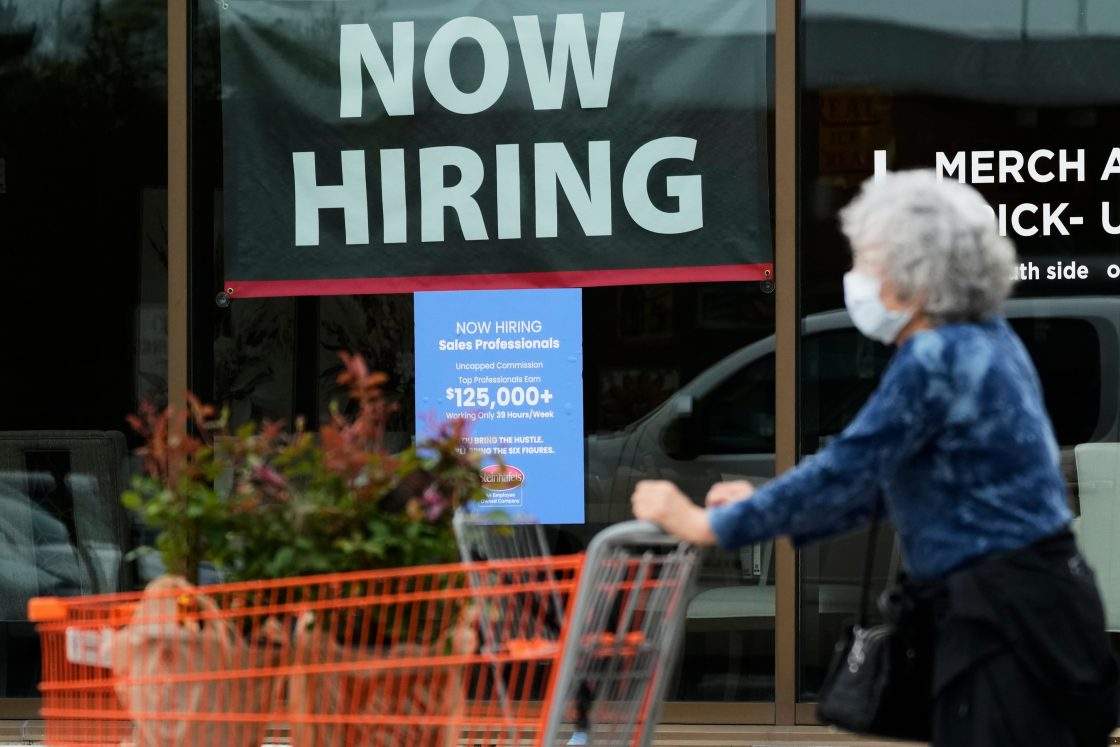
The financial press is having a collective meltdown over 57,000 jobs.
When the Bureau of Labor Statistics dropped the June employment report, the narrative was instantly written by talking heads who haven’t looked at a balance sheet in a decade. They saw the lowest monthly hiring gain in years, pointed at international supply chain hiccups and European energy volatility, and screamed that the sky was falling.
They want you to believe the American economic engine is sputtering. They want you to panic.
They are completely misreading the room.
The June slowdown is not a sign of economic decay. It is a sign of economic maturity. For the past five years, corporate America has been drunk on cheap capital and erratic over-hiring, treating headcount growth as a proxy for corporate health. That era is dead. What we are witnessing right now is an intentional, structural re-calibration that will save corporate margins and force a long-overdue return to actual productivity.
Stop mourning the missing jobs. The obsession with raw hiring numbers is an outdated twentieth-century metric that completely misses how modern, efficient businesses scale.
The Flaw of the Headcount Fetish
For decades, Wall Street and Washington agreed on a simple, flawed premise: high job growth equals a good economy, low job growth equals a bad economy.
This is lazy thinking. It treats labor as an output rather than an input.
When a company adds 10,000 employees to its payroll, the media cheers. But as an insider who has sat in executive boardrooms during hyper-growth cycles, I can tell you exactly what those 10,000 jobs usually represent: operational bloat, middle-management fiefdoms, and a complete failure to build scalable systems.
Imagine a scenario where a mid-sized software or logistics firm doubles its headcount over twenty-four months. On paper, it looks like an expansion. In reality, their revenue per employee plummets, their internal communication fractures, and their speed to market slows to a crawl. I have watched tech enterprises and consumer goods giants blow tens of millions of dollars hiring warm bodies just to signal "growth" to investors, only to spend the next two years quietly restructuring the mess away.
The June figure of 57,000 jobs added shows that the hiring binge has finally ended. Corporate leaders are refusing to build more bloat. Instead of solving operational bottlenecks by throwing cheap labor at them, companies are forced to do something they haven't done since before the pandemic: optimize.
The Math of Marginal Productivity
To understand why a slow hiring market is healthy, you have to look at marginal productivity. In economics, the law of diminishing marginal returns dictates that adding more of a variable input (labor) to a fixed input (capital and infrastructure) will eventually yield lower incremental output.
During the frantic hiring waves of the early 2020s, the marginal productivity of new hires in several key sectors dropped significantly. Companies were hiring ahead of demand, hoarding talent simply to keep them away from competitors.
- Labor Hoarding: Firms kept underutilized staff on payroll out of fear of future shortages.
- Margin Compression: Wage inflation paired with stagnant output eroded corporate profitability.
- Systemic Slack: The average output per hour worked in the nonfarm business sector stagnated because organizations became too heavy to move fast.
The 57,000 print tells us that the systemic slack is being squeezed out. Employers are demanding that their current teams operate efficiently before they open up new requisitions. This isn't a retreat; it's tactical consolidation.
Blaming Global Turmoil is a Corporate Cop-Out
The competitor articles are flooded with quotes from macro analysts blaming "global turmoil" for the June contraction. They cite international trade disputes, foreign regulatory shifts, and overseas conflicts as the primary drivers of domestic caution.
This is a convenient excuse for weak leadership.
Every time a CEO fails to hit their quarterly targets or decides to freeze hiring, they point across the ocean. It absolves them of responsibility. It sounds much better to tell shareholders that geopolitical friction forced your hand than to admit your core business model requires zero-rate interest environments to break even.
The reality is far more insular. The hiring slowdown is driven by domestic monetary realities and internal balance sheet corrections. The Federal Reserve's sustained pressure on interest rates has fundamentally changed the cost-benefit analysis of expanding human capital. When debt is expensive, human capital must deliver immediate, measurable ROI.
If global turmoil were the true culprit, we would see a uniform drop-off across all sectors exposed to international trade. We aren't seeing that. What we are seeing is a targeted freeze in sectors that over-indexed on speculative growth over the last few years—specifically tech, administrative support, and mid-tier professional services. Meanwhile, core infrastructure, specialized manufacturing, and essential healthcare sectors continue to hold steady.
The narrative of global chaos causing a domestic hiring freeze is a myth designed to hide a much harsher truth: American companies are finally paying the price for years of financial indiscipline.
Dismantling the Flawed Consensus
When the public looks at the June data, they ask the wrong questions because they are fed flawed premises by mainstream economic reporting. Let’s break down the most common anxieties and look at the brutal reality behind them.
Is the U.S. economy entering a structural recession?
No. A recession is a broad-based decline in economic activity across the economy, lasting more than a few months. A slowdown in hiring while GDP continues to expand and consumer spending remains steady is not a recession; it is a margin stabilization phase.
For years, companies absorbed rising wages by raising prices on consumers. That pricing power has hit a wall. Consumers are resisting further hikes. Because companies can no longer pass costs onto the public, they must control their internal expenses. The quickest way to do that is to stop adding to the wage bill.
This is a necessary market correction. If hiring continued at a clip of 250,000 jobs a month in this environment, it would force an unsustainable wage-price spiral that would guarantee a severe economic crash later. The June deceleration is the safety valve releasing pressure.
Why are qualified workers finding it harder to secure roles if the market is stable?
The hiring market has flipped from a volume game to a precision game.
During the boom, the interview process at many corporations was a joke. If you had a semi-relevant degree and a pulse, you could secure a remote role with a signing bonus. Today, employers have raised the bar. They are no longer hiring for general support; they are hiring for highly specific, high-yield skill sets.
This creates a mismatch. The market is flooded with generalist talent that was created during the years of corporate bloat. Those workers are struggling because the roles they used to fill are being automated, streamlined, or eliminated entirely. The jobs are still there, but they require technical expertise, direct revenue-generation capabilities, or specialized operational skills.
The Brutal Downside of the Lean Economy
Let’s be entirely transparent about the trade-offs of this contrarian view. A lean, productivity-focused economy is fantastic for corporate valuations, inflation control, and long-term economic stability. But for the individual worker, it is a meat grinder.
When companies stop hiring and focus on efficiency, the burden falls squarely on the existing workforce. The employees who survived the quiet cuts are now expected to produce double the output. The phrase "doing more with less" isn't just a corporate cliché anymore; it is the baseline operational expectation.
- Burnout Acceleration: Mid-level employees are managing larger portfolios with fewer resources.
- Stagnant Upward Mobility: With fewer new roles opening up, the corporate ladder freezes. Promotion cycles stretch from twelve months to three years.
- Reduced Leverage: The era of workers demanding four-day workweeks and esoteric lifestyle perks from their employers is officially over. Power has shifted completely back to the employer.
This is the dark side of economic optimization. It is painful, it is stressful, and it creates a highly competitive professional environment. But pretending that the solution is to force companies to hire people they don't need is an economic fantasy.
The End of the Headcount Era
The media will continue to watch the monthly BLS numbers with anxiety, waiting for a return to the massive hiring spikes of the past. They will keep tracking the 57,000 figure as if it were a fever chart of a dying patient.
They are looking at history through the wrong end of the telescope.
The companies that survive and dominate the next decade will not be the ones with the largest campuses or the biggest payrolls. They will be the lean, highly integrated operations that know how to generate maximum revenue per employee. They will be the organizations that view a hiring freeze not as a tragedy, but as an opportunity to build better infrastructure.
Stop evaluating the strength of the American economy by how many desks are filled. Start evaluating it by how much value is created by the people already sitting in them. The June hiring slowdown isn't a crisis. It's the moment corporate America finally grew up.