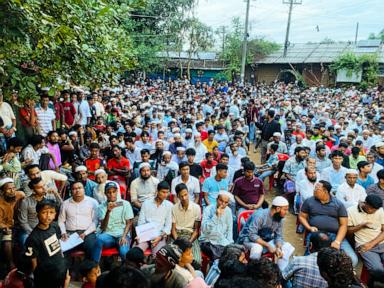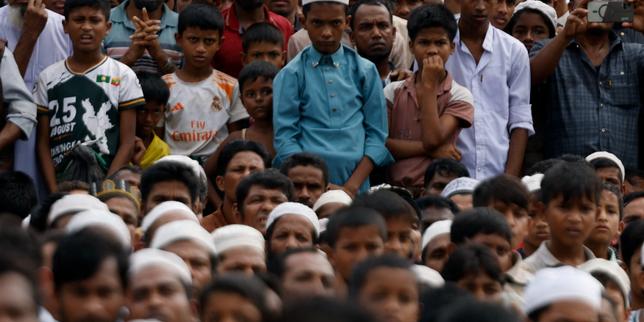
The International Court of Justice transformed international law from a mechanism of bilateral dispute resolution into a functional shield for stateless populations when it asserted jurisdiction over the Rohingya genocide case. By permitting The Gambia—a state with no direct territorial or demographic stake in Myanmar—to bring proceedings under the 1948 Genocide Convention, the Court severed the traditional link between direct material injury and legal standing. This operational shift alters the enforcement mechanics of international humanitarian treaties, establishing that obligations owed to the international community as a whole carry enforceable procedural teeth rather than mere declaratory weight.
The Structural Shift in Legal Standing
Standard international litigation operates on a strict model of reciprocity and direct harm. Under traditional diplomatic protection, State A can only sue State B if State B directly injured State A’s territory, property, or nationals. Because the Rohingya were stripped of citizenship by Myanmar’s 1982 Citizenship Law, they lacked a home state willing or legally positioned under conventional rules to represent them at The Hague. This created an accountability vacuum where a sovereign state could persecute an internal minority with near-total procedural impunity.
To dismantle this barrier, the Court operationalized the doctrine of erga omnes partes obligations. An obligation erga omnes partes is a legal commitment owed by a state party to all other states parties to a specific treaty simultaneously. In the context of the Genocide Convention, every signatory possesses a shared legal interest in ensuring that genocide is prevented and punished anywhere on earth, regardless of where the victims reside or whether the applicant state has suffered direct physical damage.
- The Traditional Standing Model: Requires proof of direct material, territorial, or national injury before a state can invoke the jurisdiction of an international tribunal.
- The Erga Omnes Partes Model: Substitutes direct injury with a shared legal interest in treaty compliance, allowing any signatory state to act as a trustee for the collective good.
- The Procedural Outcome: Eliminates the statelessness loophole by decoupling victim nationality from the right to initiate judicial proceedings.
When The Gambia filed its application in November 2019 on behalf of the Organisation of Islamic Cooperation, Myanmar objected precisely on the grounds that The Gambia was merely acting as a proxy for an international organization and lacked standing. In its July 2022 judgment on preliminary objections, the ICJ rejected Myanmar’s defense across almost every count. The Court confirmed that the common interest in compliance with the Genocide Convention implies that any state party can invoke the responsibility of another state party for an alleged breach, without needing to prove a special interest.
Deconstructing the Provisional Measures Mechanism
A critical failure in standard commentary on the ICJ is conflating the speed of interim rulings with the glacial pace of merits judgments. A final determination on whether state-sponsored genocide occurred takes anywhere from five to fifteen years due to the extreme evidentiary threshold required to prove specific genocidal intent (dolus specialis). Waiting a decade for a final verdict renders judicial intervention useless to a population facing active extermination or forced displacement.
The Court resolved this temporal mismatch through the aggressive deployment of provisional measures under Article 41 of its Statute. Provisional measures function as binding international injunctions designed to preserve the respective rights of the parties pending the final decision. To grant them, the Court does not need to prove that genocide has definitively occurred; it only needs to establish that the claims are plausible and that there is a real and imminent risk of irreparable prejudice to those rights.
In January 2020, the ICJ unanimously ordered Myanmar to take all measures within its power to prevent the commission of all acts within the scope of Article II of the Genocide Convention against the Rohingya. Crucially, the Court included the judges appointed by both parties—including Myanmar’s own ad hoc judge—in that unanimous vote. This unanimity stripped away the political narrative that the ruling was an imposition by Western powers or hostile regional rivals.
The operational components of the 2020 provisional measures order established four distinct compliance requirements for the Myanmar military and civilian apparatus:
- Cessation of Prohibited Acts: Immediate halt to killing, causing serious bodily or mental harm, and inflicting conditions of life calculated to bring about physical destruction.
- Military Command Accountability: Ensuring that the military and any irregular armed units directed or supported by it do not commit or conspire to commit genocide.
- Evidence Preservation: Preventing the destruction and ensuring the preservation of all evidence related to allegations of acts within the scope of the Convention.
- Periodic Reporting: Submitting a formal compliance report to the Court within four months, and every six months thereafter, until a final decision is rendered.
The reporting mandate represents a subtle institutional innovation. Historically, once the ICJ issued provisional measures, it lacked an internal monitoring mechanism to track compliance, leaving enforcement entirely to the political gridlock of the United Nations Security Council. By requiring recurring, confidential reports from Myanmar—to which The Gambia is permitted to respond—the Court created an ongoing administrative audit of state behavior inside the courtroom.
Evidentiary Thresholds and the Burden of Proof
Evaluating the long-term trajectory of the Rohingya case requires separating the procedural victories achieved so far from the steep evidentiary climb ahead. Proving genocide at the state-responsibility level is fundamentally different from prosecuting individual war criminals at the International Criminal Court. At the ICJ, the applicant state must demonstrate not merely that mass atrocities, ethnic cleansing, or crimes against humanity took place, but that the state acted with the specific intent to destroy, in whole or in part, a national, ethnical, racial, or religious group as such.
Under the precedent established in the 2007 Bosnian Genocide case, the ICJ requires that genocidal intent be the only reasonable inference that can be drawn from a pattern of conduct. If a respondent state can plausibly argue that its military operations were driven by counter-insurgency objectives, territorial control, or forced expulsion rather than physical destruction, the charge of genocide fails at the merits stage, even if massive loss of life occurred.
This high evidentiary bar creates a direct tension between the Court’s progressive stance on standing and its conservative approach to state attribution. The Gambia relies heavily on the factual findings of the United Nations Independent International Fact-Finding Mission on Myanmar, which documented systematic clearance operations, mass killings, sexual violence, and the burning of hundreds of villages in Rakhine State in 2016 and 2017. However, UN fact-finding reports operate on a "reasonable grounds to conclude" standard, whereas the ICJ demands "fully conclusive" evidence for charges of exceptional gravity.
The strategic intervention of third-party states—including Canada, Denmark, France, Germany, the Netherlands, the United Kingdom, and the Maldives—aims directly at this evidentiary bottleneck. By filing declarations of intervention under Article 63 of the ICJ Statute, these nations are not merely offering political solidarity; they are submitting formal legal arguments to lower or clarify the evidentiary threshold for proving genocidal intent. Specifically, the intervening states argue that the Court should evaluate sexual violence, forced displacement, and the destruction of cultural and religious infrastructure holistically as indicators of genocidal intent, rather than viewing them solely as byproducts of counter-insurgency campaigns.
The Geopolitical Cost Function of Judicial Intervention
When the ICJ exercises jurisdiction over an active conflict, it alters the cost-benefit calculus of the targeted regime, even in the absence of an international police force. Critics often dismiss ICJ rulings as toothless because Article 94 of the UN Charter places ultimate enforcement authority in the hands of the Security Council, where permanent members can deploy vetoes to shield allies. This critique misunderstands how international law exerts pressure on sovereign actors.
The real cost function of an adverse ICJ ruling operates through diplomatic, financial, and institutional friction rather than direct military coercion. Once the World Court validates the plausibility of genocide claims and rejects jurisdictional objections, three concrete consequences follow for the respondent state:
- Diplomatic Isolation and Legitimacy Erosion: Following the February 2021 military coup in Myanmar, the junta sought international recognition as the legitimate government of the state. The ongoing proceedings at The Hague forced the Court to navigate representation issues, ultimately allowing the military regime’s agents to appear while denying them the broader diplomatic validation they sought, keeping the junta tethered to ongoing scrutiny over atrocities committed by the exact same military leadership.
- Third-Party State Liability: Under Article I of the Genocide Convention, all signatory states have an affirmative duty to prevent genocide once they become aware of a serious risk that it may occur. An ICJ provisional measures order serves as formal, undeniable legal notice to the entire world that a serious risk exists. Consequently, any third-party state that continues to supply weapons, dual-use technology, or direct financial support to the Myanmar military risks incurring its own secondary legal responsibility for aiding and abetting treaty violations.
- Precedent Contagion: The legal architecture built in The Gambia v. Myanmar immediately became the blueprint for subsequent high-stakes litigation. South Africa utilized the exact same erga omnes partes framework in December 2023 to bring genocide charges against Israel regarding operations in Gaza, while Canada and the Netherlands deployed it against Syria under the Torture Convention. The ICJ’s willingness to hear The Gambia’s case permanently lowered the barrier to entry for public-interest litigation between states.
Institutional Limitations and the Risk of Judicial Overreach
A rigorous assessment of the ICJ’s posture must account for the structural vulnerabilities created by this expansion of judicial reach. While human rights advocates celebrate the Court’s courage in confronting state-sponsored atrocities, institutional practitioners recognize that expanding jurisdiction without commensurate enforcement power risks eroding the Court’s long-term authority.
The primary vulnerability lies in the compliance gap. The ICJ’s docket has expanded rapidly to include some of the most polarized geopolitical conflicts on the planet, including cases involving Ukraine and Russia, Armenia and Azerbaijan, South Africa and Israel, and Nicaragua and Germany. When the Court issues binding provisional measures that are openly ignored by respondent states—and uninforced by a paralyzed Security Council—the perceived efficacy of international adjudication suffers. In Myanmar, the military junta has continued systemic violence against ethnic minorities across the country while submitting confidential compliance reports whose contents remain shielded from public verification.
A second limitation involves procedural saturation. The ICJ consists of fifteen judges supported by a relatively small registry, designed originally to handle a handful of maritime boundary delimitation cases or treaty interpretation disputes each year. Handling massive, fact-intensive atrocity cases involving thousands of pages of witness testimony, satellite imagery, and dozens of third-party state interventions strains the Court’s institutional capacity. Multi-year delays between the filing of memorials, counter-memorials, replies, and rejoinders mean that justice remains largely retrospective for the immediate victims.
Finally, there is the risk of jurisdictional backlash. The ICJ’s authority rests entirely on state consent, expressed either through special agreements, optional clause declarations, or compromissory clauses embedded within multilateral treaties like the Genocide Convention. If sovereign states conclude that the Court is interpreting treaty clauses too expansively—transforming narrow dispute-resolution mechanisms into broad instruments of global governance—states may begin entering reservations to compromissory clauses in future treaties or withdrawing from existing jurisdictional commitments entirely.
Strategic Imperatives for International Legal Practitioners
The trajectory established by the ICJ in the Rohingya proceedings demands a fundamental recalibration of how states, international organizations, and legal strategists approach atrocity prevention. Relying on political bodies like the UN Security Council to halt mass atrocities has proven structurally obsolete due to great-power veto dynamics. Litigation at the World Court now represents the primary viable mechanism for establishing an authoritative, permanent legal record and triggering secondary compliance obligations among third-party states.
To maximize the operational impact of this legal pathway without triggering institutional collapse, intervening states and applicant coalitions must execute three specific maneuvers:
- Standardize Evidentiary Aggregation Prior to Filing: Applicant states should not rely solely on UN fact-finding reports to meet the ICJ’s high merits threshold. Coalitions must build parallel, court-ready evidentiary repositories—incorporating authenticated digital metadata, financial flow tracking, and military command-and-control intercepts—before initiating proceedings, compressing the timeline between provisional measures and merits hearings.
- Target Third-Party Supply Chains Using Article I: Rather than waiting years for a final judgment against the perpetrator state, legal strategists should leverage ICJ provisional measures orders immediately in domestic courts against corporations and third-party governments. Because an ICJ order establishes formal legal notice of a serious risk of genocide, it provides the exact predicate needed to block arms exports, freeze sovereign assets, and sever financial clearing mechanisms under domestic administrative law.
- Discipline Third-Party Interventions: States filing Article 63 interventions must coordinate their legal submissions to focus strictly on precise questions of treaty interpretation—such as the holistic assessment of genocidal intent—rather than turning the docket into a forum for political declarations. Overloading the Court with redundant interventions delays proceedings and dilutes the surgical precision required to win on the merits.
The International Court of Justice has demonstrated that international law possesses the structural capacity to pierce the veil of sovereignty when a state turns its apparatus against a stateless minority. Sustaining this shift requires moving beyond rhetorical praise for judicial courage and treating the Court’s rulings as actionable instruments of diplomatic, financial, and supply-chain enforcement.