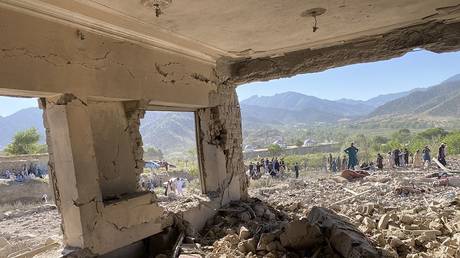
The cross-border drone strikes launched from Afghan territory into Pakistan mark a fundamental break in the geopolitical architecture of South Asia. For decades, Pakistan held the asymmetric upper hand in its dealings with Kabul, utilizing regional proxies to influence its western neighbor. That dynamic has shattered. The sudden deployment of unmanned aerial vehicles by a historically low-tech Afghan force demonstrates that cheap, weaponized commercial technology has leveled the playing field, presenting Islamabad with a security crisis that its conventional military doctrine is ill-equipped to handle.
This escalation is not a temporary border skirmish. It represents a deliberate strategic pivot by Kabul, aimed directly at Pakistan’s internal security vulnerabilities.
The Technological Equalizer in the Hindu Kush
For years, military analysts assumed that cross-border aerial operations in the region were the exclusive domain of major global powers. The reality on the ground has caught up with that assumption. Kabul’s new strategy relies heavily on modified commercial platforms and medium-range surveillance hardware left behind during the foreign troop withdrawals, alongside off-the-shelf components acquired through open black markets.
These are not multi-million-dollar systems. They are low-cost, low-altitude aircraft modified to carry precision ordnance or function as loitering munitions.
The math favors the attacker. A drone assembled for a few thousand dollars can bypass traditional radar networks designed for high-altitude jet fighters. When these assets fly through the deep valleys of the Durand Line, they disappear from Pakistani air defense grids entirely. To counter them, Islamabad must deploy electronic warfare units or expensive surface-to-air missile systems, creating an unsustainable economic equation for a state already grappling with severe financial instability.
The Intelligence Failure and Border Vulnerabilities
The strikes targeted specific infrastructure and alleged militant safe houses within Pakistan's northwestern border regions. The precision of these hits suggests a deep failure of Pakistani counter-intelligence. It reveals that Kabul has established a functional human intelligence network inside Pakistani territory, capable of providing real-time targeting telemetry.
Pakistan's traditional defense posture has always focused on its eastern border. The western frontier was treated as a strategic depth zone, managed through tribal alliances and paramilitary forces like the Frontier Corps. By shifting the conflict to the air, Kabul has exposed the structural rigidity of this defense model.
The political fallout inside Islamabad is tangible. Military leadership faces intense scrutiny over how a heavily sanctioned, economically isolated administration in Kabul managed to organize, equip, and execute a synchronized cross-border aerial campaign without detection.
The Myth of Strategic Depth
The concept of strategic depth long dictated Pakistan's policy toward Afghanistan. The goal was to ensure a friendly government in Kabul to avoid a two-front war scenario involving India. These recent strikes prove that this policy has yielded the exact opposite result.
Instead of a pliant neighbor, Pakistan now faces an assertive, independent actor willing to project power across the internationally recognized border. The Durand Line, long a source of diplomatic friction, has transformed from a porous migration route into an active, unpredictable front.
Squeezing the Economic Corridors
The targets selected in these operations indicate a broader economic motive. By destabilizing the border provinces, the strikes directly threaten the security of regional trade infrastructure. Foreign investments, particularly transport networks linking Central Asia to the Arabian Sea, rely entirely on regional predictability.
No international investor will fund infrastructure that sits within the flight path of unguided or semi-guided strike drones. Kabul is aware of this leverage. By demonstrating that it can disrupt local transit nodes at will, the Afghan administration is demanding a seat at the regional economic table on its own terms, rather than accepting terms dictated by Islamabad.
The Regional Alignment Shift
This conflict does not exist in a vacuum. Neighboring states are watching the breakdown of Pak-Afghan relations with growing alarm. Regional powers that once relied on Pakistan to act as the primary interlocutor for Afghan affairs are now dealing with Kabul directly, bypassing Islamabad entirely.
- China requires absolute stability along its western trade routes and is deeply concerned about any spillover of militancy that could target its regional projects.
- Iran views the escalation as an unpredictable variable on its eastern flank, forcing a recalculation of its own border security protocols.
- Central Asian Republics are reassessing their planned energy corridors, which suddenly look far more vulnerable than they did a year ago.
This isolation leaves Pakistan with limited diplomatic options. Retaliating with conventional air strikes risks a full-scale conventional war that Islamabad cannot afford, while remaining passive invites further incursions.
The New Reality of Asymmetric Deterrence
The strategic calculus has permanently changed. Kabul has proven that a nation does not need a modern air force, a massive defense budget, or international recognition to challenge a nuclear-armed neighbor. It only needs the willingness to exploit cheap technology and the tactical patience to strike where the opponent is softest. Islamabad's move is no longer about projecting influence abroad, but figuring out how to secure its own skies against an enemy that refuses to play by the old rules of engagement.