The lazy consensus in modern cultural commentary relies on a predictable script. Take a high-profile institution, inject a dynastic surname, sprinkle in a political dispute over executive influence, and frame the entire conflict as a noble defense of heritage against an authoritarian takeover.
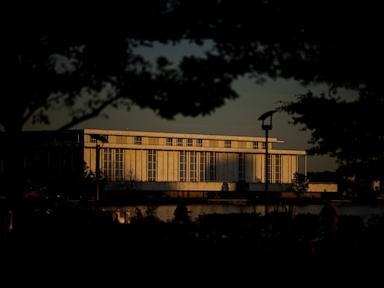
That is the exact narrative dominating the recent media cycle regarding the symbolic tug-of-war over the Kennedy Center. Headlines scream about political figures holding national landmarks hostage, turning an architectural monument into a partisan pawn. It makes for excellent cable news fodder and effortless outrage bait.
It is also completely missing the point.
Strip away the political theater and the hereditary grievances, and you find a much more pragmatic, unromantic reality. The fight over cultural naming rights and institutional control has never been about preserving artistic integrity or honoring a family legacy. It is about real estate, brand equity, and the monetization of prestige.
I have watched organizations burn millions trying to buy association with heritage brands, assuming that historical goodwill automatically translates into operational relevance. It rarely does. When a cultural institution becomes a battlefield for political posturing, the underlying financial and structural mechanics are ignored by design. The public gets distracted by the shouting match over who sits on the board while the core economic model of these institutions quietly rots.
Consider the baseline mechanics of how these landmarks operate. They require staggering capital injections just to keep the lights on and the acoustics tuned. When public funding shrinks or shifts, private interests step in. These entities do not write blank checks out of pure civic devotion. They extract value through naming conventions, board appointments, and narrative alignment.
The Kennedy family lineage in American politics functions much like a corporate trust. The brand represents a specific era of mid-century aesthetic optimism, tragedy, and political mythology. Protecting that brand from being co-opted by a rival political faction is standard defensive positioning. But framing this protection as a defense of high culture is a category error.
Let us look at the structural reality. Cultural centers dependent on federal subsidies and political appointments are inherently unstable. They are vulnerable to whatever ideological wind happens to be blowing through Washington. Pretending that a venue named after a martyred president was ever an apolitical temple of pure arts is historical revisionism of the highest order. The institution was born out of political compromise and federal mandate. Its entire existence is political.
When critics argue that political leverage is ruining the sanctity of the space, they assume a sanctity that never existed. Arts funding in the capital has always been a transaction between political actors seeking cultural legacy and artists seeking state sanction. The current dispute over naming rights and administrative control is simply the latest iteration of this dynamic.
The counter-intuitive truth is that shaking up these calcified institutional boards might actually force a necessary reckoning. For decades, legacy cultural centers have coasted on their names, churning out predictable programming for elite audiences while alienating the broader public. They suffer from administrative bloat and a desperate refusal to adapt to modern consumption habits.
If political pressure forces a structural audit, or if the fight exposes the fragility of these bureaucratic boards, that is a net positive for the arts, even if the motives of the combatants are entirely self-serving. Institutions that cannot survive without clinging to a shrinking pool of political patrons deserve to be disrupted.
The mistake is believing that the name on the facade dictates the quality of the work inside. It does not. Great art and meaningful cultural engagement happen in spite of administrative interference, never because of it.
Stop worrying about who is holding the deed to the cultural narrative. The real story is that the traditional model of state-sponsored artistic monuments is obsolete.
Let the politicians fight over the plaque on the wall. The future belongs to institutions that do not need a famous surname to stay relevant.