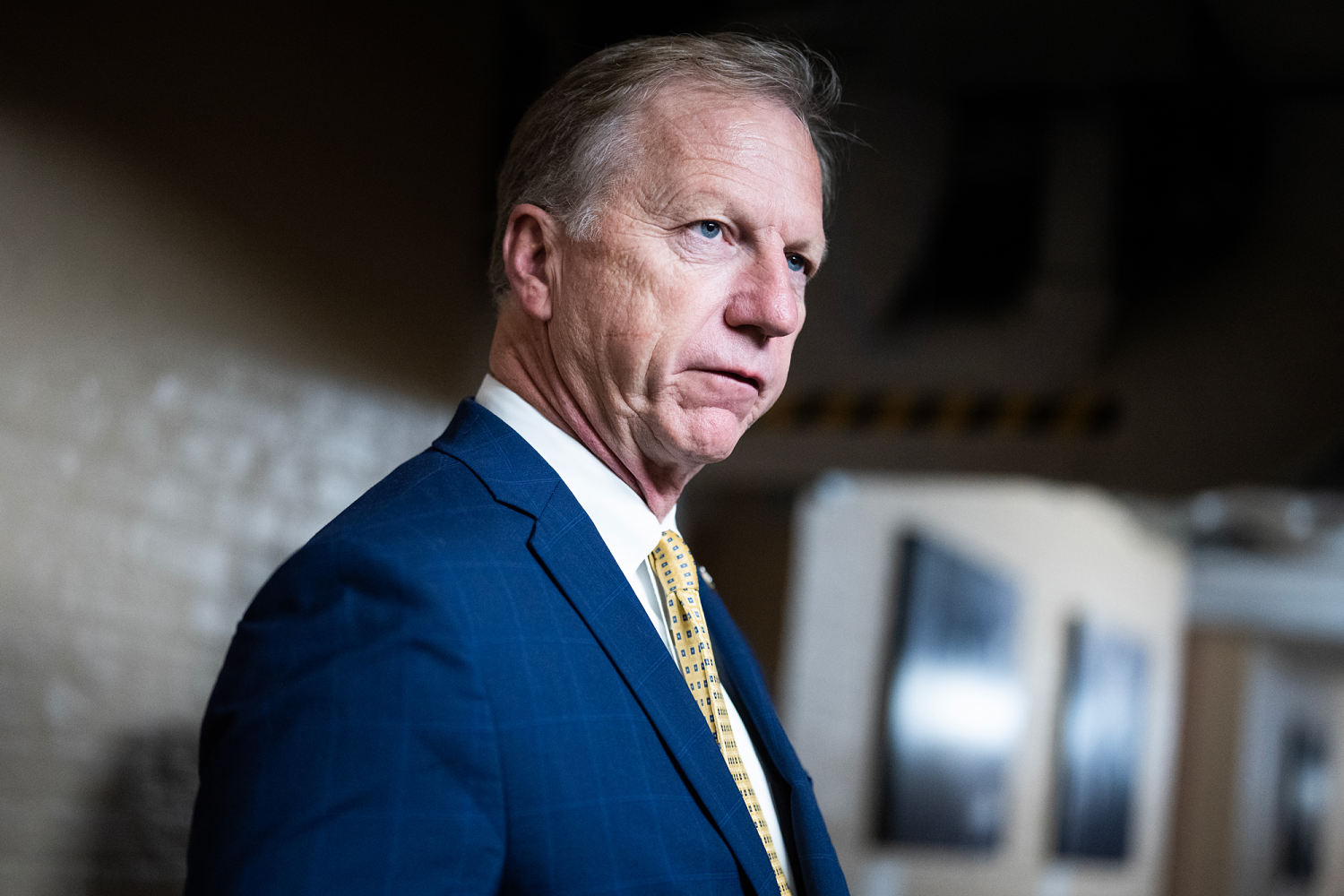
The air inside the Oklahoma Republican Party headquarters in Oklahoma City tasted of stale coffee, hairspray, and the electric tension that only accumulates when a career hangs in the balance. It was Tuesday night, June 16, 2026. Outside, the early summer heat was heavy, the kind that forces you to breathe slow. Inside, Kevin Hern stood before a thicket of microphones, his eyes reflecting the harsh glare of television lights.
He had just won. Not just a minor victory, but a resounding declaration.
With more than 69 percent of the vote, Hern, a four-term congressman from Tulsa, had crushed a five-person field to secure the GOP nomination for the United States Senate. By crossing the 50 percent threshold so decisively, he bypassed the grueling ordeal of an August runoff. He had cleared the board.
The wires reported the news with the typical clinical brevity of modern political journalism. They talked about data, percentages, and vacant seats. But to understand what happened in Oklahoma, you have to look past the spreadsheets. You have to look at the invisible lines of power running from a golf resort in Palm Beach straight into the heart of the American plains. This was not just an election. It was a demonstration of absolute geopolitical leverage.
The Quiet Power of the Nod
Consider how this race began. The seat was open because Markwayne Mullin had been summoned to Washington for a different purpose, tapped by President Donald Trump to head the Department of Homeland Security after the sudden departure of Kristi Noem. It left a vacuum. In Oklahoma, a Senate vacancy is not just a job opening; it is a rare piece of political real estate that usually guarantees a lifetime lease.
In a different era, an open Senate seat in a deeply conservative state would trigger a political civil war. Ambitious young representatives, wealthy businessmen, and local icons would lock horns in a brutal, multi-million-dollar knife fight lasting through the heat of August.
This time, the fight never happened.
The primary reason for the quiet fields of Oklahoma lies in a single endorsement. Trump backed Hern early. He backed him before the Senate had even confirmed Mullin to his new cabinet post. That blessing acted like a sudden freeze in a turbulent river. It chilled the ambitions of anyone else thinking about jumping into the water. Potential heavyweights looked at the polling, looked at the endorsement, and chose to stay on the sidelines.
We see this pattern across the country, but in Oklahoma, the reality is stark. Trump won this state by thirty-five points against Kamala Harris. His word here is not just influential; it is gravitational. For Hern’s opponents—men like Gary Ty England, Sean Buckner, Brian Ragain, and Nick Hankins—the race was an uphill climb against a mountain that refused to move. England managed 13.6 percent. The rest finished in the single digits.
Power, in its purest form, is the ability to win a fight before the first punch is thrown. By securing the top endorsement early, Hern had effectively won the seat months before voters touched a ballot.
From the Grill to the Capitol
Hern is an interesting vessel for this brand of populist power. He does not look or sound like a traditional backslapping Southern politician. He speaks with the precise, slightly detached cadence of an aerospace engineer, which is exactly what he used to be.
But engineers do not often make it to the Senate. Businessmen do.
Decades ago, Hern shifted his focus from tracking flight paths to tracking profit margins. He bought a single McDonald's franchise in the Tulsa area. Then another. Then five more. Eventually, his corporate empire expanded to 24 restaurants. Anyone who has ever managed a single fast-food kitchen understands the brutal reality of that life: razor-thin margins, supply lines that snap if a truck is an hour late, and a workforce that rotates constantly. It teaches you a specific, cold efficiency.
When Hern arrived in the U.S. House of Representatives after a 2018 special election, he brought that franchise-owner mentality to the floor. He became a darling of fiscal watchdogs like the Club for Growth, earning a 92 percent lifetime rating. He voted against raising the debt limit. He fought omnibus spending bills. He spoke about federal spending the way a restaurant owner talks about kitchen waste—as a systemic failure that threatens the survival of the enterprise.
To his supporters, this is the exact medicine Washington requires. They see a self-made man who understands the cost of a box of burger wrappers trying to balance the ledger of an empire. To his detractors, it is a rigid, corporate approach to a complex human society, a philosophy that prioritizes the balance sheet over the safety net.
But on Tuesday night, the balance sheet was the only thing that mattered. The investment paid off.
The Autumn Horizon
The road ahead for Hern is remarkably clear. Oklahoma has not elected a Democrat to the U.S. Senate since 1990. In the current political climate, the Republican primary is the actual election; the November vote is largely a formality. Barring an unprecedented geopolitical shift, Hern will trade his House office for a seat in the upper chamber.
But the real drama in Oklahoma is not settled. The true test of the political machinery that lifted Hern will come later this summer in the race to succeed outgoing Governor Kevin Stitt. That primary is a crowded, messy affair, lacking the clean clarity of the Senate race. Trump dipped his toes into that contest late, backing former State Senator Mike Mazzei in a field crowded with heavy hitters.
As Hern stepped away from the podium on Tuesday night, shaking hands with staff and posing for photos with supporters, the immediate future looked bright for his brand of politics. He had survived the crucible. He had executed the plan with the engineering precision of his youth.
Yet, as the lights flickered off in the headquarters and the crowd spilled out into the warm Oklahoma night, the larger question remained unanswered. The state had once again affirmed its loyalty to a singular political figure in Florida. But when you outsource your political choices to a kingmaker, you become entirely dependent on the king. For now, Oklahoma is comfortable with that bargain. The franchise king has his promotion, and the empire marches on.