A 14-year-old girl goes missing from Sioux Falls, South Dakota. Five days later, her body turns up in a ditch outside Brookings, an hour's drive north. It's the kind of local tragedy that breaks a community. But this specific nightmare quickly spiraled into a national political flashpoint.
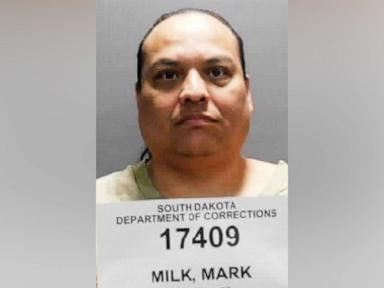
The primary suspect is the girl's own uncle, Mark Milk. He didn't just happen to be out on the streets. He was free because former South Dakota Governor Kristi Noem signed off on his release, cutting short a life sentence for a previous killing.
When politicians play God with prison sentences, they gamble with real lives. Sometimes, the house loses. This time, the cost of that lost wager was paid by a child named McKenna Wendel.
The Tragic Turn in the McKenna Wendel Case
McKenna Wendel was a 14-year-old member of the Rosebud Sioux Tribe. Her family remembers her as a girl who loved animals, possessed a vibrant personality, and loved dancing to the traditional thrum of native drums at regional powwows. She disappeared on March 13. By March 19, police found her body dumped in a rural area.
Federal prosecutors stepped in with a heavy hammer. They unsealed an indictment charging 51-year-old Mark Milk with five federal counts. The specific charges paint an ugly picture. Prosecutors allege Milk transported a minor across state lines with the intent to engage in criminal sexual activity. They also allege he provided the cocaine that directly caused her death via a drug overdose.
Another man, 38-year-old Jon Rogness, faces charges for conspiracy and acting as an accessory. Prosecutors say Rogness tried to help Milk cover up the crime scene and evade the police.
Federal investigators aren't holding back on their descriptions. Gene Kowel, the FBI Special Agent in Charge of the Omaha Field Office, called the details heart-wrenching and horrific.
Milk was already locked up when the murder charges came down. Authorities picked him up on March 17, just four days after the teen went missing, on separate charges of drunk driving and felony police eluding. Local tongues were wagging immediately. Everyone suspected a connection, but prosecutors spent over two months locked in grand jury proceedings, building an ironclad case before dropping the hammer.
A Decades Old Crime and a Controversial Signature
To understand how Mark Milk was walking free in Sioux Falls to begin with, you have to look back to 1993. Milk was a 19-year-old kid when he got caught up in a series of violent altercations in Winner, South Dakota. Those fights ended with Milk stabbing a man named Shawn Peneaux to death.
The state didn't show mercy back then. A judge handed Milk a flat life sentence for first-degree manslaughter. In South Dakota, "life" means exactly that. There is no parole option for life terms. Barring a miracle, Milk was supposed to die behind bars.
That miracle arrived in February 2023. Governor Kristi Noem used her absolute executive authority to commute Milk's life sentence. He walked out of state prison after serving nearly 30 years.
Why did she do it? We don't know. The state of South Dakota seals all executive clemency files. South Dakota Attorney General Marty Jackley explicitly told reporters that the choice belonged solely to Noem. He noted that law enforcement agencies routinely oppose these types of releases, but confessed he couldn't even review the background paperwork himself because the documentation is locked down tight under state law.
The Fallout of Political Clemency
Executive clemency is a necessary safety valve in the American legal system. Judges make mistakes. Mandatory minimum sentences can twist justice into cruelty. Governors and presidents need the power to correct systemic errors.
But the process is heavily prone to political backscratching or optics-driven decisions. When a commuted violent offender commits another horrific crime, it leaves a permanent stain on the legacy of the politician who signed the paper.
Noem served as governor from 2019 to 2025, moved briefly into a messy stint as Homeland Security Secretary, and eventually took an advisory role at a Canadian mining firm. Her political career has faced heavy turbulence, but this case connects her directly to a local policy failure that ended in a teenager's death.
If you want to track how cases like this alter public policy, watch the state legislatures. Every time an act of clemency goes disastrously wrong, lawmakers react by stripping power away from the executive branch or imposing strict notification laws.
The public deserves complete transparency regarding who gets released from prison and why. Sealed files shield politicians from accountability while leaving communities vulnerable to the consequences of bad penology. Demand that your state representatives introduce legislation to unseal executive clemency records, ensuring that when a leader overrides a judge's sentence, they do it out in the open where everyone can see the data.