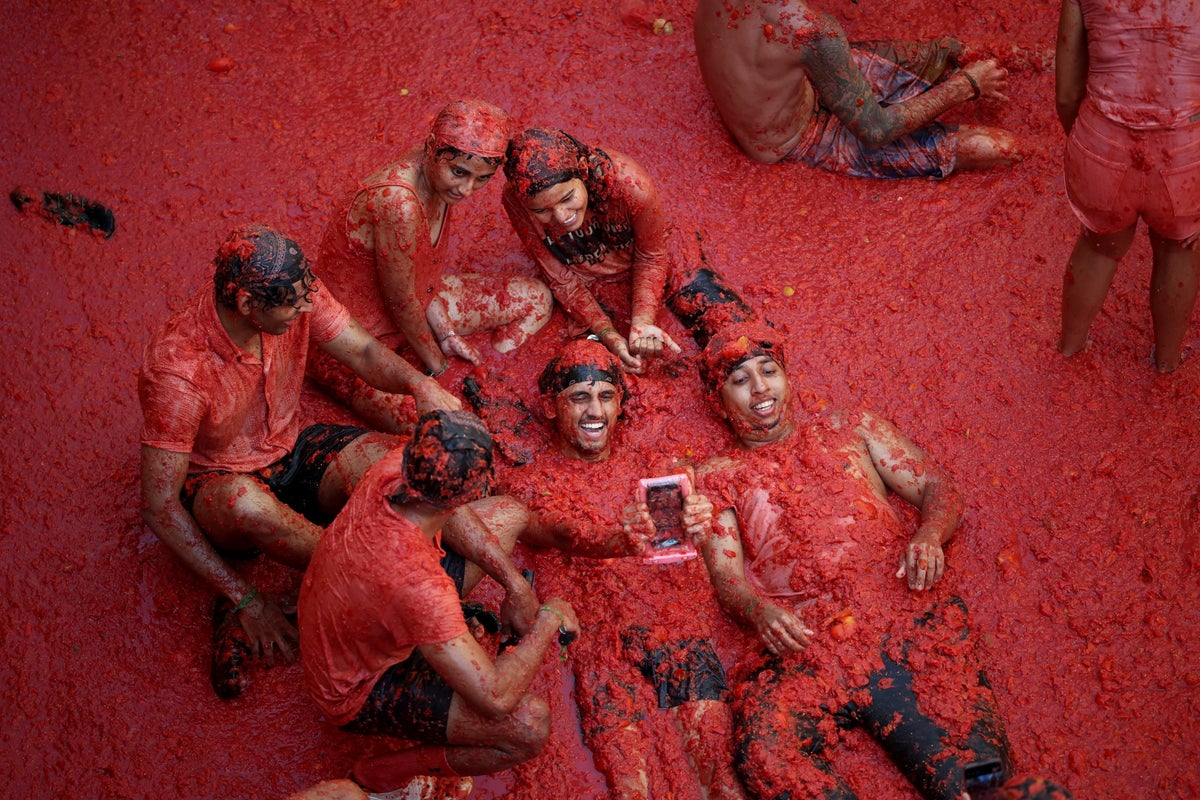
You stand in the narrow, baking-hot streets of Buñol, surrounded by twenty thousand people sweating through their clothes, and you realize something terrifying. There is no escape. A massive truck rolls down the cobblestones, piled high with over one hundred metric tons of overripe, squishy red tomatoes. Someone next to you grabs a massive, rotting fruit, squishes it in their bare hands, and lets out a wild yell. Within seconds, a wall of crimson pulp hits you squarely in the chest. Welcome to La Tomatina.
Most people see a few viral photos on social media and think it is just a quirky food fight. It is so much more than that. It is an hour of absolute, unadulterated chaos that tests your physical limits, stains your skin for days, and requires way more tactical preparation than you would ever guess. If you show up in nice sneakers or forget to protect your eyes, you are going to have a genuinely miserable hour.
The Surprising Origin of the World's Biggest Food Fight
History books will tell you this festival started in August 1945 during a local parade of the Giants and Big-heads figures. A scuffle broke out among local youths, someone knocked over a vegetable stall belonging to a local vendor, and the crowd started pelting each other with tomatoes until the local police broke it up. Simple enough, right?
Except the local government tried to ban it the following years because they thought it was ridiculous. The people of Buñol refused to let it die. They staged peaceful protests, got arrested, and brought tomatoes in their pockets just to defy the rules. By the late nineteen fifties, the town council finally gave up and made it official.
What started as an accidental street brawl evolved into a cultural phenomenon. It is a masterclass in community stubbornness. The residents of Buñol protect this tradition fiercely. They know it puts their tiny Valencian town on the map every single August.
How the Chaos Actually Unfolds
You need to know the schedule because things move fast. The morning starts with the palo jabón. Someone greases up a tall wooden pole with a huge ham hanging right at the top. The crowd forms a human pyramid, slipping and sliding everywhere, trying to climb it. The official tomato war cannot start until someone manages to grab that ham. It usually takes hours of hilarious failure.
Once the ham comes down, a loud firecracker goes off at around eleven in the morning. That is your cue.
The dump trucks rumble in. They crawl through the Carrer del Cid and Plaza del Pueblo, tipping their loads. Thousands of people swarm the trucks immediately. You are wading through a red river that quickly reaches ankle-deep.
There are strict rules you have to follow, even in a riot:
- You must squish your tomatoes before throwing them so you do not break someone's nose.
- You are only allowed to throw tomatoes and nothing else.
- You must stop throwing the exact second the second rocket goes off.
Breaking these rules gets you kicked out fast. The local police do not mess around.
Survival Tactics for First Timers
I learned the hard way that regular clothes will not survive this. You need to wear a white shirt that you are willing to throw straight into the trash can the minute you walk out of the zone. Closed-toe shoes are mandatory unless you want your toes crushed by twenty thousand pairs of stamping feet. Trust me on this.
Goggles are not nerdy. They are essential gear. Tomato acid mixed with sweat burns your eyes like liquid fire. If you wear prescription glasses or contact lenses, switch to swim goggles or ditch them entirely. Leave your phone, wallet, and passport locked securely in your hotel or a locker. Waterproof pouches leak. Do not risk it.
Protecting Your Gear
- Secure your action camera with a heavy-duty chest harness if you must film.
- Wrap your hotel key in plastic and tuck it deep inside your swimsuit pocket.
- Wear old clothes that cover your skin to prevent scrapes against rough stone walls.
The Cleanup Operation
You might wonder what happens to a town buried under a hundred and forty metric tons of acidic mush. The scale of the post-party cleanup shocks most first-time visitors.
Fire trucks roll into the streets almost immediately after the second rocket fires at noon. They pump high-pressure water straight from the Roman aqueducts nearby. The acidity of the tomatoes actually leaves the cobblestone streets remarkably clean and smelling intensely of agriculture. Locals open up their garden hoses and spray down tourists who are still dripping in pink sludge. You wander down to the Buñol river, rinse off as best you can, and stagger toward the train station smelling like a walking marinara sauce.
Is It Actually Worth the Hype?
Yes, but only if you drop your expectations of comfort. It is hot, it is crowded, and you will swallow accidental mouthfuls of salty tomato juice. You will lose shoes in the red mud. You will bump into strangers from Tokyo, New York, and Sydney who are laughing hysterically while covered head-to-toe in pulp.
It strips away all your social filters. When everyone looks equally ridiculous, nobody cares.
Book your transport ticket well in advance because the trains from Valencia sell out weeks before the event. Grab a cheap pair of goggles, buy an old white t-shirt at a thrift store, and dive right into the red tide.