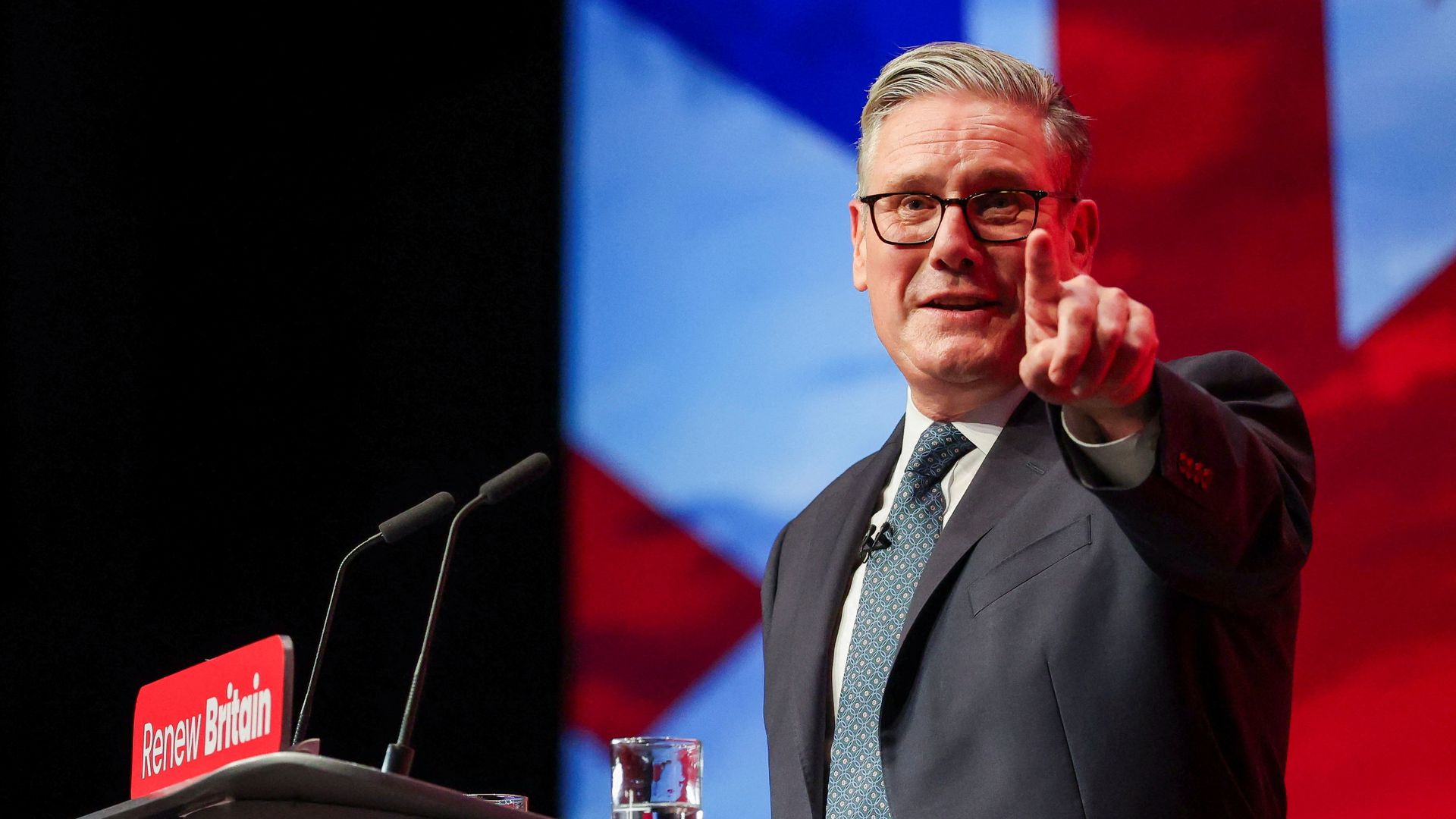
Keir Starmer is discovering that a landslide victory provides a mandate for the country but offers no immunity from his own backbenchers. The ideological truce that held during the general election campaign has evaporated, replaced by a coordinated "major reset" demand from the Labour left. This isn't a mere collection of disgruntled outliers. It is a calculated, multi-pronged challenge to the Treasury’s fiscal conservatism, led by a coalition of trade unions, campaign groups, and veteran MPs who believe the government is squandering its historic opportunity to fundamentally reshape the British economy.
The tension centers on a singular, uncomfortable reality. While Starmer and Chancellor Rachel Reeves have staked their reputation on "economic stability," the left of the party views this as a polite euphemism for managed decline. They are no longer asking for incremental shifts in policy. They are demanding a total departure from the fiscal rules that they argue have kept the UK in a cycle of stagnant wages and crumbling public infrastructure.
The Architecture of the Revolt
This latest surge in internal opposition is different from the scattered rebellions of the past decade. It is professionalized. The "reset" call is anchored by a unified front involving the Socialist Campaign Group (SCG) and major affiliate unions like Unite. Their leverage isn't just rhetorical; it's structural. By aligning their demands, they are forcing the leadership to choose between the approval of the City of London and the continued goodwill of the labor movement that funds the party.
At the heart of the friction is the two-child benefit cap. To the leadership, it is a non-negotiable line in the sand to prove fiscal discipline. To the left, it is a moral stain that undermines the very purpose of a Labour government. This specific policy has become the proxy battleground for a much larger war over whether the state should be an active participant in reducing inequality or a passive manager of existing market forces.
The strategy being deployed is one of attrition. By constantly highlighting the gap between Labour’s founding principles and the current government’s pragmatic caution, the rebels hope to peel away the "soft left" of the party—those MPs who are not career radicals but are increasingly spooked by the anger in their own constituencies regarding the cost of living.
The Ghost of Austerity
Rachel Reeves has repeatedly stated that there is "no money left," a phrase that triggers visceral reactions from those who remember the 2010 coalition government. The left’s counter-argument is intellectually grounded in modern monetary realities. They point out that a sovereign government with its own currency and a central bank has significantly more room to maneuver than a household budget would allow.
The "major reset" being demanded involves several key pillars that the current Cabinet considers radioactive:
- Wealth Taxes: A targeted levy on the wealthiest 1% to fund a massive injection of capital into the National Health Service.
- Public Ownership: Beyond the modest plans for Great British Energy, the left wants a full-scale return of water and rail to the public sector to end dividend outflows to private shareholders.
- The End of Private Finance Initiatives: A total ban on the hidden debt mechanisms that have plagued hospital and school budgets for decades.
These aren't just wish lists. They are presented as the only viable way to prevent a populist right-wing surge at the next election. The argument is simple: if Labour fails to deliver a tangible improvement in the standard of living, the electorate will look for more radical, potentially more dangerous, alternatives.
The Union Power Play
The role of the trade unions in this "reset" movement cannot be overstated. Sharon Graham of Unite has been particularly vocal, moving away from the "blind loyalty" of previous union leadership styles. Her focus is on "the rate for the job" and the protection of industrial hubs. When the government refuses to intervene in plant closures or fails to match inflation with public sector pay deals, the unions see it as a betrayal of the basic contract between the party and the workers.
This creates a logistical nightmare for Starmer. Unlike rebellious backbenchers who can be stripped of the whip, the unions represent millions of members and a significant portion of the party’s institutional memory and financial muscle. If the unions decide to decouple their support from the leadership, the grassroots infrastructure of the Labour Party could wither before the mid-term elections even arrive.
The Fiscal Rules Trap
The Treasury’s current fiscal rules are designed to "get debt falling" as a share of GDP within five years. Critics on the left argue these rules are arbitrary and self-defeating. They point to the "investment gap" between the UK and its G7 peers. When the government refuses to borrow to invest in green technology or social housing, it isn't being "responsible." It is ensuring that the UK remains a low-growth, high-tax economy because the foundations of future productivity are never laid.
A Narrowing Path for the Leadership
Starmer’s response has been to double down on the "change" mantra while offering very little in the way of specific policy shifts that would appease the left. The leadership's gamble is that the left has nowhere else to go. With the Conservative Party in a state of flux and the Liberal Democrats occupying the centrist ground, the Labour leadership believes it can ignore its own internal critics without facing a credible electoral threat from the flank.
This might be a miscalculation. The rise of independent candidates in the last election and the growing influence of the Green Party in traditional Labour heartlands suggest that the "nowhere else to go" theory is dying. The electorate is increasingly willing to punish a government that it perceives as being indistinguishable from its predecessor.
The "major reset" isn't just a challenge to Starmer’s authority. It is a challenge to the entire project of "Starmism"—a project that sought to win power by making the party as small a target as possible. Now that power has been achieved, the target has naturally become much larger. The internal critics are essentially asking: "You won. Now, what are you actually going to do with it?"
The Coming Budgetary Flashpoint
The true test will come during the next comprehensive spending review. This is where the rhetoric of the "reset" will meet the reality of departmental allocations. If the government continues to enforce real-terms cuts or "efficiency savings" on overstretched services, the rebellion will move from the fringe to the mainstream of the parliamentary party.
The left is already organizing "alternative budgets" to show that there is a different path available. These documents serve as a constant reminder to the public and the party that the current constraints are a political choice, not a natural law. They highlight the massive amounts of capital currently sitting in offshore accounts or being used for share buybacks—capital that could, in their view, be used to rebuild the country’s social fabric.
Starmer's current strategy of "wait and see" is reaching its expiration date. The noise from the left is getting louder because the silence from the center is becoming deafening. The "major reset" isn't a plea for attention; it's a warning that the honeymoon is over and the real fight for the soul of the party has begun.
Would you like me to analyze the specific economic data the Labour left is using to support their wealth tax proposals?