Most people assume massive tracts of pristine countryside can only be saved by billionaire philanthropists or sprawling government agencies. They're wrong. In the Scottish borders, a former textile town proved that everyday citizens can out-maneuver major landowners when they actually care enough to try.
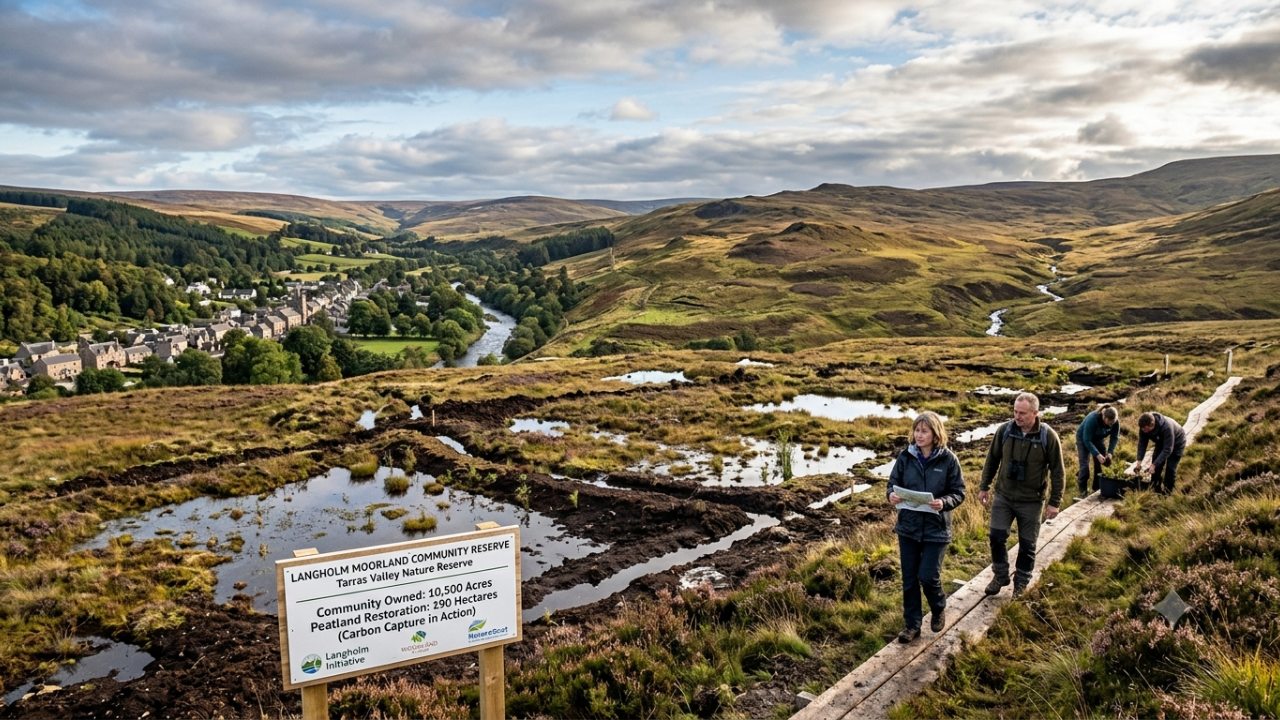
When the Buccleuch Estates announced plans to sell off 25,000 acres of Langholm Moor and the Tarras Valley back in 2019, locals faced a stark choice. They could watch their historic landscape pass into unknown private hands, or they could try to buy it themselves. Raising six million pounds seemed like an absolute pipe dream for a small community dealing with industrial decline. Yet, the Langholm Initiative development trust pulled it off, acquiring 10,500 acres to establish the community-owned Tarras Valley Nature Reserve.
If you are wondering how a rural town manages to raise that kind of cash during tough economic times, the secret lies in sheer grit and a bulletproof public crowdfunding strategy.
The Reality of Community Land Ownership
Buying land is one thing. Managing it profitably and ecologically is an entirely different beast. Most outsider critics assumed the locals would mismanage the estate or fail to service the long-term ecological needs of the region.
Instead, the project tackled systemic environmental damage head-on. Large portions of the upland moorland and peat bogs had been heavily degraded over generations through artificial drainage and intensive management. The reserve didn't just put up a fence and call it a conservation win. They partnered with specialists like the Crichton Carbon Centre to launch massive restoration efforts.
- Workers blocked over 54 kilometers of artificial drainage channels at Middlemoss Head to re-wet dried peatland.
- Degraded bog areas were repaired to stop severe erosion and store carbon effectively.
- Commercial Sitka spruce stands blown down by severe weather were cleared to make way for native woodlands.
These aren't just cosmetic green initiatives. They're hard, muddy, boots-on-the-ground interventions that change how water flows through the Scottish uplands.
Why Traditional Conservation Models Fall Short
State-run conservation often moves at a glacial pace, bogged down by bureaucracy and distant management boards who've never walked the local hills. Langholm worked because the people doing the fundraising actually live with the consequences of land use.
When you own the dirt beneath your feet, local wealth building takes on a totally different meaning. The reserve has brought back traditional grazers like Highland cattle and Fell ponies through partnerships with local farmers. Empty rural properties on the estate are being flipped into affordable energy-efficient homes and bunkhouses for visitors.
Wildlife is responding faster than expected. Rare raptors like hen harriers, short-eared owls, and black grouse are finding safer nesting grounds. Ponds created in wind-damaged forests are already playing host to dozens of dragonfly species and amphibians.
You can't fake that kind of organic recovery. It happens because the community treats the landscape as a living home rather than a corporate asset or a carbon offset ledger.
If you want to support similar grassroots land buyouts or get involved in community-led conservation across the UK, start by looking into regional development trusts or backing active land fund appeals before corporate buyers scoop up the remaining acres.
The Scottish village that raised millions to create a nature reserve
This video provides an on-the-ground look at the local team behind the Langholm Initiative and how they managed their historic community buyout.


