The Silence in Chisinau
When the heavy oak doors of the Moldovan Parliament swung shut this week, they didn't just close on a session of legislative debate. They closed on a room half-empty, vibrating with the echoes of shoes clicking rapidly toward the exit. In the high-ceilinged halls of Chisinau, silence has become a weapon. It is a specific kind of silence—the kind that follows a walkout, where the absence of a person says more than their speech ever could.
To understand why a room full of politicians would suddenly stand up and leave their posts, you have to look past the dry ink of the law. You have to look at the dinner tables in Balti, the markets in Comrat, and the bustling streets of the capital. In Moldova, language isn't just a way to ask for the price of milk. It is a map of where you stand in a world that is shifting beneath your feet.
The government moved to tighten the grip of the Romanian language on the country’s official pulse. They restricted the use of Russian in the very halls where laws are born. On paper, it is a move toward national identity. In reality, it is a tremor that has sent the opposition fleeing into the hallways in protest.
The Ghost of the Soviet Shadow
Imagine a woman named Elena. She is seventy years old. She lives in a small apartment where the wallpaper is peeling at the corners, smelling faintly of dried dill and old books. For fifty of those years, Russian was the language of her ambition, her love letters, and her government. When she goes to the post office now, the forms look different. The sounds in the hallways of power are changing.
Elena is a hypothetical anchor for a very real tension. For her, and for thousands like her, the restriction of the Russian language feels less like a policy update and more like an erasure.
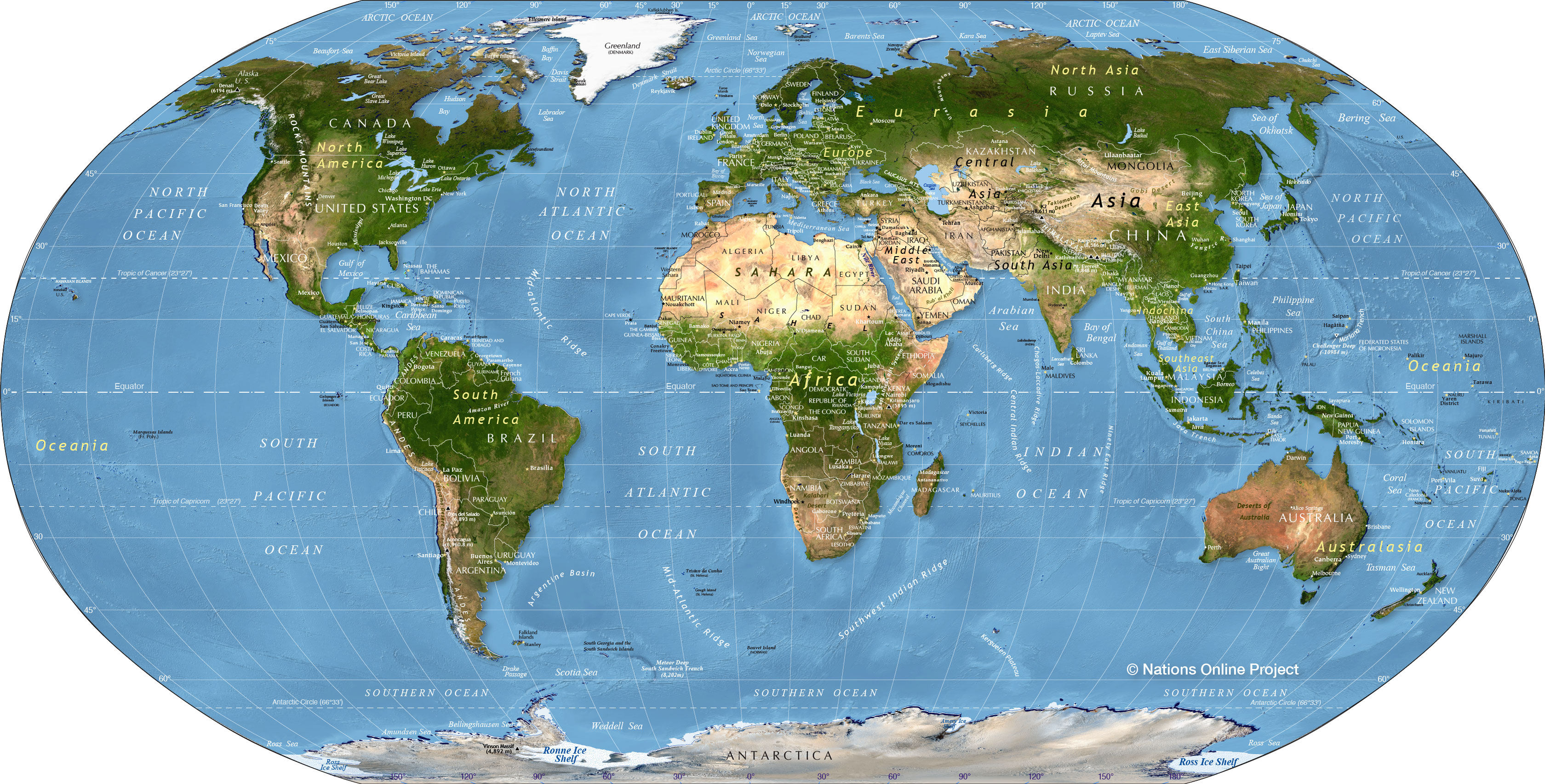
Moldova sits on a geopolitical fault line. To the West lies Europe, beckoning with the promise of the EU and a future tied to Bucharest and Brussels. To the East lies the long, deep shadow of Moscow. Language is the rope in this tug-of-war. Every time a legislator proposes a new restriction on Russian, they aren't just editing a document. They are pulling the rope.
The opposition parties, largely representing the Russian-speaking population and those who favor closer ties with the Kremlin, see this as a betrayal. When they walked out of the parliament, they weren't just skipping work. They were signaling to their constituents that the government no longer speaks their tongue—literally or figuratively.
The Weight of the Word
The law in question specifically targets how the state communicates. It prioritizes Romanian—the official language that is linguistically identical to what is spoken across the border in Romania—while pushing Russian to the margins of the administrative process.
Why does this matter?
Because bureaucracy is the nervous system of a country. If you cannot understand the law, you cannot obey it. If you cannot speak to the judge, you cannot find justice. If you cannot read the ballot, you cannot vote with a clear conscience. The government argues that a unified language creates a unified nation. They point to the need for a sovereign identity, one that isn't tethered to the linguistic remnants of a collapsed empire.
But unity is rarely found by taking things away.
Consider the complexity of the Gagauzia region or the breakaway territory of Transnistria. In these pockets of land, Russian is the lingua franca. It is the bridge between different ethnicities. When the central government in Chisinau passes a law that mutes that bridge, the people in the provinces feel the distance between themselves and the capital growing. It’s not just a matter of words. It’s a matter of belonging.
The Theatre of the Walkout
Politics is often a performance. The walkout is the ultimate dramatic gesture. It is the "I refuse to be a part of this" that stops the clock.
When the opposition members gathered their papers and filed out, they left behind a sea of empty chairs. In those gaps, you could see the fractured soul of the country. On one side, the ruling party, bolstered by a mandate to move toward the West, views the Russian language as a tool of soft power used by Moscow to maintain influence. They see the restriction as an act of defense. They see it as clearing the brush to let the national culture breathe.
On the other side, the empty chairs represent a segment of the population that feels like a stranger in its own home. They argue that the government is ignoring the multi-ethnic reality of Moldova in favor of a narrow, nationalist vision.
The air in the chamber becomes thick when half the voices are missing. Debate requires a counterpoint. Without it, the passing of a law feels less like a democratic triumph and more like a monologue.
The Invisible Stakes
The real danger of linguistic restriction isn't found in the parliament at all. It’s found in the resentment that builds in the quiet spaces.
When a grandfather can no longer help his grandson with his homework because the terminology has shifted, a thread is cut. When a local official in a northern village has to struggle through a document they can barely decode, the state becomes an obstacle rather than a provider.
We often think of conflict as something that happens with loud bangs and flashing lights. But the most enduring conflicts are those that happen in the mouth. They are the subtle corrections in a classroom. They are the sighs of frustration at a government window. They are the moments when a citizen realizes their mother tongue has been demoted to a second-class status.
The Moldovan government is betting that by mandating Romanian, they can accelerate the country's integration into the European family. They are looking at the map and seeing a destination. But the opposition is looking at the people and seeing a heritage.
The Sound of What Comes Next
What happens after the walkout?
The law will likely pass. The government has the numbers. The ink will dry, and the signs on the doors of the ministries might change. But the people who walked out are still there. They have gone back to their districts. They have gone back to the voters. And they are carrying a story of exclusion with them.
In the markets of Chisinau, you can still hear the beautiful, messy overlap of languages. A merchant shouts in Romanian; a customer responds in Russian; they both laugh and settle on a price. The people, as they often do, are miles ahead of the politicians. They have learned how to live in the "in-between." They understand that a language is a tool for connection, not a border fence.
But as the laws become more rigid, that organic fluidity is threatened. The government is trying to build a house with only one kind of stone. It might look uniform and grand from the outside, but if the foundation is made of people who feel unheard, the walls will eventually crack.
The walkout wasn't just a political stunt. It was a warning. It was the sound of a country splitting along its most sensitive nerve. As Moldova continues its journey toward a new identity, it faces a question that no law can easily answer: Can you build a future by silencing the past?
The empty chairs in the parliament chamber remain a haunting image. They represent the parts of the population that are no longer participating in the conversation. And in a country sitting on the edge of a continent’s shifting plates, a conversation you aren't a part of is a conversation that eventually turns into a confrontation.
The doors stay open, but the room feels colder. Outside, the sun sets over the vineyards, indifferent to the language used to describe its beauty. The people continue to talk, sometimes in Romanian, sometimes in Russian, often in both, waiting to see if their leaders will ever learn to listen to the spaces between the words.
A country is not a document. It is a chorus. And right now, in Moldova, some of the most important singers have just left the stage.