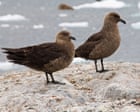
On a damp winter afternoon on Petone Beach, just a short drive from the bustling heart of Wellington, the tide washed up a single, dark-feathered brown skua. To an ordinary beachgoer walking their dog along the grey sand, it looked like a routine tragedy of the sea.
But for scientists, conservationists, and farmers across New Zealand, that lifeless bird was a highly anticipated threat finally crossing the threshold. Learn more on a similar subject: this related article.
The test results came back positive. The global killer had officially crossed the moat. Highly Pathogenic Avian Influenza, specifically the devastating H5N1 clade 2.3.4.4b, had landed in the last sanctuary on Earth.
The Island Moat is Breached
For six years, New Zealand watched from a distance as the pandemic tore through the rest of the planet. We read about the millions of wild seabirds dying on the cliffs of Scotland, the sea lions convulsing on the beaches of Peru, and the frantic culling of poultry farms in North America. We held our breath when it finally reached the icy fringes of Antarctica. We watched in June when the virus leaped to Australia. Further analysis by The Guardian explores related perspectives on this issue.
Throughout it all, we relied on our isolation. The Tasman Sea is a brutal, wind-whipped expanse of ocean, a natural barrier that has shielded these islands for eighty million years.
But nature does not respect national borders, and migratory birds do not carry passports. The skua, an ocean-going nomad, carried the pathogen across the waves and dropped it onto a suburban beach.
The biosecurity sirens are not blaring yet. Biosecurity Minister Andrew Hoggard was quick to emphasize that this is a single, isolated case. There is no evidence of mass die-offs on our shores, and the virus has not been detected in commercial poultry.
But the arrival itself is a quiet, tectonic shift. The invisible shield is gone.
A Vulnerability Written in Evolution
To understand why this single dead bird on a Wellington beach sends a shudder through the conservation community, you have to understand the strange, beautiful, and fragile nature of New Zealand's ecology.
Before humans arrived, these islands had no land mammals. No foxes, no wolves, no weasels. The evolutionary niche of predators was completely empty. In this isolated paradise, birds became the kings of the forest. Without the need to flee ground-dwelling hunters, many simply gave up the energy-intensive art of flight.
They became heavy-bodied, gentle, and slow. They nested on the forest floor. They lived long, quiet lives.
When humans brought rats, stoats, and cats, it was a slaughter. Decades of intensive conservation work have been spent dragging species back from the very brink of extinction. We built predator-free sanctuaries on offshore islands. We erected massive pest-proof fences. We treated these birds like the priceless, irreplaceable living treasures they are.
But you cannot build a fence against the air.
Consider the kākāpō. It is a giant, nocturnal, flightless parrot with the face of an owl and a scent like sweet honey. There are fewer than 250 of them left on earth. They do not live in cages; they live in the wild, on heavily protected, windswept southern islands. They are social, curious, and intensely vulnerable.
If H5N1 enters a kākāpō colony, the results could be absolute. The same is true for the takahē, a large, brilliant blue-and-green flightless bird once thought to be extinct, and the kakī, or black stilt, of which only a few dozen breeding pairs remain in the braided rivers of the South Island.
Recognizing this looming catastrophe, wildlife authorities quietly launched a desperate, historic effort. Over the past year, veterinarians have been administering experimental avian influenza vaccines to 300 core breeding birds from five of the country’s most endangered species.
It is a high-stakes gamble. No one knows if the vaccine will offer robust protection in the wild. We are injecting our most sacred living relics with hope, hoping that when the storm hits, their immune systems will know how to fight.
The Quiet Panic on the Farm
While conservationists look to the forests, New Zealand's farmers are looking at their fences.
On a free-range poultry farm in Patumahoe, South Auckland, the tension is palpable. The entire business model of free-range farming is built on a simple promise: the birds go outside. In New Zealand, about 1.6 million laying hens—roughly forty percent of the country’s commercial flock—rely on this outdoor access to earn their "free-range" status under the law.
But the moment H5N1 is detected near a commercial facility, that outdoor access becomes a deadly liability. A single sparrow landing in a chicken run to steal feed can bring the virus with it. If the virus gets inside a commercial shed, the mortality rate is swift and mercifully brief, running between 95 and 100 percent.
The government has been drafting emergency regulations that could force millions of free-range chickens indoors to protect them. But this creates a bizarre legal paradox. If you lock a free-range chicken inside a barn to save its life, can you still legally sell its eggs as "free-range"?
Under the Fair Trading Act, doing so is technically consumer deception. Farmers could face massive fines for trying to save their flocks from a biological disaster. While consumer watchdogs have signaled they might offer temporary enforcement discretion during an outbreak, it is a fragile, uncertain lifeline for an industry operating on razor-thin margins.
What Happens Now?
The coming weeks will reveal whether this skua was an unfortunate, isolated casualty of the high seas, or the first drop in an oncoming deluge.
For now, the advice to the public is simple but urgent: do not touch dead birds. If you see three or more dead wild birds grouped together, report it immediately. The authorities need eyes on the ground. We have to spot the smoke before the forest catches fire.
There is a profound, aching vulnerability in watching a threat you have anticipated for years finally walk through the front door. We spent years drafting plans, running simulations, and stockpiling vaccines. We comforted ourselves with the thought that we were the most prepared nation on earth.
But preparation is only a shield; it is not a cure. The ocean has kept us safe for millions of years, but the ocean has finally delivered the one thing we could not keep out.
The coming spring will bring millions of migratory birds back to our shores from their northern feeding grounds. They will descend upon our estuaries, our wetlands, and our coastlines. And we will be watching the skies, waiting to see what else they carry.