Paper does not bleed. Spreadsheets do not flinch. Yet when a finance official signs a freeze order on a sovereign oil route or blocks a clearinghouse in Tehran, the ink dries inside a very real room where a very real person sits, hears gravel crunch under unfamiliar tires at midnight, and wonders whether the threat came from a distant capital or a rented sedan two blocks away.
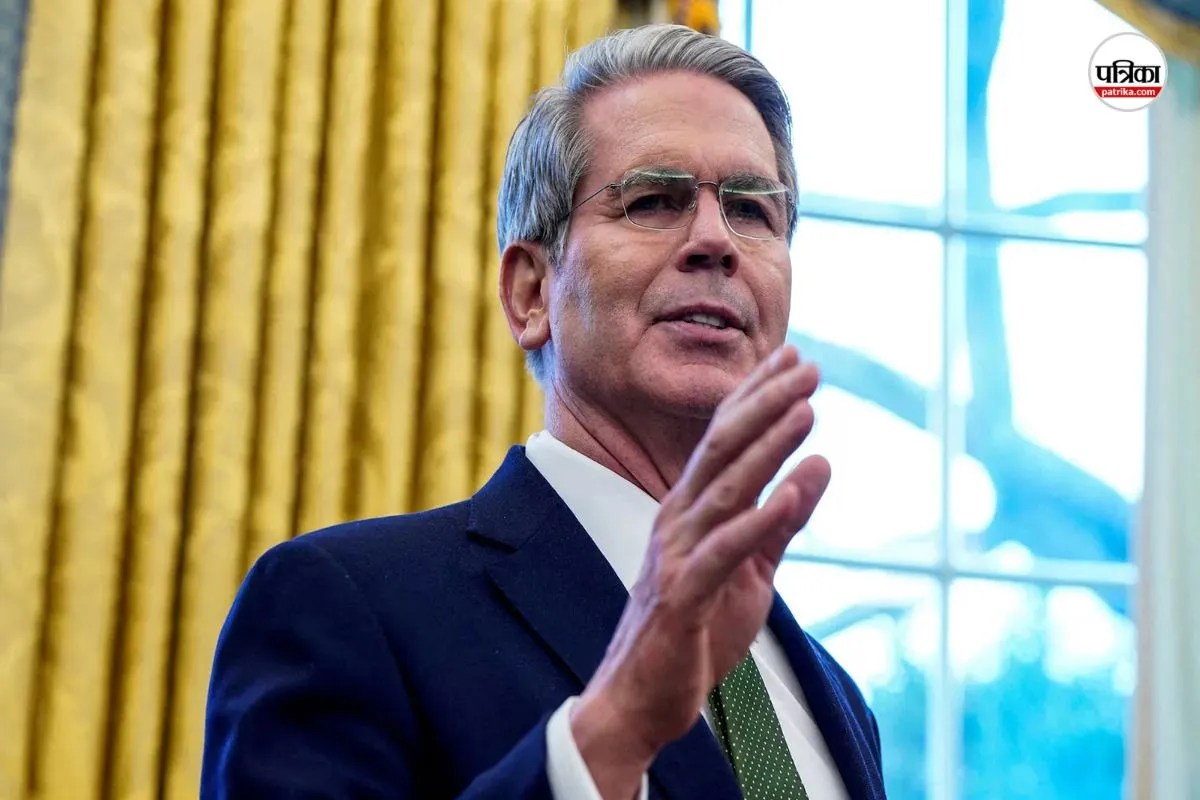
A headline in Hindi announced that U.S. Treasury Secretary Scott Bessent faced a death threat from Iran and sought shelter at a military base.
That single line carries more weight than most readers notice over morning tea. We tend to picture assassination plots against generals in desert fatigues or diplomats stepping out of armored limousines near embassy gates. We rarely picture a ledger keeper behind steel walls. Still, modern economic statecraft hits harder than many artillery barrages because it starves networks of oxygen without firing a shot.
I have spent years watching how financial pressure ripples through real lives—from port workers in Rotterdam waiting on a delayed wire transfer to small-business owners in Mumbai trying to price goods when dollar liquidity tightens overnight. When someone writes a sanction order, it looks like a policy memo. When the target of that sanction answers back with a death threat, the distance between a balance sheet and a grave collapses to zero.
Why a Balance Sheet Draws Fire
To understand why a Treasury official ends up behind military perimeter wire, look at what the modern Treasury actually does. It is not merely a vault of coins or a collection of tax forms. It sits at the crossroads of global plumbing—every correspondent bank account, every dollar-denominated settlement, every maritime insurance policy that keeps tankers moving across the Persian Gulf.
Consider what happens next when Washington tightens financial screws on Tehran. A sanction cuts off access to hard currency, squeezes oil revenues, and forces middlemen into costly detours through shell companies and shadow fleets. For a government under severe economic strain, those measures feel like a siege conducted in suits and pinstripes.
In my own work analyzing cross-border trade friction, I have watched how desperate actors retaliate when conventional fronts are blocked. They look for asymmetry. If they cannot match an opponent's naval tonnage or sovereign bond market, they target individuals whose signatures carry outsized financial force.
Let us use a metaphor to make the mechanism clear. Think of the global dollar system as a vast aqueduct carrying water to parched cities. A finance minister or Treasury secretary stands near the headgates with a set of heavy iron wheels. Turning a wheel does not look violent from a distance, yet miles downstream, crops wither and factories go quiet. The people losing water do not always blame the pipes; sometimes they aim straight at the hand on the wheel.
That is why threats against senior economic officials have become a recurring hazard in high-stakes geopolitics. Targeting a cabinet member responsible for sanctions and financial enforcement sends a chilling message to every bureaucrat, compliance officer, and bank counsel below them: your signature has a price.
Inside the Perimeter
When a threat rises from background noise to active danger, routines evaporate. A normal Tuesday—coffee at a familiar corner, a walk across a courtyard, an unhurried drive home—turns into a choreographed movement of radios, earpieces, and swept routes.
Moving a high-level official onto a military installation changes the texture of every hour. Civilian neighborhoods are built for openness, errands, and chance encounters. A military base is built for control: guard towers, blast walls, clear sightlines, and access badges checked under floodlights.
Imagine a hypothetical scenario to feel the shift without claiming details that remain guarded behind security protocols. Picture an analyst named Tariq—not a real person, just a composite stand-in for the dozens of security and policy staffers who live inside these moments. At 11:40 p.m., his phone buzzes with a priority alert. A threat assessment has crossed a threshold from bluster to credible intent. Within two hours, bags are packed, itineraries are scrubbed, and the quiet hum of a standard government billet gives way to the low thrum of base generators and heavy gates locking behind them.
Sensory details tell the truth that dry dispatches miss. Cold fluorescent light in a briefing room at two in the morning. The smell of wet asphalt and diesel near a checkpoint. The sudden silence when everyone stops talking about markets and starts talking about routes, backups, and line-of-sight cover.
Anyone who has lived near high-threat security environments knows the strange contradiction at the heart of them. You feel protected by walls and trained personnel, yet the very existence of the walls reminds you why you needed them. It is unsettling. It is exhausting. And if you are honest with yourself, it is scary—because no security detail on earth can make a human being feel invincible when someone else wants them dead.
The Invisible Stakes for Ordinary People
Why should a reader miles away from Washington or Tehran care whether a finance chief spends nights on a base?
Because the stakes are not confined to politicians and intelligence agencies. Financial warfare and retaliation against it shape everyday prices, shipping lanes, and regional stability. When tensions escalate around Iran and U.S. financial enforcement, energy markets twitch first. Even a rumor of disruption in Gulf shipping can nudge oil prices upward, which eventually shows up at the pump, in freight surcharges, and in grocery bills far from the conflict zone.
Doubt.
That is the most natural reaction when news breaks like this. Whenever a story involves espionage, threats, and state rivalries, skepticism is healthy. Governments sometimes use security scares to rally support or project resolve; adversaries sometimes bluff to sow fear and distraction. Sorting signal from theater is rarely neat in real time.
Still, dismissing every threat as mere posturing is a mistake. History shows that asymmetric pressure often triggers asymmetric pushback. Even when direct attacks are thwarted, the climate of intimidation alters decision-making. Officials spend cognitive bandwidth on personal survival instead of steady policy. Teams become cautious. Institutions feel the strain.
Let us look at the broader pattern across recent decades. Around the world, diplomats, judges, journalists, and economic policymakers have increasingly found themselves in the crosshairs of state and non-state actors alike. When traditional battlefields carry too much risk of escalation, shadow pressure—cyber intrusions, disinformation, financial coercion, and personal intimidation—becomes the preferred arena.
The cost is measured not only in guard hours, but in trust. When a state tries to bend another through economic isolation, and the targeted state responds by threatening the architects of that isolation, both sides are testing how much pain the other can absorb before blinking.
Power Behind Steel Walls
There is a sharp irony in a powerful official seeking shelter inside a military compound. From the outside, a cabinet secretary looks like someone holding all the levers. Inside a secured facility, that same person is subject to strict movement rules, vetted contacts, and constant vigilance.
Power and vulnerability rarely sit apart in high-stakes roles; they share the same room. The broader the reach of your office, the wider the circle of people who resent what your office does.
In my own experience observing crisis rooms during tense geopolitical standoffs, the hardest part for leaders is often the loss of normalcy. You cannot step out for air without a shadow. You cannot speak casually without wondering who is listening or probing. Every routine becomes a tactical calculation.
Yet institutions are built to outlast individual nerves. Treasury departments have career economists, sanctions lawyers, compliance analysts, and intelligence liaisons who keep the machinery turning even when principals are under heavy guard. A threat against one leader is meant to paralyze the whole apparatus. Making sure the apparatus does not flinch is half the battle.
At the same time, escalations like this carry a sobering warning. When economic pressure and retaliatory threats spiral upward, miscalculation becomes easier. A botched plot, a misread signal, or an overreaction can pull countries closer to direct conflict than either side claims to want.
What This Moment Reveals About Modern Conflict
We live in an era where wars rarely start with a formal declaration on parchment. They simmer through sanctions lists, tanker seizures, proxy skirmishes, cyber probes, and covert intimidation.
Look closely at what happened when a finance chief became a target:
- Economic policy is front-line strategy. Financial restrictions are no longer polite alternatives to force; they are blunt instruments that provoke fierce countermeasures.
- Personal security is part of statecraft. Protecting key officials—and their families and staff—is now a central operational requirement, not an afterthought.
- Information travels faster than clarity. Short headlines spark intense emotion long before full facts become public, making calm, critical reading essential.
None of this means panic is warranted. Most threats never reach execution, and security services exist precisely to stop them before they do. Still, paying attention matters. Understanding why a ledger keeper needs a military base helps us see the real mechanics of global power—not as a comic book of heroes and villains, but as a high-wire act where every move carries weight.
A floodlight hums above a concrete wall at 3:00 a.m., catching mist off the wire while inside a quiet room someone opens a folder and keeps working.


