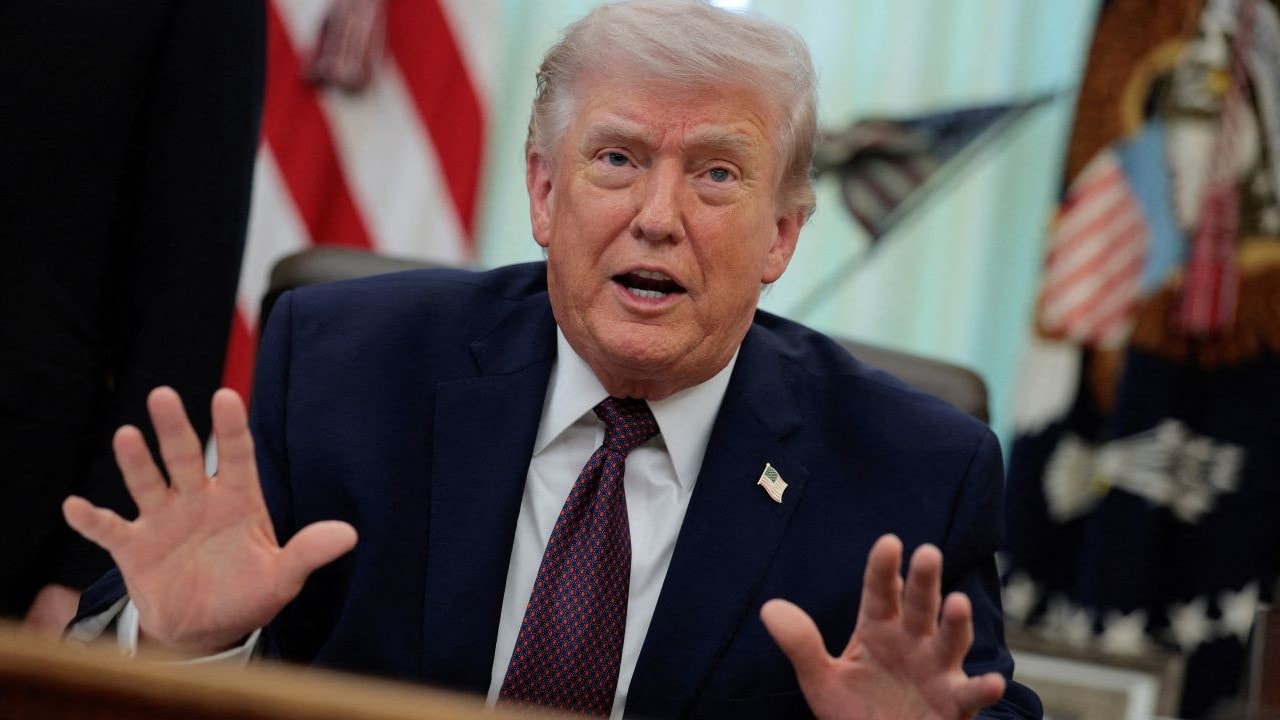
The air in the hallways of power doesn't smell like incense or old paper anymore. It smells like ozone and adrenaline. In Washington, there is a specific kind of silence that precedes a storm—a frantic, hushed clicking of keyboards and the low murmur of aides wondering if their names are written in the margins of a very specific notebook.
Donald Trump has always been a man of lists. Not the kind of lists you take to the grocery store, but the kind that track the precise moment a handshake felt weak or a public statement sounded like a betrayal. For years, observers treated this as a quirk of personality. They were wrong. It is a philosophy of governance.
Power is often described as a blunt instrument. In the hands of a man who feels he has been wronged, it becomes a scalpel. We are entering an era where the primary engine of the executive branch isn't just policy or ideology; it is the settling of accounts. This isn't a "revenge tour" in the way a rock band hits the road to play the hits. It is an architectural teardown.
Consider the mid-level bureaucrat. Let’s call him Arthur. Arthur isn't a household name. He doesn’t appear on cable news. He is a career professional who, four years ago, signed off on a memo that contradicted a White House talking point. In any other administration, that memo would be a footnote in a dusty digital archive. In the current climate, that memo is a GPS coordinate.
The Weight of the Grudge
There is a psychological weight to living under the gaze of a leader who views loyalty as a binary state. You are either a soldier or a target. This binary ripples through the Department of Justice, the FBI, and the intelligence agencies. These institutions were built on the idea of continuity—the notion that the machine keeps humming regardless of who sits in the Oval Office.
But continuity is exactly what is being challenged. The lists currently circulating among the inner circle are populated by those who stood in the way of the "America First" momentum during the first term. These aren't just political rivals like Adam Schiff or Liz Cheney. The list has grown to include the "Deep State" actors—the nameless individuals who whispered to reporters or slowed down executive orders with red tape.
The stakes are invisible until they aren't. When a government shifts its focus from future-facing problems—climate, debt, infrastructure—to past-facing grievances, the friction generates heat. That heat melts the norms we take for granted. We’ve spent decades assuming the Department of Justice exists in a vacuum of impartiality. Now, we have to grapple with the reality that the vacuum has been breached.
The Anatomy of the List
Who is actually on it? The names change depending on the day's headlines, but the categories remain chillingly consistent.
First, there are the "Turncoats." These are the former allies who found their conscience or their courage too late for the inner circle's liking. Think of the generals who wrote scathing op-eds or the cabinet members who resigned in protests. For them, the punishment isn't just a loss of status; it is a systematic effort to strip them of their credibility and, in some cases, their pensions or security clearances.
Next are the "Institutional Obstructionists." These are the career civil servants who relied on the civil service protections of the Pendleton Act. The plan to reclassify these workers under "Schedule F" is the legal equivalent of a battering ram. If you can turn a protected professional into an "at-will" employee, the list becomes actionable. You don’t have to prove they did a bad job. You just have to decide you don't like their face. Or their past.
Then, there are the "Media Aggressors." This isn't about mere name-calling from a rally stage. The strategy has shifted toward legal warfare—utilizing libel laws and investigative powers to make the cost of dissent higher than any newsroom can afford.
It is a quiet, grinding process. It happens in budget meetings where funding for specific oversight offices is moved to zero. It happens in HR departments where "loyalty audits" become the new standard for promotion. It is the sound of a thousand doors locking at once.
The Human Cost of Constant Vigilance
Imagine being a young lawyer at the DOJ. You joined because you believe in the majesty of the law. You spend your nights reading Case Law and your days drafting motions. Suddenly, you realize that the case you are working on isn't about justice, but about a slight that happened at a dinner party in 2019.
The moral injury of that realization is profound. It leads to a "brain drain" that no statistic can fully capture. When the best and brightest leave because they refuse to be tools of a personal vendetta, the institution doesn't just change—it hollows out. What remains is a shell, inhabited by those who are either too scared to leave or too eager to please.
We often talk about the "guardrails of democracy" as if they are made of steel. They aren't. They are made of people. They are made of people like Arthur, who have to decide if a mortgage and a health plan are worth the price of their professional integrity. When the list comes for the Arthurs of the world, the guardrails don't break; they just step aside.
The atmosphere is thick with a specific kind of dread. It’s the feeling of a student watching a teacher walk down the aisles during a test, knowing the teacher isn't looking for wrong answers, but for people who didn't use the right pencil.
The Architecture of the Return
This isn't a chaotic outburst. It is a disciplined, well-funded operation. Organizations like the Heritage Foundation and various "America First" think tanks have spent the last few years vetting thousands of potential loyalists. They are building a shadow government in waiting, a "vetted" army ready to replace those on the list.
This is the "Project 2025" reality. It is a manual for the dismantling of the administrative state. By framing the government as a swamp that needs draining, the act of purging becomes a virtue. Revenge is rebranded as reform.
But reform usually implies building something better. What is being built here is a feedback loop. When you surround yourself only with those who have passed a loyalty test, you lose the ability to hear the truth. You create a world where the leader’s perception is the only reality that matters.
The danger of a ledger of long memories is that it never actually balances. Every action taken to settle an old score creates a new grievance, a new name for a new list. It is a cycle that consumes the energy of a nation.
The Invisible Stakes
Why should the average person, someone living far from the Beltway, care about who is on a former President’s list?
Because the government is the world’s largest insurance policy. It manages the safety of your food, the stability of your currency, and the defense of your borders. When that insurance company stops focusing on risk management and starts focusing on settling lawsuits against its own employees, the policy becomes worthless.
If the weather service is purged of scientists who refuse to "correct" a hurricane map to match a political narrative, the person in the path of the storm pays the price. If the SEC is filled with people whose primary qualification is their donor status, the retiree with a 401k pays the price.
The human element of this story isn't just about the people on the list. It’s about the millions of people who rely on the people on the list.
The Final Account
There is a story often told about the Roman emperor Domitian, who kept a book of names of those he intended to execute. He spent his nights staring at it, obsessed with the idea that he was surrounded by shadows. The tragedy of the book wasn't just for those whose names were in it—it was for the empire that withered while the emperor spent his genius on spite.
We are currently watching the ink dry on a new book. The names are being categorized. The legal justifications are being sharpened. The stage is being set for a performance where the audience is expected to cheer for the fall of the "enemies within."
But in the quiet moments, away from the rallies and the social media firestorms, there is a lingering question. What happens when the list is finished? When every "traitor" is gone and every slight is avenged, what is left?
A kingdom of echoes.
The true cost of the ledger isn't the careers it ruins or the lives it upends. It is the loss of the idea that we can be a country governed by laws rather than by the shifting moods of a single man. Once that idea is gone, no amount of winning can bring it back.
The sun sets over the Potomac, casting long, distorted shadows across the monuments. In the offices of the capital, the lights stay on. People are checking their files. They are deleting old emails. They are looking over their shoulders. The ledger is open, and the pen is moving.
Memory is a dangerous thing when it is used as a weapon.