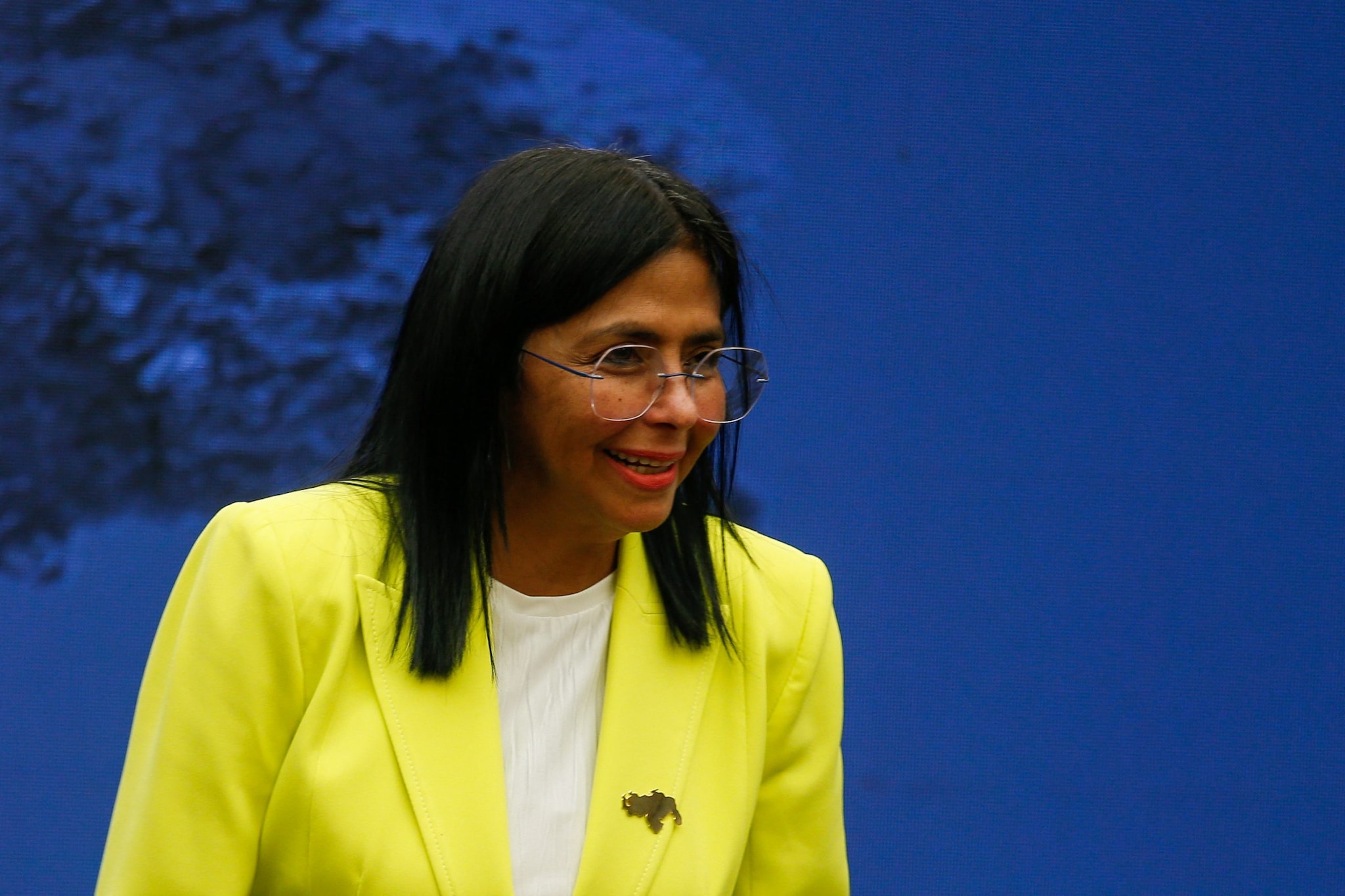
The expulsion of Colombian-born financier Alex Saab from Venezuela to the United States breaks a foundational rule of authoritarian survival: never trade your chief financial architect for foreign political goodwill. Nominally executed as an administrative deportation by Venezuela’s migration authority, SAIME, this transfer is not a routine extradition. It represents an calculated liquidation of assets by the interim administration led by acting President Delcy Rodríguez, who assumed control following the ouster of Nicolás Maduro. By handing Saab back to federal prosecutors less than three years after a highly publicized presidential pardon, Caracas has signaled a shift toward systematic alignment with Washington, fundamentally upending the state-subsidized patronage networks that sustained the previous administration for over a decade.
To understand the mechanics of this move, one must analyze it through three interlocking structures: the vulnerability of Saab’s previous executive clemency, the economic restructuring of the Venezuelan state under interim leadership, and the legal threat Saab poses as an elite witness against Maduro in federal court.
The Legal Arbitrage of a Conditional Pardon
The core fallacy of the previous political consensus was that Saab’s 2023 return to Caracas constituted permanent immunity. It did not. The clemency granted by the United States executive branch was structurally limited, leaving open major avenues for subsequent prosecution.
The Mechanics of the 2023 Executive Pardon
The presidential pardon issued to Saab was narrowly tailored to a specific 2019 federal indictment out of Miami. That indictment focused on a bribery scheme related to unbuilt low-income housing contracts. The pardon was an executive instrument used to secure a bilateral asset swap, which won the release of several detained American citizens and the return of fugitive defense contractor Leonard Francis. Because the pardon cited a specific case number, it offered zero immunity against separate criminal conspiracies.
The Overlapping Indictments Bottleneck
Federal prosecutors maintained active, unpardoned investigations by segregating Saab's financial operations into distinct legal compartments. The primary mechanism currently deployed is a 2021 Department of Justice case originally filed against Saab’s long-standing operational partner, Alvaro Pulido.
- The Target System: The Comités Locales de Abastecimiento y Producción (CLAP), a state-run food distribution network designed to distribute subsidized staples during periods of severe hyperinflation.
- The Legal Status: In this indictment, Saab was classified as "Co-Conspirator 1."
- The Mechanism: The prosecution alleges the creation of an international shell company network structured to channel bribes to regional pro-government officials. These officials subsequently awarded over-invoiced food import contracts from Mexico.
Because the CLAP food-distribution corruption probe is legally distinct from the low-income housing case, the previous pardon provides no constitutional or statutory defense in a federal court.
The Extradition Circumvention Loophole
The Venezuelan constitution contains an explicit, absolute prohibition against the extradition of its own nationals. Under Maduro, the state attempted to insulate Saab from international law enforcement by granting him Venezuelan citizenship and appointing him as a diplomat on a "humanitarian mission" during his 2020 arrest in Cape Verde.
To bypass this internal legal barrier, the Rodríguez administration utilized a simple designation change. The immigration authority designated Saab exclusively as a "Colombian citizen." By stripping him of his diplomatic status and treating his Venezuelan nationality as void, the state converted a complex, constitutionally barred extradition process into a swift administrative deportation. This allowed the physical transfer of Saab based on his involvement in active criminal proceedings abroad.
The Strategic Realignment of the Venezuelan State Economy
The removal of Saab from the cabinet—where he briefly served as industry minister under Maduro—reflects a shift in the survival strategy of the Venezuelan executive branch. Authoritarian regimes maintain stability by managing a precise balance between internal patronage and external capital inflows.
+--------------------------------------------------------+
|             MADURO SURVIVAL ARCHITECTURE               |
|  - High reliance on opaque domestic patronage (CLAP)   |
|  - Financial insulation via shell company networks    |
|  - Subsidized loyalty of internal military elite      |
+--------------------------------------------------------+
                           │
                           ▼ (Jan 2026 Shift in Power)
+--------------------------------------------------------+
|            RODRÍGUEZ REALIGNMENT STRATEGY              |
|  - Liquidation of legacy networks (Deportation)       |
|  - Re-engagement with Western capital markets         |
|  - Trade-off: Alienation of ideologically rigid wings |
+--------------------------------------------------------+
The Shift from Shadow Capital to Western Investment
Under Maduro, the regime relied heavily on shadow financial networks to bypass international sanctions. Saab was the principal architect of this parallel economy, managing trade corridors with countries like Iran and assembling the corporate infrastructure required to liquidate state gold and oil reserves through unmonitored channels.
The interim administration has altered this strategy. Facing a depleted treasury, acting President Rodríguez has focused on securing concessions from Washington, specifically aimed at drawing American corporate investment back into the domestic oil and mining sectors. Within this framework, a financial operative specializing in sanctions evasion is no longer an asset; he is an institutional barrier. Delivering Saab to the United States serves as a major trust-building measure designed to lock in economic normalization.
Internal Patronage Friction
This economic pivot introduces a major point of friction within the ruling coalition. The Venezuelan state apparatus is not a single entity, but an alliance of ideologically rigid factions and security officials.
While the executive branch pursues integration with global energy markets, powerful internal actors remain highly vulnerable. Figures such as Interior Minister Diosdado Cabello, who commands deep loyalty within the domestic security forces, face separate, active criminal indictments in the United States. For this faction, the deportation of an elite insider sets a dangerous precedent. It demonstrates that under the current administration, proximity to the executive branch no longer guarantees protection from foreign prosecution.
The Witness Value Function in the Narcoterrorism Case
The tactical utility of Alex Saab to the United States Department of Justice has risen dramatically following the events of January 2026, when a United States military raid led to the capture of Nicolás Maduro. With Maduro currently awaiting trial on drug trafficking and narcoterrorism conspiracy charges in Manhattan, Saab's value has shifted from a primary target to a key witness.
The Asymmetry of Financial Intelligence
In complex racketeering and narcoterrorism prosecutions, physical evidence of illicit trade is secondary to proving the flow of funds. Saab spent over a decade mapping the financial plumbing of the Venezuelan presidency. He holds granular information regarding:
- The exact routing of state funds through European, Middle Eastern, and Asian shell companies.
- The identities of third-party financial institutions willing to clear transactions for sanctioned state entities.
- The specific mechanisms by which illicit commercial revenues were mixed with legitimate state budgetary allocations.
The Historical Cooperation Factor
The probability of Saab entering a formal cooperation agreement with federal prosecutors is elevated by his past actions. Court filings unsealed during his previous detention revealed that prior to his 2020 arrest in Cape Verde, Saab served as a confidential source for the U.S. Drug Enforcement Administration (DEA).
During this period of cooperation, he provided intelligence regarding internal corruption networks and forfeited more than $12 million in illicit proceeds. Although he later returned to the regime's fold after his 2023 release, his history demonstrates a willingness to trade institutional secrets for personal legal relief when facing prolonged federal imprisonment.
Strategic Forecast
The deportation of Alex Saab will likely trigger an immediate reorganization of Venezuela's remaining illicit financial channels. Operatives who previously relied on Saab's corporate structures must rapidly dissolve those entities to avoid exposure from his potential testimony in federal court. This disruption will create a short-term cash flow bottleneck for secondary patronage networks dependent on the CLAP program and parallel oil sales.
Concurrently, the move accelerates a deeper divide within the ruling coalition in Caracas. Expect the ideologically rigid, security-dominated wing of the government to consolidate its control over internal enforcement mechanisms as a defense against further concessions to Washington. Acting President Rodríguez will face growing pressure to balance her Western economic outreach with structural guarantees for internal military and political figures.
The immediate indicator of success for this strategy will be whether Washington rewards the transfer of Saab with further updates to energy sector licenses, or if internal political pushback forces the interim government to slow its cooperation with U.S. law enforcement.


_Biopsy.png?branch=uat_release_3)
