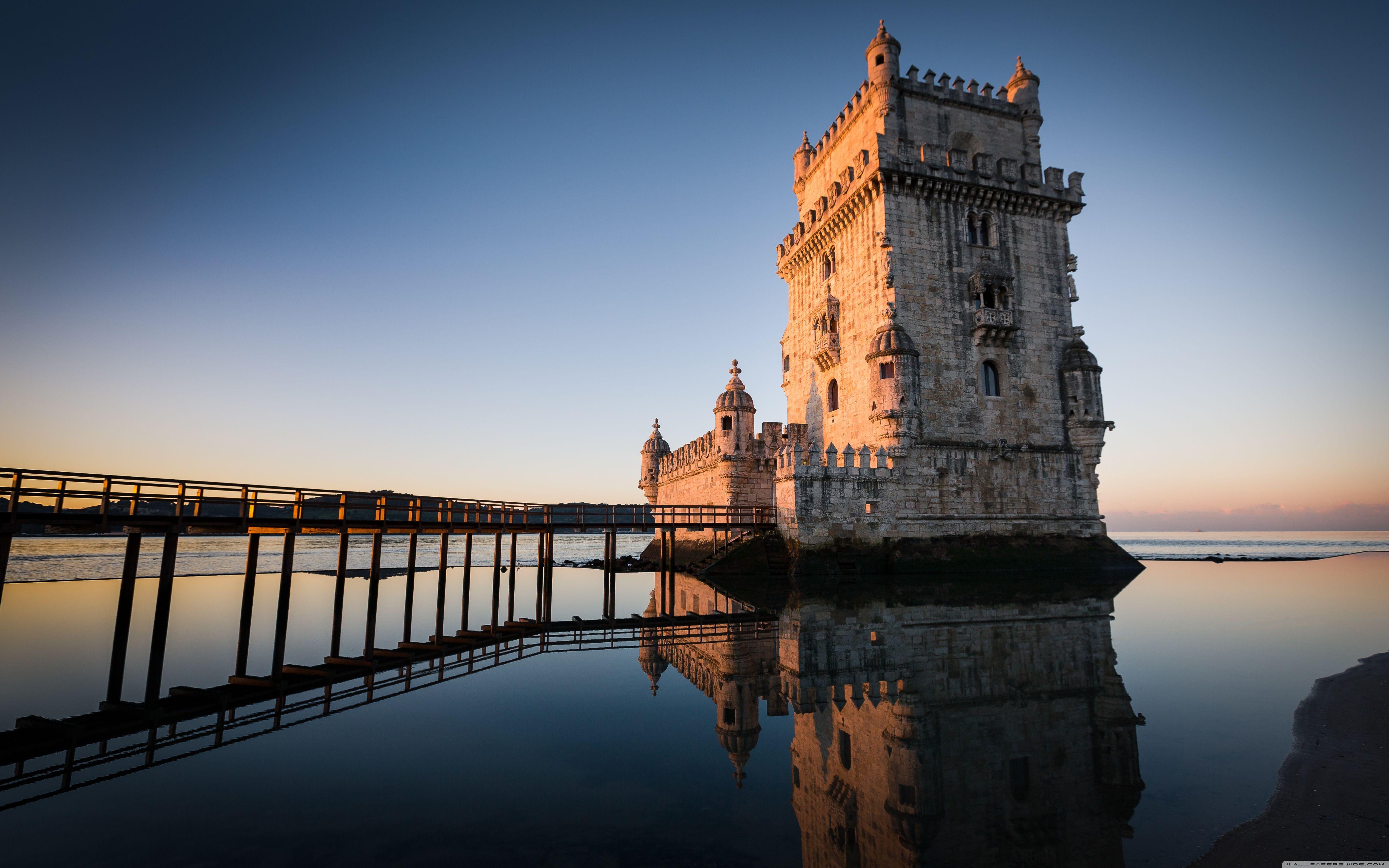
Twenty-five people in handcuffs. A cleared encampment in Lisbon. Predictable outrage across every major newsroom in Europe.
If you read the standard coverage of the Portuguese police clearing the Lisbon housing protest camp, you already know the script. Journalists frame it as a simple morality play: ruthless state power and greedy foreign landlords versus helpless local tenants. It makes for clean headlines and easy clicks. You might also find this connected article useful: Why Delegations Meeting in Iran Won't Calm Middle East Tensions Anytime Soon.
It is also completely wrong.
The lazy consensus blames digital nomads, short-term rentals, and police batons for Lisbon’s housing emergency. That narrative feels righteous, yet it ignores the basic economic reality that put those tents on the pavement in the first place. Arresting protesters is an ugly spectacle, sure, but the real violence against Lisbon’s working class happened years ago inside the Portuguese parliament. As discussed in detailed reports by The New York Times, the implications are worth noting.
The Villain Isn't Who You Think It Is
When rent explodes in a European capital, the public demands a scapegoat. In Lisbon, the targets are obvious: Airbnb hosts, Golden Visa buyers, and remote tech workers sipping flat whites in Chiado.
Blaming foreigners is politically convenient. Politicians love it because it absolves them of decades of catastrophic urban planning.
Here is what actually happened. For over a century, Portugal maintained some of the strictest rent freezes in Western Europe, dating back to the Salazar dictatorship and reinforced after the 1974 Carnation Revolution. Thousands of apartments in central Lisbon were locked at rents of 20 or 50 euros a month. Landlords collected less in annual rent than it cost to fix a broken roof tile.
So what did those landlords do? Nothing. They let historic buildings rot until the facades crumbled into the streets. By the early 2010s, central Lisbon looked like a post-war ruin, with roughly 40,000 vacant or derelict properties sitting empty while the city hollowed out.
Then came the 2012 New Urban Lease Law (NRAU), which finally thawed those frozen rents, alongside tax incentives to attract foreign capital. Suddenly, money poured in to renovate collapsing buildings. The city came back to life, and the tourism boom saved Portugal from sovereign debt default.
Now, politicians are reversing course with the Mais Habitação (More Housing) package—banning new short-term rental licenses, capping rent increases below inflation, and even threatening forced rentals of vacant homes. They are treating the symptom while feeding the disease.
Why Clearing the Camp Was Inevitable (And Beside the Point)
Let’s look at the protest camp itself. Housing activists set up tents to demand immediate rent caps, an end to evictions, and massive public housing construction. When they refused to vacate public space, the Polícia de Segurança Pública (PSP) moved in and arrested 25 people.
Media outlets immediately framed the arrests as the suppression of a grassroots movement. Look closer at the mechanics of urban governance, however, and you see a government trapped by its own promises.
The Portuguese state spent years telling citizens that housing is a constitutional right—which it literally is under Article 65 of the Portuguese Constitution—without building a single square meter of meaningful public stock to back up that promise. Only about 2% of Portugal’s housing stock is public or social housing, compared to roughly 30% in the Netherlands or 24% in Austria.
You cannot legislate supply into existence with a constitutional clause. When a government promises free or cheap housing, fails to build it, and then restricts private developers from building it either, tents appear on the street. Clearing those tents with riot police doesn't solve the shortage, and letting the tents stay doesn't build apartments. Both sides are fighting over a symptom while ignoring the math.
The Economics of Scarcity Nobody Wants to Hear
I have spent fifteen years advising institutional real estate funds and municipal housing boards across Southern Europe. I have watched city councils burn hundreds of millions of euros on rent subsidies and price ceilings, only to act shocked when available units vanish overnight.
To understand why Lisbon is broken, you have to strip away the emotional slogans and look at how housing markets actually function.
- Price ceilings destroy supply. When the state caps rent increases at 2% while inflation runs at 5% or 7%, owning a rental property becomes a guaranteed money-loser. Small landlords—who own the vast majority of Portuguese rental stock—sell their units to owner-occupiers or leave them empty rather than lock themselves into a losing contract.
- Licensing bottlenecks choke new construction. Getting a building permit in Lisbon routinely takes three to five years. Bureaucratic paralysis adds tens of thousands of euros to the cost of every single apartment before a shovel even hits the dirt.
- Taxation punishes long-term leasing. Until recent tweaks, Portugal taxed long-term rental income at a flat 28%, making it far less attractive than commercial ventures or leaving capital parked elsewhere.
- Tenant protections backfire on the vulnerable. Eviction processes in Portugal can drag through the courts for over two years. When a landlord knows a non-paying tenant cannot be removed for 24 months, they demand six months of rent upfront, three guarantors, and spotless tax returns. Who gets locked out by those requirements? Young locals, immigrants, and low-income workers.
Dismantling the "People Also Ask" Myths
Whenever a story like the Lisbon arrests trends, search engines flood with the same predictable questions. Most of those questions are built on broken premises. Let’s take them apart.
"Are digital nomads and Airbnb ruining Lisbon?"
Short-term rentals undeniably reduced long-term supply in specific historic neighborhoods like Alfama and Baixa. In some parishes, Alojamento Local (AL) properties accounted for over 25% of the housing stock.
Yet blaming Airbnb for the entire national crisis is bad math. Across the Greater Lisbon metropolitan area, short-term rentals represent a tiny fraction of total dwellings. Even if you banned every single Airbnb tomorrow and converted them all into long-term leases—which wouldn't happen, because many are tiny studios unsuitable for families—you would barely dent the structural deficit of roughly 150,000 missing homes across the country. Foreigners didn't break Lisbon’s housing market; they simply exposed how fragile and undersupplied it already was.
"Why doesn't the government just freeze rents?"
Because we already ran that experiment in Lisbon for eighty years, and the result was urban decay. Economists across the political spectrum—from Milton Friedman to Assar Lindbeck, the Swedish socialist economist who famously declared that rent control is the most efficient technique presently known to destroy a city except for bombing—agree on this.
A rent freeze creates a lottery. The lucky few who already hold a lease enjoy cheap housing forever, even if their income rises or they no longer need the space. Meanwhile, every young worker, student, or growing family trying to enter the market faces an empty desert of zero available units and skyrocketing black-market prices.
"Shouldn't housing be a human right, not a commodity?"
Calling something a human right does not make it immune to scarcity. Food is a human right, yet nobody argues that the government should force farmers to sell bread below the cost of wheat.
When you treat housing purely as an entitlement without addressing the cost of land, concrete, labor, and capital, builders stop building. You end up with a "right" to an apartment that does not exist.
What Actually Fixes a Broken Housing Market
If you want to get protesters out of tents and workers into apartments, you have to stop treating property developers like criminals and start treating housing like an infrastructure problem.
Imagine a scenario where the Lisbon City Council wakes up tomorrow and abandons every populist gimmick. Instead of arresting activists or banning short-term rentals, they execute four ruthless, unglamorous reforms.
- Slash permitting times to 90 days. Implement automatic approval ("tacit consent") for any residential project that meets existing zoning and safety codes. If the municipality fails to review the blueprints within three months, the builder breaks ground.
- Upzone the transit corridors. Lisbon is a low-rise city surrounded by underutilized industrial land and single-story warehouses along its rail lines. Allow high-density, mixed-use residential towers within 800 meters of every metro and train station.
- Build public housing on state-owned land. The Portuguese state and military sit on massive tracts of idle real estate inside Lisbon. Instead of selling that land to luxury developers or letting it gather weeds, lease it at zero cost to non-profit housing cooperatives and public-private partnerships to build 30,000 cost-rental units—apartments rented at the exact cost of construction and maintenance, with zero profit margin.
- Fix the courts. Create specialized housing tribunals that resolve unpaid rent disputes within 60 days, paired with an emergency state insurance fund that covers rent for tenants who lose their jobs. Landlords get security; vulnerable tenants get a safety net instead of homelessness.
The Uncomfortable Truth About This Approach
I won't pretend this blueprint is painless. Every serious policy has casualties, and pretending otherwise is what gets us into these messes.
Aggressive upzoning will infuriate wealthy NIMBY homeowners in neighborhoods like Lapa and Campo de Ourique who want their views and property values protected. Fast-tracking permits will inevitably lead to some ugly, generic apartment blocks replacing charming old ruins. And streamlining eviction courts will result in hard-nosed headlines when non-paying tenants are removed faster than they are today.
There is no version of reality where Lisbon preserves its museum-like 19th-century skyline, keeps rents artificially low, protects every tenant from ever being evicted, and magically houses every young professional on a local salary. You have to pick your trade-offs.
Stop Watching the Handcuffs
The mainstream press wants you to stare at the photos of 25 protesters being loaded into police vans in Lisbon. That image confirms everyone’s priors. The left sees capitalist oppression; the right sees law and order restoring calm.
Both sides are staring at a distraction.
Lisbon doesn't have a policing problem, and it doesn't have a tourism problem. It has a math problem. Until Portugal stops punishing the people who build homes and starts flooding the market with actual concrete, steel, and square footage, the rents will keep climbing—and the tents will be back next month.


