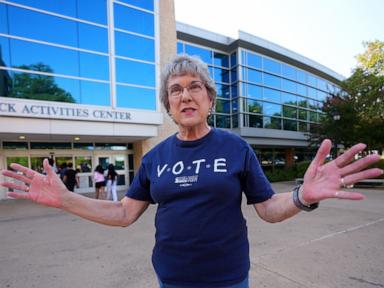
The ink on the pavement of the strip mall parking lot had barely dried when the sign appeared on the glass door. Closed. Not for remodeling. Not for a holiday. Permanently.
For three decades, that corner unit between a dry cleaner and a shuttered bakery had served as precinct 312. It was where Mrs. Alpert brought her lemon bars for the poll workers. It was where teenagers watched their parents slide thick paper rectangles into humming metal boxes, learning through osmosis that civic duty smelled faintly of floor wax and anxious coffee. Building on this topic, you can find more in: The Gavel and the Ghost Inside the Courtroom Door.
Now, the room is empty. The folding tables are gone. The electrical tape on the linoleum marking the queue has been scraped away, leaving pale tracks where the glue held on too tight.
Across Texas, ahead of the 2026 midterms, a quiet geometry is unfolding behind closed doors. County commissioners and election boards are redrawing the map of access, quietly trimming the number of places a citizen can cast a vote. Officials point to spreadsheets, budget line items, and statutory requirements. They talk about consolidation. They talk about efficiency. Experts at Associated Press have provided expertise on this trend.
Efficiency. A cold word for a long journey.
Consider Maria. (This is a hypothetical scenario built from the verified architectural shifts happening in counties across the state right now, where hundreds of polling places face consolidation). Maria lives on the eastern edge of a sprawling county where public transit runs once every hour if the bus is on time. She works two jobs, cleaning offices downtown by dawn and stocking shelves at a big-box retailer by dusk. Her car gave up its transmission last November, a quiet mechanical death she couldn't afford to fix.
In past election cycles, Maria walked four blocks to the elementary school gymnasium. She voted on her lunch break, standing in line for twenty minutes, nodding to neighbors she had known since her children were small.
Under the new county consolidation plan, her neighborhood precinct is shuttered. The nearest active polling location is now 3.4 miles away across a six-lane arterial road with no pedestrian crosswalk for a mile in either direction.
How does Maria vote?
When you strip away the sanitized municipal language of resource allocation, you are left with a simple, brutal equation: distance equals friction, and friction equals silence.
Public outcry has followed these decisions into county commission chambers. Citizens have crowded into municipal buildings, clutching printed maps and crumpled utility bills, speaking into microphones that buzz with feedback. They point out what the spreadsheets miss. They talk about the grandmother with the bad hip who relies on a neighborhood church basement. They talk about the shift worker who cannot afford a two-hour round trip on multiple buses just to exercise a constitutional right.
The response from the dais is usually a polite nod, followed by a reminder that early voting exists, or that county-wide voting centers mean you can cast your ballot anywhere in the county.
Technically true. Practically elusive.
County-wide voting centers sound modern, like an upgrade to a smartphone operating system. But they assume every resident possesses a car, a flexible schedule, and the GPS literacy to navigate unfamiliar parts of town. They trade the local landmark for the bureaucratic hub. They turn voting from a neighborhood communal act into an errand that requires logistics, planning, and privilege.
History tells us that access is rarely taken away all at once. It is chipped away. A precinct here, a school gymnasium there. Each individual closure is defended as a minor adjustment, a pragmatic response to low turnout or high rent. But accumulated, these adjustments redraw the boundaries of civic participation. They create silent deserts where voting requires an expedition rather than a pause in the rhythm of daily life.
Democracy is heavy. It requires physical infrastructure. It needs real estate, parking lots, electrical outlets, and bodies in folding chairs handing out "I Voted" stickers. When you remove the physical spaces from the neighborhoods where people actually live, you aren't just saving money on rent. You are sending a message about who belongs in the room where decisions are made.
The 2026 midterms are barreling toward us, shadowed by the friction of these new maps. Somewhere in Texas tonight, a custodian is pulling the last pieces of masking tape off a gymnasium floor, unaware that a ritual that has stood for generations has just quietly exited the building.
The door is locked. The key is in a drawer downtown. And the walk to the next ballot box just got a little bit longer.