The air in Beijing in the late nineteen-nineties tasted of coal dust, boiled cabbage, and low-frequency anxiety. State-owned factories were bleeding money by the billion. Workers who had traded their youth for an iron rice bowl—a lifetime guarantee of housing, medical care, and a meager pension—now stood outside shuttered gates, holding pink slips that fluttered like dry leaves in the bitter winter wind.
They were scared. They had every right to be.
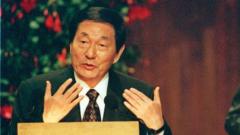
At the center of that storm sat a man with ears like jug handles, a mouth set in a permanent, severe slash, and a nickname that made bureaucrats sweat through their woolen suits: Premier Zhu Rongji. He was called the economic czar, but he felt more like an undertaker assigned to revive a corpse with a defibrillator.
History remembers the numbers. China joined the World Trade Organization in two thousand and one, flooding global ports with cheap plastic toys, televisions, and textiles, eventually becoming the undisputed workshop of the world. Gross domestic product skyrocketed. Millions crawled out of subsistence farming into the neon-lit gravity of booming megacities.
Those are the dry stats. They miss the violence of the transition.
Imagine standing on a cobblestone courtyard in Shanghai in nineteen-ninety-eight. To your left, a centuries-old lane house is being reduced to dust by a demolition crew wielding sledgehammers. To your right, a sixty-story glass monolith is clawing its way into the smoggy sky. Zhu Rongji engineered that collision. He took an agrarian giant stumbling under the dead weight of communist central planning and strapped it onto a rocket fueled by raw, unadulterated global capitalism.
He did not do it gently.
Zhu understood a brutal truth that softer politicians preferred to ignore. You cannot build a modern skyscraper on a foundation of rotten timber. When he took charge of the economy, inflation was running wild, state-owned enterprises were bloated zombies consuming credit they could never repay, and local protectionism was turning China into a patchwork of bickering fiefdoms.
So he brought the axe down.
Millions of state workers lost their jobs in a wave of restructuring that remains one of the largest corporate purges in human history. Imagine telling a generation raised to believe the state would cradle them from cradle to grave that they were suddenly on their own. They protested. They whispered curses in smoky tea houses. They wept in stairwells.
Zhu went on television. He did not offer empty platitudes. He leaned into the microphone, his voice sharp and gravelly, and famously declared that he had prepared one hundred coffins for corrupt officials, and one for himself.
He meant it.
His weapon wasn't just administrative reform; it was structural surgery without anesthesia. He centralized tax collection, starving regional governments of the funds they used to protect failing local industries. He forced state banks to act like actual banks rather than bottomless piggy banks for political favorites. He cracked down on smuggling with a personal ferocity that terrified the coastal elites.
Critics called him arrogant. Bureaucrats called him a dictator. Foreign diplomats watched with a mixture of horror and awe as he dragged a reluctant nation kicking and screaming into the twenty-first century.
Why did he take such risks?
Because he looked ahead and saw a cliff. If China had stayed on its old path, it would have starved under the weight of its own inefficiency. It would have missed the digital revolution, the container-ship boom, and the financial globalization that reshaped the planet. Zhu saw that isolation was a slow death sentence. To survive, China had to open its doors, and to open its doors, it had to clean house.
He was not a saint. The trade juggernaut he helped unleash also created staggering wealth inequality, a hyper-competitive rat race for the younger generations, and an environmental toll that turned blue skies into a distant memory for decades. The ghosts of the laid-off factory workers still haunt the rust belts of the northeast, where the promise of the new economy sometimes felt like a distant rumor.
Yet the architecture of modern global commerce rests squarely on the foundations he poured during those chaotic years. Every time a cargo ship slips out of Shenzhen loaded with smartphones, every time a supply chain shifts because of a policy made in Beijing, you are feeling the aftershocks of Zhu Rongji's iron will.
He lived to be ninety-seven.
He watched from quiet retirement as the dragon he whipped into shape grew teeth that could challenge superpowers. He saw the towers rise higher, the highways stretch farther, and the world economy dance to a rhythm dictated by the nation he restructured.
He spent his final years out of the spotlight, a ghost walking through a hyper-modern metropolis he engineered into existence.
Consider the silence of that old man in his Beijing courtyard as the roar of traffic echoed from the ring roads outside. He broke an old world to build a new one. And long after the dust has settled on his grave, the world is still living inside the walls he built.