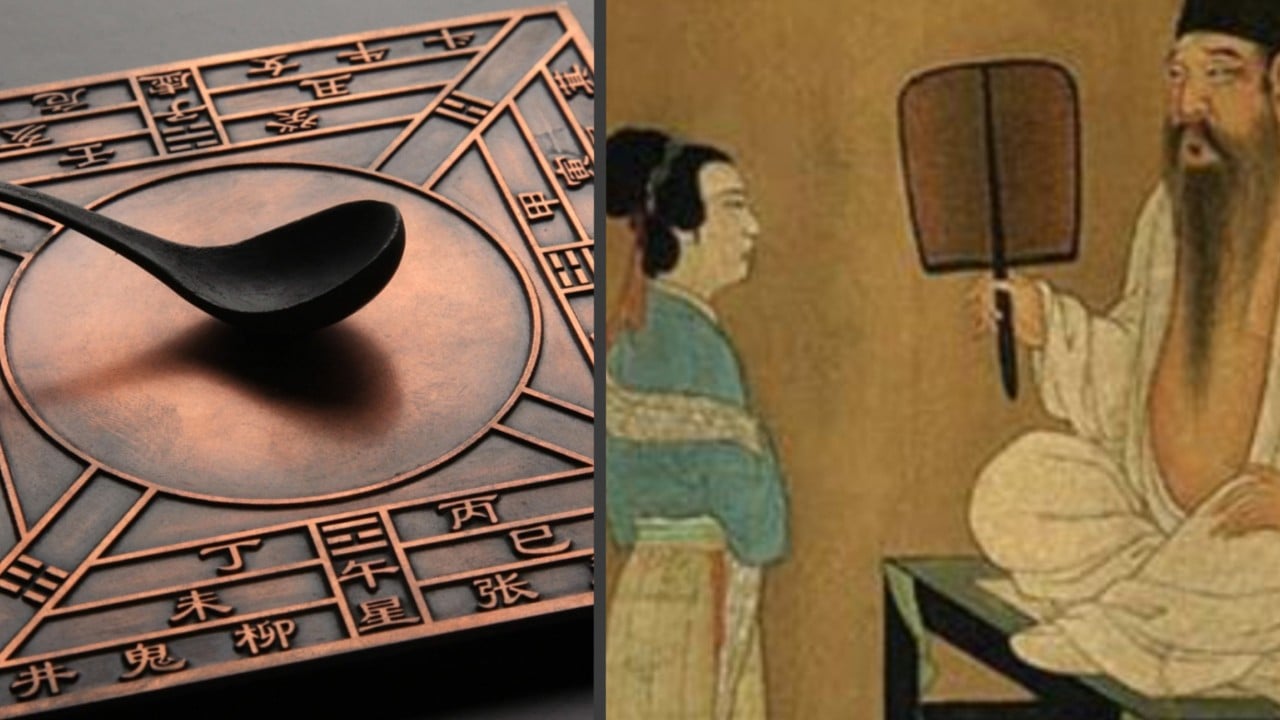
We spend our entire existence trying to outrun the clock. We chase youth as if it were a physical object we could drop and shatter, and we dread the winter of our days with a quiet, persistent terror. Modern life teaches us to view aging as a slow decline, a straight line pointing inexorably downward from morning to midnight. But ancient cultures looked at the sky and saw something entirely different. They looked at the earth and found a compass that did not merely point north, but mapped the very trajectory of human breath.
Consider the old maps of China. They did not treat the four cardinal directions as inert coordinates on a flat plane. Instead, they loaded them with the weight of time, season, and blood. East, South, West, and North were assigned to the four stages of a human life: birth, growth, harvest, and rest.
When you stand facing the dawn, you are not just looking at a direction. You are looking at an infant drawing their first breath.
I remember sitting in a modest courtyard in Beijing years ago, watching an old man move through a sequence of slow, deliberate stretches. His joints popped softly, a sound like dry twigs breaking underfoot, but his eyes were preternaturally bright. He wasn't just exercising. He was orienting himself. When I asked him why he always began his morning routine facing east, he didn't give me a mystical lecture. He smiled, pointing a weathered finger at the horizon.
"The sun does not negotiate its arrival," he said simply. "Neither does a child."
The Weight of the Morning
East belongs to the spring. It is the direction of green shoots piercing through hard, frost-bitten earth. In traditional Chinese thought, this quarter of the compass holds the element of wood, representing expansion, impulse, and the raw, unrefined energy of youth.
Think about your own childhood. Remember the sheer, exhausting velocity of those years. You ran until your chest burned. You asked questions until your parents sighed. You grew out of shoes in a matter of months, your bones aching with the quiet violence of growth. That is the eastern wind blowing through a human body.
Statistically and biologically, this phase is characterized by cellular proliferation and rapid neural mapping. We absorb languages, social cues, and trauma with equal ferocity. We are wet clay being thrown violently against a potter's wheel. There is no subtlety in the east. There is only the insistence of being.
Yet, we rarely appreciate the east while we are standing in it. We spend our childhoods wishing to be twenty, wishing to hold the keys, wishing to be free. We curse the slowness of time because we do not yet understand that speed is the only thing we actually possess.
The Fire of the Noon
As the sun climbs, the compass shifts. South is summer. South is fire. South is the meridian of adulthood.
If the east is the spark, the south is the roaring blaze. This is the domain of peak physical strength, of career ambition, of heartbreak, of building homes, and of raising the next generation of screaming, running children. The ancient Chinese philosophers mapped the southern quadrant to the heart and to the emotion of joy—though joy, in this context, is not a passive smile. It is an intense, vibrating engagement with the world.
(Note: When I speak of these elemental associations, I am describing a centuries-old philosophical framework recorded in texts like the Liji and the Huainanzi, where cosmological order mirrors human physiology.)
Step into any modern metropolis at midday, and you can feel the southern wind pressing down on the pavement. People rush between glass towers with coffee cups clutched like shields. They are fighting for promotions, buying mortgages, worrying about retirement portfolios, and arguing over text messages. This is the zenith. It is loud. It is demanding. It is the period of life where we carry the heaviest loads.
My grandfather used to call this the noon of the blood. He spent his southern years managing a textile factory, coming home with grease under his fingernails and soot in the lines of his face. He was constantly tired, perpetually stressed, and utterly convinced that he had infinite time to fix every mistake he made. He thought the sun would stay at the top of the sky forever.
It never does.
The Gathering of the Sheaves
West is autumn. West is metal. West is the setting sun.
There is a distinct chill that enters the narrative when the compass swings toward the west. This is the stage of life where we begin to look backward with as much frequency as we look forward. The children have grown and moved to distant cities. The body starts sending warning signals—a twinge in the lower back that doesn't disappear after a night of sleep, a pair of reading glasses left intentionally on the kitchen counter.
In the traditional four-part framework, the west represents the harvest. It is the time of reaping what was sown in the east and cultivated in the south. It is also the season of grief, associated in Chinese elemental theory with sorrow and letting go.
We harvest our achievements, yes, but we also harvest our regrets.
Consider what happens next in the human cycle: the realization of mortality. It is terrifying, but it is also clarifying. In the western phase of life, the superfluous falls away. People stop caring about office politics, toxic friendships, and the petty opinions of strangers. There is a magnificent hardening that occurs, much like the metal element assigned to this direction. You become sharper, leaner, and more honest.
I watched my mother enter her western years with a quiet defiance. She started throwing away things she had hoarded for decades—old clothes, broken appliances, dusty photograph albums of people she no longer recognized. When I asked her why, she paused with a box in her hands and looked out the window at the falling leaves.
"I don't have the room for dead weight anymore," she said.
She was talking about the boxes. She was also talking about her life.
The Quiet Room
North is winter. North is water. North is the dark, silent depths where everything rests before the wheel turns once more.
Modern society despises the north. We pump our homes with artificial light, pop supplements to maintain our energy, and view old age as a disease to be cured rather than a season to be honored. We hide our elderly away in sterile facilities, pretending that if we don't look at winter, it will never arrive for us.
The ancient Chinese map tells us this is a profound mistake.
North is not the end. North is the foundation. It is the root system sleeping beneath the frozen mud, gathering strength for a spring that is currently unimaginable. In human terms, this is old age—the time of wisdom, stillness, and integration.
The element of water, assigned to the north, is yielding yet immensely powerful. Water carves canyons through solid stone, not through brute force, but through persistence and adaptability. The elderly who have truly mastered the northern phase possess a terrifying clarity. They have seen empires rise and fall within their own families; they have survived heartbreaks that would have crushed their younger selves.
They are the keepers of the hearth.
When you sit across from someone in their eighties or nineties who is at peace with the compass of their life, you feel a gravitational pull. They are no longer rushing anywhere. They have walked the entire circle. They started in the green shoots of the east, burned through the fires of the south, reaped the metal harvest of the west, and have finally come home to the quiet waters of the north.
Turning the Wheel
We are terrible at living because we refuse to accept the weather of our current season.
We want the energy of the east when we are standing in the west. We want the wisdom of the north while we are still thrashing around in the blinding fires of the south. We fight the compass, breaking our knuckles against the reality of time.
But the four directions offer an alternative prescription. They ask us to inhabit our place on the map fully. If you are young, let the wood-fire of the east consume you without guilt. If you are burdened by the midday sun, accept the heat as proof that you are doing the heavy lifting of existence. If the western chill is creeping into your bones, let the metal strip away your illusions. And when the northern dark finally embraces you, do not weep.
The wheel does not stop turning.
Every morning, without fail, the sun breaks over the eastern horizon. A newborn cries in a sterile hospital room. A green shoot splits the frozen soil. The compass resets. And the journey begins all over again.