The air in the Pentagon’s E-Ring doesn't smell like gunpowder. It smells like industrial carpet cleaner and overpriced espresso. But inside the windowless briefing rooms where the "Total Force" planning occurs, the atmosphere thickens with the weight of geography. Across a laminated map of the Middle East, a finger traces the jagged coastline of the Persian Gulf. It stops at the Strait of Hormuz. This is where the abstract concept of "geopolitics" becomes a nightmare of logistics, steel, and young lives.
Reports are filtering out of Washington that the current administration is dusting off the most complex playbook in the military’s possession. They call it a land invasion strategy. To the pundits on cable news, it’s a talking point. To the planners in the basement of the Department of Defense, it is a mathematical problem involving 2,000-mile supply lines and the terrifying reality of the Zagros Mountains.
Donald Trump is weighing options. That phrase sounds clinical. It sounds like choosing between different brands of cereal. In reality, it means deciding whether to commit hundreds of thousands of boots to a terrain that makes the deserts of Iraq look like a playground.
The Geography of a Nightmare
Iran is not a desert. It is a fortress.
Imagine a country the size of Alaska, but instead of tundra, it is a high central plateau ringed by mountain ranges that reach 14,000 feet into the sky. To get a tank from the coast to the capital of Tehran, you have to climb. You have to thread through narrow passes where a single well-placed insurgent with an old Soviet RPG can stall an entire armored column.
Consider a hypothetical platoon leader—let’s call him Miller. Miller isn't thinking about the "Global Oil Infrastructure" or "Regime Change." He is thinking about the heat. In the Khuzestan province, the summer temperatures routinely hit 120°F. In that heat, the sweat dries before it can even cool your skin. The sand is so fine it finds its way into the sealed optics of a $10 million Abrams tank. It finds its way into Miller’s lungs.
A land invasion of Iran wouldn't look like the 2003 "Shock and Awe" campaign. It couldn't. Iran has spent forty years watching how the United States fights. They have buried their missiles deep inside mountains. They have built a navy of "swarms"—hundreds of small, fast boats designed to overwhelm a multi-billion dollar Destroyer through sheer numbers.
The planners know this. They know that to "control" the ground in Iran, the U.S. would likely need a force twice the size of the one used to take Baghdad. We are talking about 500,000 to 800,000 troops. That isn't just an army; that is a generation.
The Invisible Stakes of the Strait
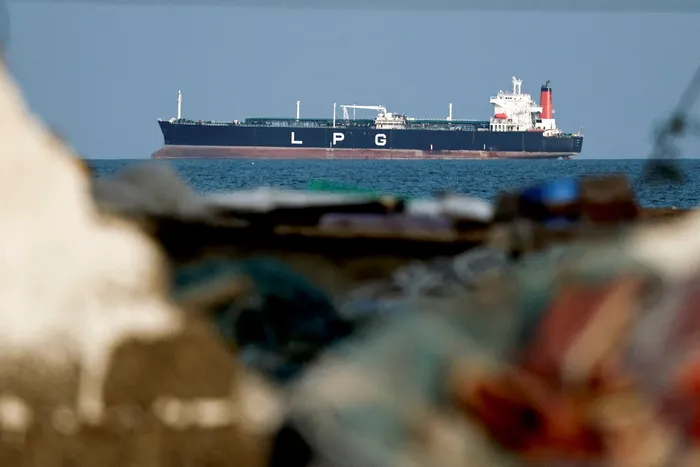
While the headlines focus on "ground troops," the real war starts in the water. The Strait of Hormuz is a choke point only 21 miles wide at its narrowest. Through this needle’s eye passes twenty percent of the world’s petroleum.
If a ground invasion begins, the first thing that happens isn't a paratrooper drop. It’s a spike.
The price of oil wouldn't just rise; it would leap. Economists whisper about $200 or $300 a barrel. For the person driving to work in Ohio or the farmer running a tractor in France, a land war in Iran feels like a world away until the gas pump stops at eighty dollars, then a hundred, then keeps spinning. The "invisible stakes" are the stability of the global middle class. War is expensive, but the collateral damage to the global economy is a bill that every single person on the planet pays simultaneously.
The Ghost of 1979
There is a psychological shadow over these briefing rooms. It’s the memory of the Embassy, the desert sands of Operation Eagle Claw, and a sense of unfinished business that has haunted the American conservative psyche for four decades.
Trump’s approach to Iran has always been a paradox of "Maximum Pressure" mixed with a deep-seated desire to avoid "forever wars." He campaigned on bringing the boys home, yet he finds himself staring at a map that requires sending more of them out. This tension is where the current strategy is being forged. It’s a gamble that the threat of an invasion will do what sanctions couldn't.
But threats have a shelf life.
Eventually, you either fold the map or you cross the border.
If Miller and his platoon are ordered across that line, they aren't entering a vacuum. They are entering a nation of 85 million people with a fierce sense of Persian identity. This isn't a fractured state like Libya. It is a civilization. When you invade a civilization, the "human element" isn't just your own soldiers; it’s the millions of people who see your presence as a desecration of their home.
The Logistics of the Impossible
To understand the scale, look at the ports. To supply a land invasion, the U.S. would need to secure massive deep-water ports in a region that is within easy range of Iranian ballistic missiles.
The technical term is "Anti-Access/Area Denial" (A2/AD). In plain English: Iran has spent billions making sure the front door is booby-trapped. The Pentagon’s strategy must account for thousands of mines floating in the Gulf, silent submarines lurking in the shallows, and drones—thousands of cheap, explosive drones—launched from the backs of pickup trucks.
The math of modern warfare is brutal. A $20,000 drone can disable a ship that took five years and three billion dollars to build. The Pentagon knows this. The "Report" being circulated isn't just a list of targets; it’s a desperate attempt to solve an equation where the variables are constantly shifting.
The Weight of the Pen
The decision ultimately doesn't rest with the generals. It rests with a man who prizes strength but hates losing.
A land invasion of Iran is the ultimate "high-stakes, low-certainty" move. It is a commitment that would define a presidency and a century. As the strategy documents sit on the desk, they represent more than just military movements. They represent the families of people like Miller, who are currently sitting in living rooms in North Carolina or Texas, unaware that their names are effectively being written into the margins of a plan for a mountain war.
We often talk about war in terms of "assets" and "theaters." We forget the sound of a C-17 cargo plane taking off in the middle of the night. We forget the silence of a town when its youth are suddenly gone.
The strategy is ready. The maps are printed. The satellites are locked on. But as the sun sets over the Zagros Mountains, casting long, purple shadows over the rocky passes, the land itself seems to wait. It has seen empires come and go. It has swallowed armies before.
The finger on the map stays still for now. But the ink is wet.
The silence in the Oval Office isn't peace; it’s the indrawn breath before a scream.
Would you like me to analyze the historical parallels between this proposed strategy and the 1980s "Tanker War" to see how previous escalations in the Gulf played out?