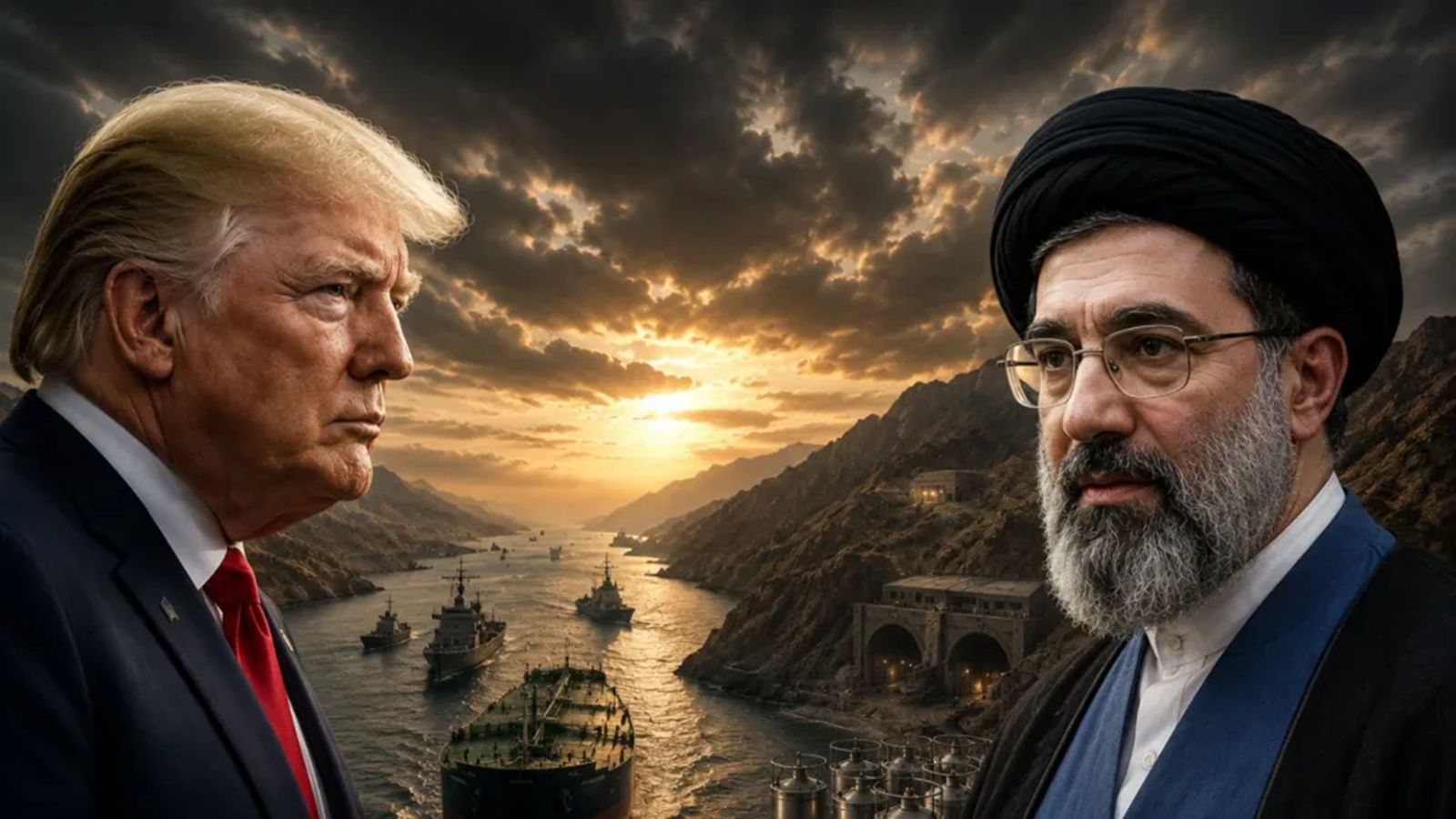
Geopolitical signaling during asymmetric military engagements relies on expanding the theater of operations to impose unacceptable economic friction on adversaries. When Iranian leadership signaled that future military exchanges involving the United States or Israel could extend beyond traditional Middle Eastern littorals into the Indian Ocean, the statement functioned less as an immediate tactical projection and more as an indicator of doctrinal adaptation. Evaluating this threat requires examining maritime logistics, the vulnerabilities of extended supply chains, and the structural limitations of power projection across open ocean expanses.
The Logistics of Maritime Extension
Operating beyond regional chokepoints such as the Strait of Hormuz and the Bab el-Mandeb requires a distinct operational architecture. Traditional Iranian naval assets, optimized for coastal defense and asymmetric swarm tactics in confined waters, possess limited blue-water endurance. Extending active operations into the broader Indian Ocean necessitates reliance on auxiliary vessels, long-range unmanned systems, or clandestine proxy networks capable of targeting commercial shipping lanes.
The economic cost function of maritime disruption does not depend on total naval dominance; it relies on risk inflation. When insurance premiums, rerouting delays, and security escorts increase for vessels transiting the Arabian Sea and the broader Indian Ocean basin, the economic burden distributes globally. Energy and containerized cargo moving from the Persian Gulf toward Asian markets must absorb these transactional frictions, converting localized military friction into widespread macroeconomic impact.
The Asymmetric Calculus of Disruption
Strategic deterrence for a materially disadvantaged state involves shifting the contest from symmetrical metrics—such as tonnage, aircraft sortie rates, or missile defense inventories—to cost-imposing variables. The calculus can be broken down into three operational pillars:
- Symptomatic Friction: Forcing commercial operators to alter routes, install private security, or experience scheduling delays that compound supply chain costs.
- Resource Dissipation: Compelling navies allied with Israel or the United States to commit high-value surface action groups and airborne early-warning assets to escort duties across thousands of square miles of open ocean.
- Vulnerability Asymmetry: Exploiting the openness of global maritime commerce, where a single asymmetric strike or credible threat disproportionately disrupts billions of dollars in trade relative to the low capital expenditure required to execute the disruption.
Strategic Realities and Logistical Constraints
While the rhetorical expansion of a conflict zone serves immediate political signaling purposes, physical execution faces severe operational bottlenecks. The Indian Ocean is vast, and maintaining targeting telemetry, communications, and logistical support thousands of kilometers from home ports presents formidable challenges under sustained air and naval surveillance by adversary coalitions.
Furthermore, projecting power into international shipping lanes risks alienating secondary economic actors, including regional states whose neutrality Tehran relies upon for sanctions evasion and non-oil trade. The risk of overextension remains high, as active naval engagement outside protected littoral zones strips away the defensive advantages provided by underground missile silos, coastal radar networks, and shallow-water geography.
Ultimately, framing maritime security threats across the Indian Ocean underscores how contemporary conflicts leverage globalized trade dependencies. The strategic utility lies not in winning a blue-water naval engagement, but in maintaining a persistent, low-cost credible threat that forces continuous economic calculation upon opposing states.
This video provides additional context regarding Iranian leadership statements concerning geographical limits in potential conflicts.