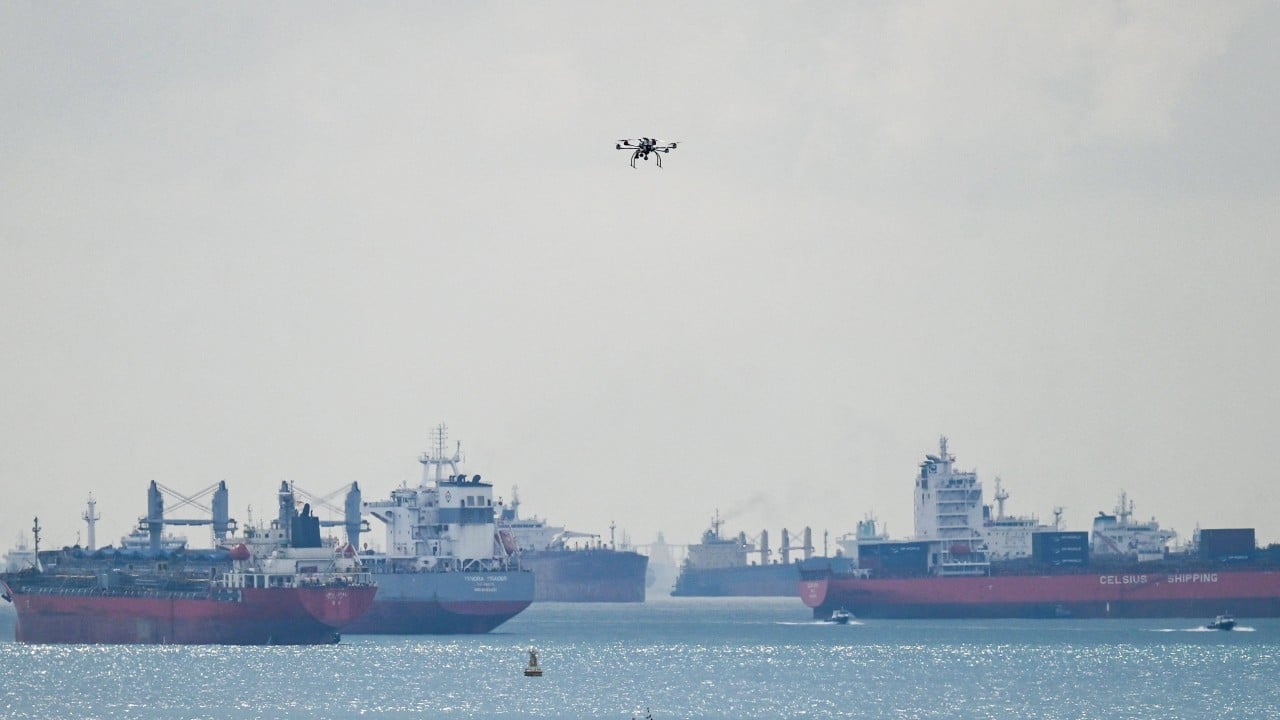
The strategic vulnerability of the Singapore Strait is a function of geographic compression and asymmetric cost structures. While headlines focus on the frequency of "piracy" incidents, a technical audit reveals that the majority of these events are low-level sea robberies—opportunistic maritime muggings—that thrive in the bottleneck where global shipping lanes narrow to less than 15 nautical miles. This concentration of high-value, slow-moving targets creates a permanent incentive structure for local criminal actors, turning the world’s busiest maritime corridor into a petri dish for persistent, low-intensity security degradation.
The problem is not a lack of naval power but a mismatch between traditional defense assets and the micro-tactics of local perpetrators. To understand the current escalation in the Singapore Strait, one must look past the surface-level reports and analyze the mechanics of the "Shadow Economy of the Straits."
The Tripartite Engine of Maritime Risk
The persistence of maritime crime in the Malacca and Singapore Straits (MSS) is driven by three intersecting variables: Hydrography, Jurisdictional Friction, and Economic Asymmetry.
1. Hydrographic Compression
The Singapore Strait is a natural bottleneck. Vessels must navigate a defined lane where the Eastbound Lane of the Traffic Separation Scheme (TSS) brings ships in close proximity to the Riau Islands of Indonesia. As ships reduce speed to navigate these congested waters, they enter a state of operational vulnerability.
- The Speed-to-Boarding Ratio: Boardings almost exclusively occur when vessels are "underway" but restricted in maneuverability. A bulk carrier moving at 10-12 knots provides a stable platform for small, high-speed craft to approach the stern and hook ladders onto the low freeboard.
- The Anchorage Overflow: Due to the sheer volume of traffic (roughly 100,000 vessels annually), ships often wait in non-designated or poorly monitored anchorages. These "waiting rooms" are prime hunting grounds where the stationary nature of the vessel eliminates the technical difficulty of boarding.
2. Jurisdictional Friction
The Straits are governed by a complex overlapping of territorial waters belonging to Singapore, Malaysia, and Indonesia. Criminal actors exploit the "Hot Pursuit" limitation.
When a robbery is detected in the Singapore Strait, the perpetrators often flee south into Indonesian territorial waters. Unless a formal bilateral agreement allows for seamless cross-border pursuit—which is often hampered by sovereignty concerns and diplomatic bureaucracy—the chase stops at the maritime boundary. This creates a functional "safe harbor" for criminals within minutes of a crime.
3. Economic Asymmetry
The cost-benefit analysis for a perpetrator is skewed toward action. The typical "sea robbery" involves 3–5 individuals armed with knives or machetes targeting scrap metal, engine parts, or the personal belongings of the crew.
- Low Entry Cost: The hardware required for these raids (a small fiberglass boat, an outboard motor, and a grappling hook) costs less than $2,000 USD.
- High Relative Yield: A single successful raid can yield engine spares or communication equipment worth $5,000 to $15,000 USD—a massive sum relative to the local GDP per capita in coastal fishing villages.
- Minimal Risk of Lethal Force: Unlike the Gulf of Aden, where private maritime security teams (PMSCs) frequently use lethal force, the Singapore Strait is a "low-lethality zone." Strict regional laws against carrying firearms on commercial vessels mean the perpetrators face little risk of being shot by the crew.
Deconstructing the "Piracy" Misnomer
Precision in terminology is required to allocate security resources effectively. The United Nations Convention on the Law of the Sea (UNCLOS) defines piracy as occurring on the "high seas." Since the vast majority of incidents in this region occur within territorial waters, they are legally classified as "armed robbery against ships."
This distinction is not merely semantic; it dictates the response mechanism. Piracy on the high seas allows any state to intervene. Armed robbery within territorial waters is the exclusive responsibility of the coastal state. When a state lacks the budget or the political will to patrol its fringes, a security vacuum emerges.
The Categorization of Incidents by Intensity
- Level 1: Opportunistic Theft (75% of cases): Petty theft of stores and engine parts. No contact with crew.
- Level 2: Armed Robbery (20% of cases): Crew is threatened or tied up while the ship is ransacked. Physical harm is rare but psychological impact is high.
- Level 3: Hijacking/Cargo Theft (5% of cases): Sophisticated operations targeting oil tankers for "siphoning." This requires مادر ships (mother ships), technical knowledge of pumping equipment, and a black-market buyer for the stolen fuel.
The current uptick in the Singapore Strait is almost entirely concentrated in Level 1 and Level 2 incidents. While less "spectacular" than Somali-style hijackings, the frequency of these events creates a "death by a thousand cuts" for shipowners, driving up insurance premiums and crew stress.
The Cost Function of Maritime Insecurity
For a global shipping firm, the cost of a sea robbery is rarely measured in the value of the stolen goods. The true economic impact is a sum of direct losses and systemic friction.
- Insurance Premiums (The Hull and Machinery/P&I Factor): Frequent incidents in a specific corridor can lead to the area being designated as a "Listed Area" by the Joint War Committee (JWC). This triggers additional premiums for every transit.
- Operational Delays: An incident requires the vessel to stop, report to the littoral state authorities, and undergo investigations. For a Capesize bulk carrier, the daily charter rate can exceed $30,000 USD. A 24-hour delay for an investigation is a direct hit to the bottom line.
- Crew Retention and Hazard Pay: Experienced seafarers are increasingly demanding "danger zone" bonuses for transiting the MSS. In a tight labor market, the reputational risk of being a "dangerous" route makes it harder to man vessels.
Technical Barriers to Mitigation
Current counter-measures are failing because they are reactive rather than preventative. The Information Fusion Centre (IFC) in Singapore provides excellent data, but data does not stop a boarding.
The Sensor Gap
Most commercial vessels rely on standard X-band or S-band radar. These systems are optimized for detecting other large ships to avoid collisions. They struggle to detect "low-observable" targets—small wooden or fiberglass boats that sit low in the water and have a minimal radar cross-section. In heavy rain or high sea states, these boats become invisible to standard bridge equipment.
The Human Element
Crew fatigue is a primary enabler of sea robbery. On a standard transit through the Singapore Strait, the bridge team is preoccupied with navigating one of the most congested waterways on earth. Asking the same crew to perform "anti-piracy watches" on the stern for 12 hours straight is a recipe for failure. Perpetrators wait for the window between 23:00 and 04:00 when human alertness is at its nadir.
Structural Solutions: A Framework for Stability
To move beyond the current cycle of "surge and retreat" policing, the littoral states must adopt a technology-first, integrated strategy.
Persistent Wide-Area Surveillance
The reliance on ship-based radar must be superseded by land-based or buoy-based sensor meshes.
- AIS/Radar Fusion: Integrating Automatic Identification System (AIS) data with coastal radar can identify "dark targets"—vessels operating without AIS transponders.
- Thermal Imaging Arrays: Deploying long-range infrared (FLIR) cameras at known "hotspots" like the Phillip Channel allows for the detection of small craft in total darkness.
The "Bursa" Model of Local Engagement
Suppression alone is insufficient. The economic incentive to rob must be replaced. In parts of Indonesia, maritime crime is a seasonal supplement to fishing. A "Social-Economic Buffer" program that provides alternative maritime employment or subsidies during low-fishing seasons has shown success in other jurisdictions but remains underfunded in the MSS region.
Intelligence-Led Policing (ILP)
Focusing on the boarding is a "downstream" tactic. "Upstream" intervention targets the fences—the scrap dealers and black-market brokers in Batam and Johor who monetize the stolen goods. Without an outlet for stolen engine parts and scrap metal, the utility of the robbery vanishes.
Strategic Recommendation for Shipowners and Regulators
The immediate requirement for vessels transiting the Singapore Strait is a shift from passive observation to active hardening.
- Hardening the Stern: The installation of physical barriers (razor wire, concentrated lighting, and water cannons) must be mandatory for vessels with low freeboards.
- Electronic Watchkeeping: Companies should invest in AI-augmented CCTV systems that trigger bridge alarms when a small craft enters a 50-meter perimeter at a high-closure rate. This removes the "human fatigue" variable from the security equation.
- Diplomatic Standardization: The ASEAN framework must move toward a "Joint Patrol Area" that ignores territorial boundaries for the specific purpose of pursuing maritime robbers. Until the "border escape" tactic is neutralized, the Riau Islands will remain a sanctuary for criminal enterprise.
The Singapore Strait is not descending into chaos, but it is settling into a state of "normalized criminality." This normalization is an invisible tax on global trade. Left unaddressed, these low-level actors will inevitably professionalize, moving from stealing paint and tools to more disruptive activities that could threaten the energy security of the entire Asia-Pacific region. The transition from maritime mugging to systemic sabotage is only a matter of sophistication and opportunity.