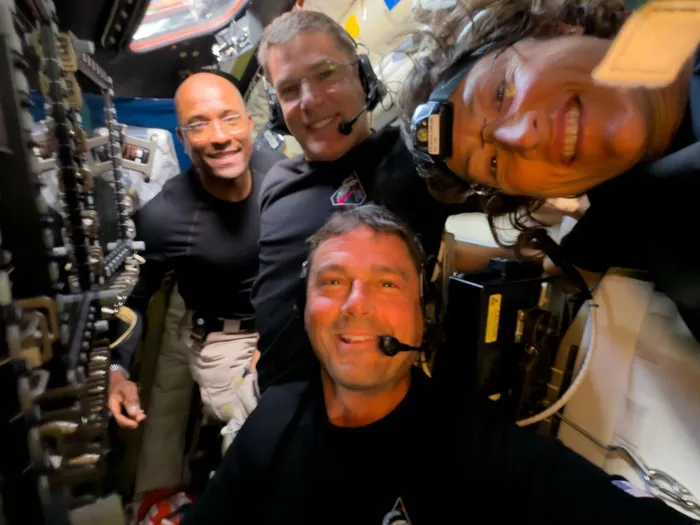
The Artemis II success wasn't a "giant leap" for mankind. It was a victory lap for 1970s physics dressed up in 2020s PR. While the headlines scream about a red planet within reach, the cold math suggests we are actually farther from Mars than we were during the Nixon administration.
The media wants to sell you a narrative of American exceptionalism and a straight line from the Moon to the Martian dunes. It’s a lie. We are currently building a logistics chain that is too heavy, too expensive, and fundamentally incompatible with deep space survival. If we keep following the current roadmap, the first "Mars colony" won't be a gleaming hub of innovation. It will be a multi-billion dollar tomb for the bravest people we have.
The Artemis Trap
Everyone is high on the Artemis II orbital success. But look at the hardware. The Space Launch System (SLS) is a Frankenstein’s monster of Space Shuttle components. It is a non-reusable, expendable relic that costs roughly $2 billion per launch.
You cannot colonize a planet with a disposable truck.
Imagine trying to settle the American West, but every time the wagon reaches the destination, you burn it and shoot the horses. That is the SLS program. The competitor articles rave about "infrastructure," but they ignore the fundamental physics of the Rocket Equation. To get to Mars, we need mass. To get mass, we need a frequency of launches that a government-run, cost-plus contract system physically cannot provide.
The current plan assumes we can use the Moon as a "stepping stone." This is the first great misconception. The Moon and Mars require entirely different landing technologies, different radiation shielding, and different psychological profiles for the crew. Spending a decade trying to build a "Gateway" station in lunar orbit is like trying to learn how to climb Mount Everest by practicing in a walk-in freezer. It feels similar, but the scale of the failure is orders of magnitude different.
The Radiation Lie
We talk about life support like it's a solved problem. It isn't.
On a trip to Mars, the crew will be pelted by Galactic Cosmic Rays (GCRs) and Solar Particle Events (SPEs). Lead shielding is too heavy to launch. Water shielding requires massive volume. The current "ambitious plan" basically hopes the sun doesn't have a bad day during the six-to-nine-month transit.
I have seen aerospace firms burn through three-year development cycles just trying to harden a simple circuit board for a low-earth orbit satellite. Now, we're talking about keeping a human brain—the most delicate biological computer in existence—from turning into Swiss cheese over a 300-million-mile journey.
If we don't solve the propulsion problem to get there faster, the radiation problem makes the mission a suicide pact. We shouldn't be talking about Mars until we are talking about nuclear thermal propulsion. Chemical rockets are for satellites and moon hops. They are not for the solar system.
The False Economy of Mars Politics
Politicians love Mars because it’s far enough away that they can promise it without ever being held accountable for the budget overruns. By the time a Mars mission actually fails or gets cancelled, the people who authorized it will be in retirement homes or different tax brackets.
The "ambitious plan" cited by the press is actually a clever way to keep the military-industrial complex fed. It keeps the legacy contractors like Boeing and Lockheed Martin flush with cash while doing the absolute minimum to innovate.
Why the Private Sector Isn't Saving You Yet
The "Elon will save us" crowd is just as delusional as the NASA fanboys. Starship is a marvel of engineering, but SpaceX is still a business. The moment the federal subsidies for "exploration" dry up, the business case for Mars evaporates. There is no economy on Mars. There are no minerals worth the delta-v to bring back. There is no "Plan B" for Earth if we can't even manage a thermostat on a planet that already has oxygen and water.
Mars is a vanity project. Until we admit that, we can’t do it right.
The Logistics of Death
Let's do a thought experiment. Imagine a scenario where we actually land four people on Mars in 2035.
They have 20 minutes of communication delay. If a seal breaks on a CO2 scrubber, they don't call Houston for help. They die before the signal even reaches Earth. The "success" of Artemis II—a mission that stayed within the Earth-Moon gravity well—has zero carryover to the absolute isolation of Mars.
We are lacking the "Small Unit Autonomy" required for this. Our current space culture is one of micromanagement. Every bolt turned on the ISS is logged and approved by a ground team. On Mars, that culture is a death sentence. We need a breed of humans who are comfortable with the fact that Earth is a memory, not a support system.
The Wrong Questions
People always ask: "When will we get to Mars?"
The better question is: "Why are we going with 1940s propulsion technology?"
We are trying to cross the Atlantic in a rowboat because we’re too stubborn to build an engine. We are obsessed with "next steps" because we are afraid to admit that we are stuck. The Artemis II mission was beautiful, sure. But it was a nostalgic trip, not a forward-looking one.
The Brutal Reality of ISRU
In-Situ Resource Utilization (ISRU)—the idea that we’ll make fuel and oxygen on the Martian surface—is the most hand-waved part of the entire plan. It requires a massive power plant. You aren't doing that with solar panels that get covered in Martian dust. You need nuclear reactors on the surface.
Show me the politician willing to sign off on launching several kilograms of weapons-grade plutonium or highly enriched uranium on a rocket that has a non-zero chance of exploding over Florida.
You can't. And that is why the plan is a fantasy.
Stop Aiming for Mars
We need to stop talking about Mars and start talking about orbit.
The future of humanity isn't on a freezing, irradiated dust ball. It's in high-earth orbit and the Lagrange points. We need to build actual space-based manufacturing. We need to stop fighting gravity every time we want to move a gram of material.
The competitor's "ambitious plan" is just more of the same: throwing money at a hole in the sky to see if it makes us feel like we’re in a sci-fi movie. It’s a waste of the momentum gained from Artemis.
If you want to reach the stars, you have to stop trying to land on every rock you see. You build the infrastructure in the vacuum first. You build the engines that make the trip take weeks, not years. You solve the biology before you commit the bodies.
Everything else is just a press release.
Burn the roadmap. Build a better engine. Stop lying to the public about how close we are to the red horizon. We aren't even out of the driveway yet.