Plastic fangs. A smear of cheap face paint on a kitchen towel. A half-empty pillowcase heavy with fun-sized chocolate bars spilling across the linoleum floor.
For most of October, those are the textures of the season. We spend weeks preparing to be scared by things we know aren't real—styrofoam tombstones on the front lawn, dry ice curling over a punch bowl, a teenager in a rubber mask jumping out from behind an oak tree. It is a collective, sanitized thrill. A night when the dark is supposed to belong to children.
Then the clock ticks past nine. The porch lights flicker off, one by one, up and down the block. And in cities and small towns from Chicago to Orlando, from Texas to California, the make-believe ends.
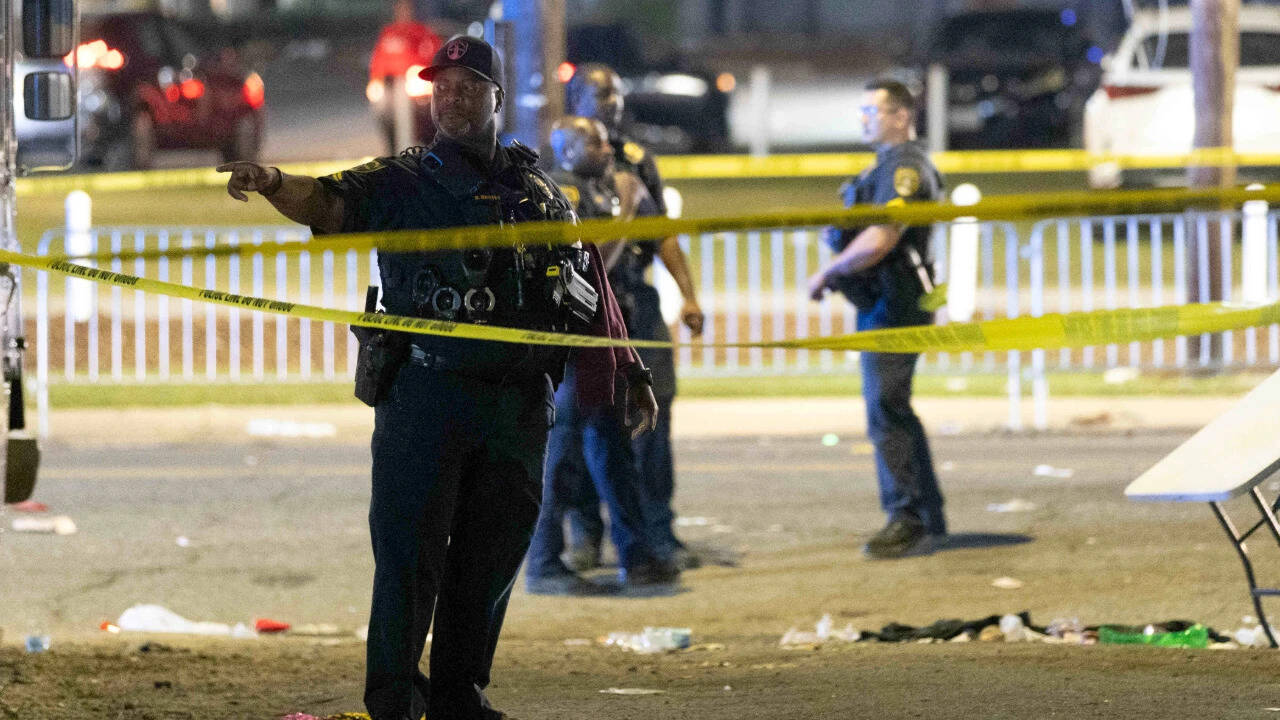
Across a single Halloween weekend in the United States, gunfire left at least 24 people dead and 94 others injured.
Numbers like that have a way of sliding right off the human brain. We read them over morning coffee, wince for half a second, and scroll down to the weather forecast. Twenty-four dead. Ninety-four wounded. They look like box scores from a sporting event we didn't watch.
The Anatomy of a Ruined Night
To understand what those digits actually weigh, you have to strip away the headline and step onto the pavement.
Consider a composite scene—a hypothetical night built from the real police blotters and emergency room logs of that weekend. Picture a rented banquet hall or a suburban backyard party. There are string lights tangled in the branches. Someone has a portable speaker blasting a throwback playlist. A young man—let's call him Marcus, twenty-two years old, wearing a borrowed jersey as a last-minute costume—is standing near the punch table, laughing with his cousin. He isn't looking for trouble. He spent his afternoon helping his mother hang orange streamers on her porch.
An argument sparks near the driveway. Maybe it’s an old grudge carried over from high school, or maybe it’s just alcohol colliding with a bruised ego in a crowded room. Words sharpen. Someone reaches into a waistband.
Chaos.
It takes less than four seconds for six rounds to empty into a space packed shoulder-to-shoulder with people dressed as superheroes and movie characters. In the dark, under strobe lights or the dim glow of a streetlight, nobody can tell who is running for cover and who is drawing a weapon. A girl in a glittery fairy costume trips over a folding chair, clutching her calf where a stray bullet tore through the muscle. Marcus doesn't even hear the final shot; he just feels a sudden, scorching heat beneath his ribs and wonders, with a strange, detached confusion, why the floor is rushing up to meet his face.
That is not an isolated tragedy. That is the exact mechanical reality of the 118 casualties recorded across the country during a holiday meant for candy and ghost stories.
Why Celebrations Become Flashpoints
People often ask why holidays—especially ones centered around nightlife and large gatherings—so frequently curdle into mass casualty events. The answer isn't mysterious, though it is deeply uncomfortable.
Think of a major holiday like a dry forest at the end of a long summer. The brush has been piling up for months: unresolved neighborhood disputes, untreated trauma, economic stress, and the sheer, overwhelming availability of firearms. On an ordinary Tuesday, people stay inside. They go to work, come home, lock their doors, and keep their distance from the people they resent.
Halloween acts like a sudden, hot wind sweeping through those trees. It pulls everyone out into the open at the exact same time. It mixes alcohol, anonymity, crowded house parties, and late-night street gatherings. Suddenly, the social friction increases tenfold. Two people who have spent six months avoiding each other on social media end up standing ten feet apart outside a convenience store at midnight.
When you introduce lethal weapons into an environment engineered for lowered inhibitions, the margin for error vanishes entirely. A fistfight that might have ended with a split lip and a bruised pride in 1995 now ends with a coroner's van idling behind yellow crime-scene tape in the middle of the night.
The Invisible Ledger of Survival
I still remember the first time I heard gunfire in a neighborhood I thought I knew. It doesn't sound like it does in the movies. There is no dramatic, echoing boom. It sounds sharp, flat, and pathetic—like someone aggressively snapping dry kindling right next to your ear, followed by a silence so heavy you can feel it pressing against your eardrums.
That night, nobody on my block died. Nobody even made the local news. Yet for six months afterward, every time a car backfired or a kid lit a firecracker in an alley, my shoulders would involuntarily slam up toward my ears, my heart hammering against my sternum before my conscious mind even registered the noise.
That is the hidden math behind the 94 injured.
When a news report states that 94 people were "injured" in weekend shootings, the word carries a subtle, misleading softness. It makes it sound like a sprained ankle or a fender bender. It hides the colostomy bags. It hides the shattered femurs held together by titanium rods, the nerves severed in a twenty-year-old's dominant hand, the traumatic brain injuries that steal a person's ability to remember their own mother's name.
And it completely erases the uncounted hundreds who walked away without a scratch on their skin.
Every bullet fired into a crowd creates a blast radius of psychological shrapnel. There is the mother who will never again let her middle-schooler walk two blocks to a friend's house on October 31st without tracking their phone every thirty seconds. There is the teenager who watched their best friend bleed out on a sidewalk next to a smashed jack-o'-lantern, who will now spend their twenties flinching at loud music and avoiding crowded rooms. Trauma doesn't show up on a police department's preliminary weekend tally, yet it settles into the bones of a community like damp cold, lingering for decades.
The Trap of Numbness
Perhaps the most dangerous side effect of these recurring headlines is the quiet, creeping paralysis they induce in the rest of us. We have become fluent in the language of grief, yet entirely illiterate in the grammar of prevention.
You can feel the collective shrug happening in real time. One side points to the availability of guns; the other points to the breakdown of community accountability, mental health, or policing. While the arguments loop endlessly on television panels, the underlying conditions remain completely untouched. We start treating gun violence like severe weather—an unavoidable seasonal front that rolls across the map every October, July, and New Year's Eve, leaving wreckage in its wake while we simply board up the windows and hope it misses our street.
I won't pretend to have a neat, three-step policy blueprint that solves a crisis this deeply tangled in American life. Anyone who tells you the solution is simple is either lying to you or trying to get your vote. The truth is messy. It involves confronting the sheer volume of firearms circulating in our neighborhoods, yes, but it also requires looking honestly at why so many young people feel that carrying a loaded weapon to a party is the only way to feel safe—or respected—in their own skin.
What I do know is that surrender is a choice.
Reclaiming the Night
Look closely at the cities that have actually managed to bend the curve downward, even slightly, during high-risk holidays. They didn't wait for a miracle from Washington, and they didn't rely on luck.
Instead, they treated predictable flashpoints with intentional, human-centered intervention. In several urban corridors, violence interrupters—credible messengers who grew up on those exact blocks and carry genuine authority among young men—spent the days leading up to Halloween working the streets like emergency triage teams. They tracked simmering beefs on social media. They stepped into living rooms and barbershops to mediate disputes before anyone ever put on a costume. They stood outside late-night venues not with badges and handcuffs, but with familiar faces, offering a calm word and a physical buffer when tempers began to flare.
At the same time, neighborhoods that refuse to abandon their public spaces to fear often see a measurable drop in late-night chaos. When block clubs organize well-lit, supervised community events, when local businesses keep their lights on and their doors open, and when parents actively reclaim the sidewalks until midnight, the predatory vacuum shrinks. Violence thrives in isolation and darkness; it struggles to breathe when a community is visibly, stubbornly present.
None of this erases the 24 empty chairs at Thanksgiving dinner tables later this month. Nothing brings back a life cut short over a spilled drink or a sideways glance in a crowded room.
Still, refusing to look away matters. Refusing to let 24 dead and 94 wounded become just another forgettable line of text on a glowing screen matters. Because behind every single one of those numbers was a person who woke up on a crisp autumn morning, checked their reflection in the mirror, adjusted a mask or a wig, and walked out the front door expecting nothing more than a good night.
Somewhere tonight, a mother is standing in a quiet hallway, staring at a pair of unworn costume shoes sitting neatly by the front door, waiting for footsteps that are never coming home.