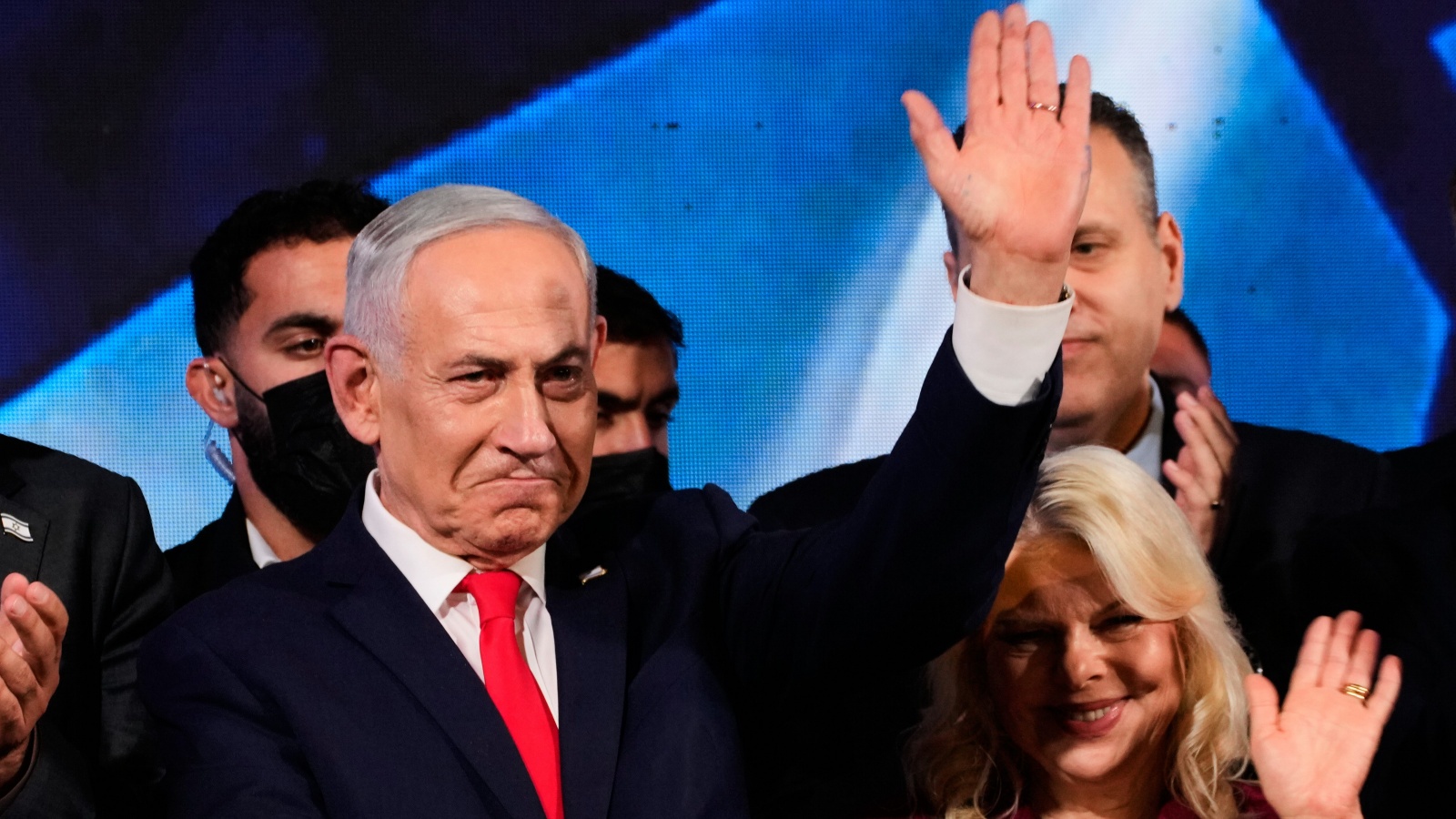
The 2026 Israeli legislative election did not produce a governance crisis by accident; it executed the exact mathematical outcome dictated by a fragmented multi-party proportional representation system operating under a 3.25 percent electoral threshold. When neither the incumbent bloc led by Benjamin Netanyahu nor the fractured opposition clears the 61-seat threshold in the 120-seat Knesset, standard political journalism defaults to horse-race narratives about personality clashes and backroom drama. That framing obscures the structural mechanics driving the stalemate. To understand how a government forms—or why the country slides toward another election cycle—analysts must strip away ideological rhetoric and examine the game-theoretic constraints, seat-allocation algorithms, and veto-player dynamics governing post-election bargaining.
The Structural Architecture of Knesset Stalemate
Israel operates under a single-district, closed-list proportional representation system. Voters cast a single ballot for a party list rather than an individual candidate. While this maximizes ideological representation, it creates severe downstream friction during executive formation.
The 3.25 Percent Electoral Threshold as a Binary Filter
The electoral threshold requires a party list to secure at least 3.25 percent of valid national votes to enter the Knesset, translating to roughly four seats. This threshold acts as a binary cliff rather than a linear gradient.
- Sub-threshold waste: Votes cast for lists finishing at 3.1 percent are discarded entirely before seat distribution begins. Because the remaining valid votes are re-normalized across qualifying parties, a single bloc losing two small factions to the threshold can suffer an immediate, unrecoverable deficit of six to eight seats.
- The merger calculus: Pre-election technical blocs—where ideologically distinct parties run on a joint slate solely to clear the 3.25 percent barrier—solve the entry problem but introduce post-election defection risks. Once sworn into the Knesset, a joint list frequently fractures back into its constituent factions, altering the bargaining power of the prime minister-designate.
The Bader-Ofer Remainder-Vote Mechanism
Seat allocation does not end with simple division. After initial whole seats are assigned based on the general electoral quota, remaining unallocated seats are distributed using the Bader-Ofer method, a modified D'Hondt formula that favors larger parties and pre-registered surplus-vote agreements.
Two parties that sign a surplus-vote agreement before election day pool their leftover votes to compete for an extra seat as a single unit. If one partner fails to clear the 3.25 percent threshold, however, the agreement collapses, and the surviving partner forfeits the combined remainder pool. In a deadlocked Knesset where the margin between a 60-seat minority and a 61-seat majority hinges on a single mandate, technical miscalculations in Bader-Ofer pairings frequently decide the balance of power before coalition talks even begin.
Mapping the Veto-Player Matrix
In political science, a veto player is an individual or collective actor whose agreement is necessary for a change in the status quo. In a hung Knesset where both the Netanyahu bloc and the anti-Netanyahu opposition fall short of 61 seats, every single faction inside a prospective coalition becomes an absolute veto player.
The Minimum Winning Coalition Problem
Standard coalition theory predicts that rational political actors form a "minimum winning coalition"—a government containing just enough seats to pass legislation (61 to 64 seats) so that cabinet ministries and budget allocations are divided among the fewest possible partners.
In the 2026 deadlock, the minimum winning coalition model breaks down due to ideological non-overlap and personal boycott constraints:
- The Bloc-Loyalty Constraint: Core factions within the Netanyahu bloc commit to negotiating exclusively as a unified front. This prevents the opposition from peeling off individual religious or right-wing parties to build a narrow center-right government.
- The Personal Boycott Constraint: Key opposition leaders campaign on explicit pledges not to sit in a government headed by Netanyahu. Breaking this pledge incurs catastrophic reputational damage among their base, effectively removing cross-bloc grand coalitions from the feasible bargaining set.
- The Arab-Party Inclusion Barrier: While predominantly Arab lists hold decisive seats that could mathematically push an opposition bloc past 61, sharp disagreements over national security policy, judicial authority, and municipal budget allocations prevent these factions from entering full cabinet partnerships. External confidence-and-supply support—where a party votes to install a government without joining it—remains unstable because any single security escalation triggers immediate withdrawal of support.
The Hold-Up Problem in Post-Election Bargaining
When a coalition requires 61 seats and a prospective bloc holds 58, the leader of a four-seat faction possesses identical leverage to the leader of a 30-seat party. Economists classify this as the hold-up problem: once an actor realizes their participation is indispensable to completing a transaction, they extract rents far exceeding their proportional contribution.
In Knesset negotiations, these rents take three concrete forms:
- Portfolio Inversion: Small parties demand top-tier sovereign ministries—Finance, Defense, or Justice—rather than junior portfolios proportional to their seat count.
- Statutory Pre-Commitments: Factions demand binding legislative timelines for contentious bills (such as military conscription exemptions, judicial override clauses, or state-religion status quo changes) as a precondition for swearing in the government.
- Fiscal Earmarks: Coalition agreements lock in discretionary sectoral funding streams before the state budget is drafted, constraining the Finance Ministry's macroeconomic flexibility.
The Institutional Clock and Mandate Mechanics
Post-election negotiations do not operate in an open-ended vacuum. Israeli Basic Law: The Government imposes strict temporal constraints that force actors toward binary outcomes.
Phase One: Presidential Consultations and the Initial Mandate
Following the publication of official results by the Central Elections Committee, the President of Israel conducts formal consultations with representatives of every faction elected to the Knesset. Each faction recommends a candidate for Prime Minister. The President then assigns the mandate to form a government to the Knesset member with the highest probability of assembling a 61-seat majority—typically, though not automatically, the leader of the largest bloc.
The designated candidate receives 28 days to present a government to the Knesset. If negotiations stall near the deadline, the President holds discretionary authority to grant a single extension of up to 14 days.
Phase Two: The Secondary Mandate and the 21-Day Free-For-All
If the initial mandate holder fails to secure 61 votes within the allotted 42-day window, the mandate returns to the President. The President may then transfer the mandate to a rival candidate for a second 28-day period without an option for extension, or notify the Speaker of the Knesset that no viable coalition exists.
Should the second candidate also fail, the process enters its final statutory phase: a 21-day period during which any group of 61 Knesset members may submit a formal written request to the President nominating any Knesset member—including one who already failed—to form a government. If this final window expires without a 61-signature petition, the Knesset dissolves automatically, triggering mandatory snap elections within roughly 90 days.
Three Causal Pathways Out of the Deadlock
Given the structural constraints of the 2026 seat distribution, the post-election environment resolves through one of three distinct mechanical pathways. Each pathway carries specific operational trade-offs and failure modes.
Pathway A: Asymmetric Defection and Poaching
Rather than negotiating with an entire rival party, a bloc leader targets individual members of Knesset (MKs) within fragile, newly formed opposition lists.
- The Mechanism: Under Israeli law, a single MK who defects from their faction without resigning faces severe institutional sanctions: they are barred from running on any existing party list in the next election and cannot be appointed as a minister or deputy minister during the current Knesset term. To bypass this penalty, a bloc leader must recruit at least one-third of a rival faction's members simultaneously, allowing them to legally split off as an independent parliamentary group.
- The Limitation: Faction leaders anticipate this vulnerability by placing loyalists at the top of candidate lists and demanding signed loyalty pledges. While poaching solves the immediate arithmetic problem of reaching 61 seats, a government built on individual defectors suffers from chronic legislative fragility, as every subsequent vote requires renegotiating with defecting MKs who face no electoral future in their original party.
Pathway B: The Rotating Unity Government
When neither bloc can reach 61 seats independently and the cost of a repeat election becomes politically unacceptable, rival bloc leaders negotiate a parity-based power-sharing arrangement.
- The Mechanism: Because neither side trusts the other to honor a handshake agreement, parity governments require constitutional engineering. In recent Israeli precedent, this involved amending Basic Law: The Government to create the legal position of Alternate Prime Minister. Under this structure, the cabinet is divided equally between the two blocs, each bloc holds a collective veto over cabinet decisions, and the premiership automatically transfers to the Alternate Prime Minister on a fixed date without requiring a new Knesset confidence vote.
- The Limitation: Parity governments institutionalize gridlock inside the executive branch. While they successfully pass a baseline state budget and manage immediate security operations, any structural reform—whether economic deregulation, judicial restructuring, or territorial policy—is neutralized by mutual veto power. Furthermore, the prime minister scheduled to serve first retains a structural incentive to collapse the government over a budget dispute just before the rotation date, triggering early elections while still holding the office of caretaker prime minister.
Pathway C: Caretaker Continuity and Attrition Warfare
If coalition negotiations fail across all statutory windows, the incumbent government remains in office as a transitional (caretaker) government until a new Knesset is elected and swears in a successor.
- The Mechanism: Under Israeli constitutional doctrine, a caretaker government possesses the same formal legal authority as a regular government, tempered by a judicial requirement of "restraint" regarding major irreversible policy shifts or senior appointments close to an election. For an incumbent prime minister facing an unfavorable post-election seat map, dragging out coalition talks to force a repeat election is a rational defensive strategy. It preserves executive control over state apparatus, security cabinet briefings, and crisis response while forcing opposition factions to finance another expensive campaign.
- The Limitation: Governing via prolonged caretaker status degrades macroeconomic stability. Without a newly approved Knesset majority, the state operates on a 1/12th monthly continuity budget based on the previous year's expenditures, freezing new infrastructure projects, delaying public-sector wage agreements, and signaling institutional instability to sovereign credit rating agencies.
Quantifying the Economic and Governance Cost Function
Prolonged coalition paralysis is not merely a political spectacle; it imposes measurable operational costs on state capacity. When analyzing the 2026 stalemate, institutional investors and policy planners track three primary degradation metrics:
- Legislative Throughput Collapse: During coalition bargaining and transitional periods, private member bills and government-sponsored structural reforms halt entirely. The Knesset Finance Committee and Foreign Affairs and Defense Committee operate strictly on emergency maintenance agendas.
- Budgetary Rigidity: Under the 1/12th continuity rule mandated by Basic Law: The State Economy, ministries can spend only one-twelfth of the prior year's approved budget per month, adjusted strictly for inflation. New strategic initiatives—such as defense procurement adjustments, artificial intelligence infrastructure grants, or healthcare capacity expansions—cannot be funded without special Finance Committee exemptions.
- Executive Bandwidth Misallocation: Senior ministers spend upward of 70 percent of their operational hours managing intra-coalition crisis negotiations, committee chair assignments, and party-list survival rather than departmental execution.
Strategic Forecast and Operational Play
Standard political commentary treats the post-election impasse as a failure of leadership negotiation. That diagnosis is flawed. The deadlock is the logical equilibrium of a system combining a low electoral threshold, rigid ideological blocs, and high personal exit costs for compromise.
For institutional stakeholders, market analysts, and policy observers tracking the 2026 coalition talks, ignore daily leaks regarding ministerial seat swaps and focus strictly on three leading indicators:
- The Knesset Speaker Election: Before a government is sworn in, the Knesset elects a Speaker. If the incumbent bloc successfully retains or captures the Speakership during the initial 28-day window, it gains control over the parliamentary agenda, allowing it to delay opposition-sponsored disqualification bills and dictate the pace of legislative dissolution.
- The Arrangements Committee Vote: Control of the Knesset Arrangements Committee determines which factions chair key legislative committees during the transitional period and governs whether splinter factions receive legal recognition to split from their parent lists. Whichever bloc wins the Arrangements Committee majority holds the procedural machinery required to execute asymmetric poaching.
- The State Budget Deadline: Monitor the statutory clock for passing the annual state budget. Under Israeli law, failure to pass a budget by the designated deadline automatically dissolves the Knesset. Any coalition agreement that omits a multi-year budget commitment is structurally designed to fail within twelve months.
Until one bloc secures 61 signatures backed by an enforceable budget agreement—not merely a tentative division of cabinet ministries—the operational baseline for Israel's governance remains protracted legislative paralysis followed by high-probability snap elections.