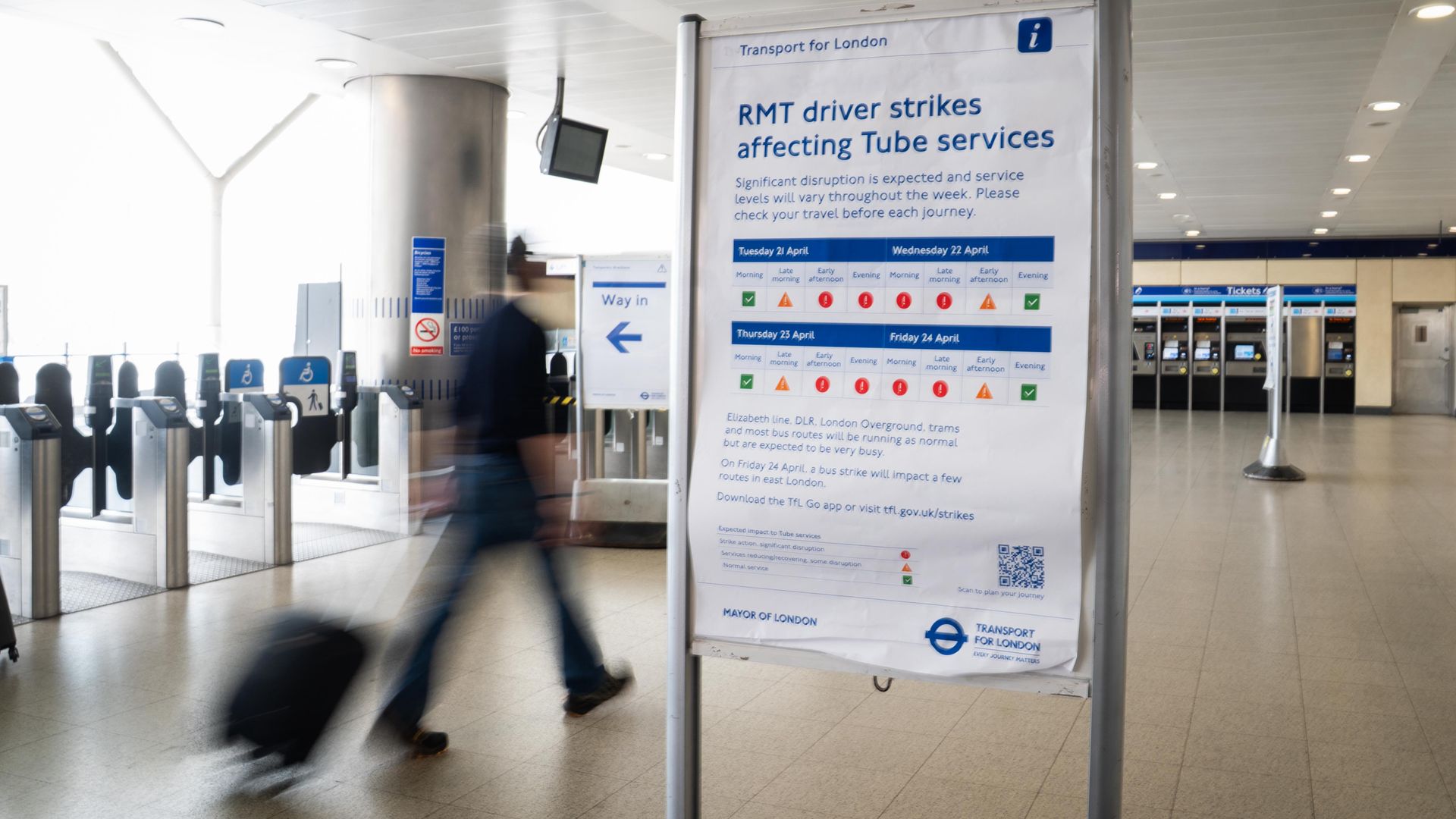
London is about to hit another wall of transit chaos. If you think you can just roll out of bed and find an alternative route to the office next week, you are in for a shock. The Rail, Maritime and Transport Union (RMT) is staging another aggressive round of walkouts that will cripple the London Underground.
But here is the detail that most people are missing. These are mid-day strikes. They do not start at midnight. They start at noon. That means your morning commute might look perfectly fine, but your trip home will be an absolute nightmare.
If you need to navigate the city between Tuesday 19 May and Friday 22 May, the old strike playbook will not work. Here is exactly what is happening, why the network is shutting down, and how to actually get across London without losing your mind.
The Midday Trap and the Exact Dates to Watch
The RMT union members are walking out in two distinct 24-hour blocks. Because these strikes run from midday to midday, the disruption is staggered. It bleeds across four calendar days, messing up both morning and evening routines in completely different ways.
Tuesday 19 May to Wednesday 20 May
The first wave kicks off at exactly 12:00 midday on Tuesday. Transport for London (TfL) expects normal services until mid-morning on Tuesday. By 11:00, drivers will start winding down operations. After 12:00, severe delays will hit every single line.
On Wednesday morning, the hangover continues. Trains will be out of position, and stations will remain closed. Expect a heavily disrupted morning commute. Services will only start crawling back to normal after the strike officially ends at 11:59 on Wednesday.
Thursday 21 May to Friday 22 May
The second wave repeats the exact same pattern. Thursday morning will function relatively normally until mid-morning. The hammer drops at noon. The entire network will face massive service reductions throughout Thursday afternoon and evening.
Friday morning will see major ongoing disruption as the city tries to restart the network. While TfL expects services to increase from midday on Friday, you should count on delays lasting well into Friday evening.
The Total Blackouts and Limited Lines
Do not assume a skeleton service will save you. TfL has already confirmed that certain sections of the network will face total closures. If your daily route relies on these specific lines, you need to find an alternative now.
During the strike windows, no service at all is expected on these routes:
- The entire Circle line.
- The entire Piccadilly line.
- The Metropolitan line between Baker Street and Aldgate.
- The Central line between White City and Liverpool Street.
Other lines will attempt to run a highly reduced service, but wait times will be massive. Stations will close at short notice due to overcrowding.
The Battle Over the Four Day Week
This isn't your standard dispute about pay rises or pension cuts. This fight is entirely about a new roster system. TfL wants to trial a voluntary four-day work week for Tube drivers, starting with a pilot program on the Bakerloo line.
TfL Chief Operating Officer Claire Mann insists the change is designed to improve work-life balance. According to management, any driver who wants to stick to a traditional five-day pattern can do so.
So why is the RMT walking out? The union isn't against a four-day week in theory. In fact, they want one. But they want a 32-hour work week spread across those four days. TfL's proposal keeps the weekly hours higher, resulting in longer individual shifts. The RMT claims these longer shifts are unsafe and ruin the wider framework of driver agreements.
TfL has hit back, calling the union's 32-hour demand completely unaffordable. Management claims shrinking the work week to 32 hours would cost tens of millions of pounds that the network simply does not have. With both sides completely dug into their positions, the June strike dates (16-19 June) are already looking inevitable.
How to Actually Move Across London Next Week
Forget trying to cram onto a bus in central London. During the April strikes, bus queues wrapped around entire blocks. If you need to travel, you need to use the networks that are completely unaffected by the strike action.
Maximize the Elizabeth Line and Overground
The Elizabeth line, London Overground, DLR, and the Trams are running a normal schedule. They will be incredibly busy, but they will be moving. If you usually take the Central line across town, use the Elizabeth line instead. Just expect major queuing systems outside core hubs like Paddington, Liverpool Street, and Tottenham Court Road.
The Walking Strategy
If your journey is under three miles within Zone 1, walking is faster than waiting for a bus. Download an offline map app before you leave. Do not rely on live transit apps on the day, as data networks get heavily congested around major stations when thousands of people look for alternative routes simultaneously.
Santander Cycles and E-Bikes
The Santander cycle network will operate as normal. However, central London docking stations will empty out by 8:30 AM and fill up completely by 5:30 PM. If you plan to use an e-bike app like Lime or Forest, expect surge pricing and a severe lack of available bikes in commercial districts.
If you have a hospital appointment at major hubs like Imperial College Healthcare or Great Ormond Street, or if you are heading to campus for university exams, leave at least 90 minutes earlier than usual. The morning commutes on Wednesday 20 May and Friday 22 May will be the hardest hit windows for students and patients alike.



