Europe faces a structural paradox in its pursuit of technological sovereignty. The European Union commands a €17 trillion single market and a world-class scientific research base, yet it remains fundamentally dependent on non-European infrastructure for its digital stack. This dependence is not a failure of intellect or capital availability; it is a structural consequence of market fragmentation, asymmetric capital allocation, and regulatory design that prioritizes risk mitigation over market capitalization.
Achieving genuine technological autonomy requires moving past the political rhetoric of "strategic autonomy" and deconstructing the digital economy into its physical, computational, and regulatory components. The path forward demands a cold calculation of path dependencies and a deliberate strategy to scale European digital infrastructure.
The Three Layers of Digital Dependency
To evaluate Europe's current position, the technology stack must be separated into three distinct layers: the hardware foundation, the cloud compute layer, and the application orchestrator.
The Hardware Bottleneck and Litmus Test
Europe possesses critical chokepoints in the global hardware supply chain, most notably in photolithography systems. However, ownership of a single chokepoint does not equal vertical sovereignty. The hardware layer is bound by extreme capital intensity and long depreciation cycles. A semiconductor fabrication plant requires billions in capital expenditure before yielding a single wafer. Europe’s goal to capture 20% of global semiconductor manufacturing faces structural headwinds because fabrication facilities require proximity to a dense ecosystem of chemical suppliers, packaging facilities, and downstream design partners that currently cluster in East Asia.
The Cloud Compute Deficit
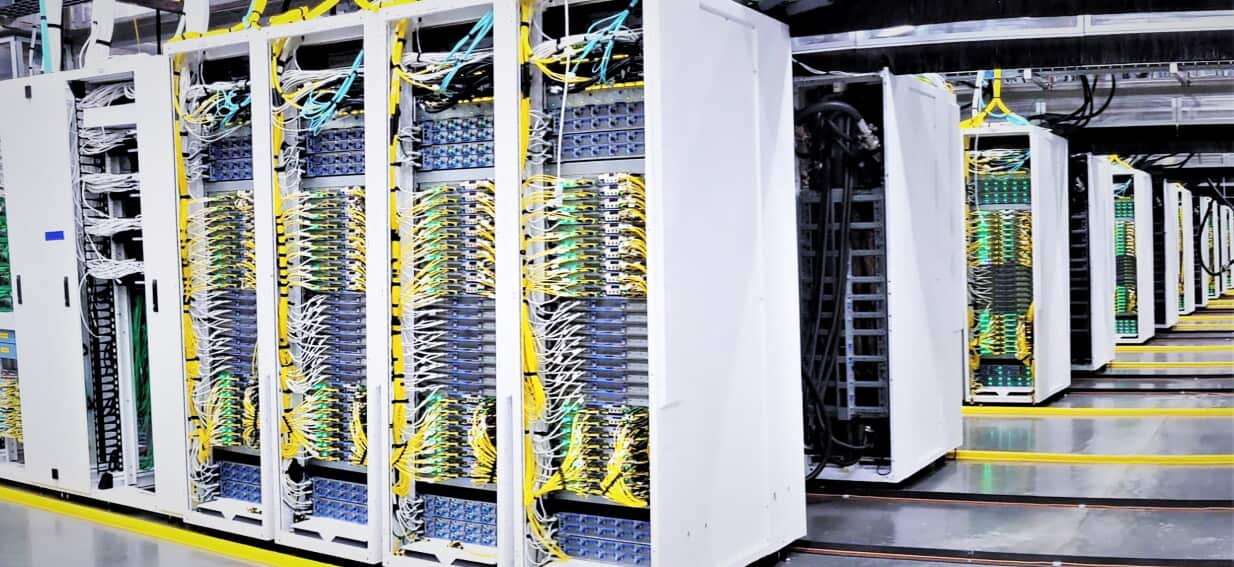
The compute layer is where Europe faces its steepest challenge. The modern digital economy runs on hyperscale cloud infrastructure. European enterprises and government agencies overwhelmingly rely on American cloud providers for data storage, machine learning pipelines, and infrastructure-as-a-service (IaaS). The economic mechanism at work here is the data flywheel: large scale lowers the marginal cost of compute, which attracts more data, trains better models, and generates higher revenues to reinvest in capital expenditure. European cloud providers operate at a fractional scale, leaving them unable to compete on price or feature velocity.
The Application and Model Orchestration Gap
At the software layer, European companies regularly create high-performing foundational models, yet they face an immediate capitalization hurdle when scaling those models into global platforms. The limitation is not algorithmic capability; it is the availability of late-stage growth capital and compute credits. When a European software entity must purchase compute from a non-European hyperscaler, economic value leaks out of the domestic ecosystem, compounding the capital asymmetry.
The Economics of Scale Asymmetry
The fundamental friction in the European tech ecosystem lies in the divergence between how capital scales in a unified market versus a fragmented one. The United States and China benefit from domestic markets that offer immediate homogeneity of language, consumer behavior, and regulatory enforcement. Europe’s single market remains fragmented along several fault lines.
Domestic Market Fragmentation Cost
While goods move freely across European borders, digital services encounter localized challenges. Variations in labor laws, tax regimes, data localization interpretations, and consumer protection nuances mean that a software platform scaling from France into Germany faces compliance costs that an American platform scaling from California to Texas does not. This friction acts as a tax on growth, slowing down the customer acquisition velocity required to achieve network effects.
The Venture Capital Growth Chasm
Europe has a highly efficient engine for seed and Series A funding. The breakdown occurs at Series C and beyond. The European financial ecosystem lacks the depth of institutional growth capital found in US pension funds or sovereign wealth funds.
[Seed / Series A] -> Highly Liquid (European Funds & Grants)
[Series B / Growth] -> The Funding Valley of Death (Capital Deficit)
[Series C+ / Scale] -> Asymmetric Reliance on Non-European Mega-Funds
When a European technology company requires a €100 million growth round, it almost systematically looks to foreign capital markets. This capital injection often requires shifting corporate structures or moving headquarters closer to the capital source, resulting in an intellectual property and tax revenue drain.
The Regulatory Dualism Paradox
European technology policy operates via a dualism that simultaneously protects citizens and constraints domestic scale. The General Data Protection Regulation (GDPR), the Digital Markets Act (DMA), and the AI Act are monumental achievements in establishing global standards for digital rights. However, their compliance architecture introduces unintended operational asymmetries.
Compliance Cost Asymmetry
A multinational technology firm with hundreds of billions in cash reserves can absorb the legal and engineering costs required to comply with complex, proactive regulatory frameworks. For a mid-sized European enterprise or a high-growth startup, the cost of proactive compliance consumes a significantly higher percentage of operational runway.
The regulatory burden creates an unintended barrier to entry. By forcing companies to audit data lineages, secure conformity assessments, and maintain exhaustive logs before achieving market scale, the regulatory framework inadvertently favors incumbent platforms that already possess the scale to amortize these legal costs.
Risk Aversion and Innovation Dampening
The precautionary principle, which underpins much of European regulatory philosophy, prioritizes the mitigation of worst-case scenarios over the optimization of best-case outcomes. In highly dynamic technology sectors like generative AI or autonomous systems, this creates a velocity bottleneck. While foreign competitors iterate in live production environments, European firms are often delayed by legal perimeter-mapping, ceding the early-mover advantage that dictates long-term market share in digital networks.
Quantifying the Cost of Non-Sovereignty
Relying on external digital infrastructure introduces severe operational and geopolitical risks that can be quantified through specific economic vectors.
- Data Rent Extraction: European enterprises pay a perpetual digital tax to foreign infrastructure providers. This capital leaves the European economy instead of funding domestic R&D loops.
- Jurisdictional Vulnerability: Data stored or processed via foreign entities, even if physically located within European borders, remains subject to extraterritorial legal instruments like the US CLOUD Act. This creates structural legal uncertainty for critical state infrastructure and highly regulated industries.
- Strategic Disintermediation: As foreign platforms integrate deeper into European industrial supply chains—such as automotive, logistics, and healthcare—they capture the high-margin software layer, relegating European industrial champions to low-margin hardware manufacturing.
Structural Countermeasures for True Autonomy
To shift from a reactive regulatory stance to a proactive industrial position, Europe must execute a strategy centered on capital aggregation, computing resource pooling, and harmonized scaling pathways.
Consolidating Sovereign Capital Pools
Europe must mobilize its massive domestic savings pool into productive technology assets. This requires structural reforms to incentivize European pension funds, insurance companies, and institutional asset managers to allocate a dedicated percentage of their portfolios to late-stage venture capital and deep-tech infrastructure.
The creation of pan-European mega-funds of funds would allow domestic managers to match the check size of foreign growth investors, ensuring that high-growth companies can scale to liquidity events without migrating their corporate architecture.
Decoupling Compute from Monopolies via Shared Infrastructure
To mitigate the cloud compute deficit, the public and private sectors must co-invest in open-architecture compute consortia. This does not mean building state-subsidized replicas of existing commercial clouds, which is a proven path to commercial irrelevance. Instead, it requires investing heavily in next-generation decentralized infrastructure, open-source AI models, and federated data spaces across key industrial sectors like automotive, aerospace, and healthcare.
By building unified data repositories that conform to European privacy standards, Europe can give its domestic innovators an asset that foreign tech giants cannot easily replicate: access to high-quality, structured industrial data for B2B applications.
Establishing Regulatory Safe Harbors for Scale
The enforcement of regulations like the AI Act and GDPR must be streamlined to lower the operational friction for growing enterprises. Implementing unified, pan-European regulatory sandboxes with single-point-of-contact approvals would eliminate the need to negotiate with 27 distinct national data protection authorities.
Furthermore, compliance requirements must scale progressively based on market share or compute capability. Startups and mid-market innovators should operate under streamlined reporting structures, allowing them to focus resources on product development and market acquisition during their critical growth phases, with full-scale compliance burdens kicking in only after reaching systemic size.
The execution of these structural shifts determines whether Europe becomes a dynamic, self-sustaining hub of the global digital economy or remains a wealthy, highly regulated consumer market dependent on external technology infrastructure. The window to build self-sustaining digital scale narrows with every compute cycle; execution must supersede deliberation.