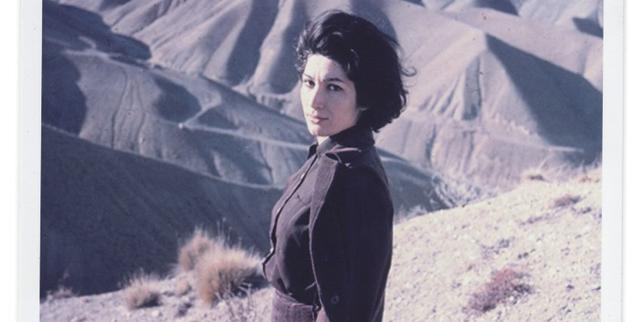
Forough Farrokhzad did not merely write poetry; she engineered a structural shift in the Persian linguistic and social landscape by dismantling the boundary between the private female interior and the public literary square. To understand her influence, one must analyze her work not as a collection of emotional verses, but as a deliberate disruption of the "Aruz" (classical Persian prosody) and a calculated assault on the patriarchal monopoly of the first-person perspective. Her career represents a transition from traditional sentimentality to a raw, existential realism that served as a precursor to the radical shifts in Iranian identity leading up to 1979.
The Tripartite Architecture of Farrokhzad’s Evolution
The development of Farrokhzad’s literary output follows a distinct trajectory of increasing technical complexity and social defiance. This evolution is categorized into three specific phases: You might also find this connected coverage useful: Evaluating the Mercury Prize Shortlist Mechanics Selection Bias and the Economics of Recognition.
- The Captive Phase (Identity Definition): Her early collections—The Captive, The Wall, and The Rebellion—function as a baseline of resistance. During this period, she utilized standard forms to articulate non-standard desires. The friction here exists between the rigid structure of the Persian quatrain and the prohibited nature of her subject matter: female physical autonomy and domestic confinement.
- The Transitional Phase (Formal Deconstruction): Her meeting with filmmaker Ebrahim Golestan introduced a cinematic lens to her poetry. The rhythmic pacing of her work shifted from metrical predictability to "visual" sequencing. She began to treat the stanza as a film frame, prioritizing the "cut" and the "montage" over the flow of traditional rhyme.
- The Rebirth Phase (Total Synthesis): With Another Birth and the posthumous Let Us Believe in the Beginning of the Cold Season, Farrokhzad achieved a synthesis of modernism and mysticism. She stripped away the ornamental artifice of classical Persian poetry, replacing it with a vernacular that was simultaneously mundane and prophetic.
The Disruption of the Male Gaze in Persian Syntax
Persian literature historically utilized a gender-neutral "I" or a male-oriented perspective, even when the subject was love. Farrokhzad’s primary innovation was the radical "feminization" of the poetic voice. This was not a passive shift but a structural reclamation. She introduced biological and domestic specificities—menstruation, the kitchen, the physical sensation of the female body—into a high-literary tradition that had spent centuries sanitizing these realities.
The cause-and-effect relationship here is clear: by naming the domestic and the physical, she invalidated the "Ghazal" tradition's reliance on the abstract "Beloved." This forced the reader to confront a concrete, sentient female agent rather than a poetic symbol. The backlash she faced was a direct response to this loss of symbolic control; she had moved the female figure from the periphery of the poem's gaze to the center of its consciousness. As highlighted in detailed reports by Rolling Stone, the implications are widespread.
The Cinematic Influence as a Narrative Force Multiplier
Farrokhzad’s work in documentary film, specifically The House is Black (1962), served as a laboratory for her poetic maturation. This film, documenting a leper colony, applied a "Humanist Realism" that she subsequently imported into her writing.
- Objective Correlation: She stopped describing emotions and started documenting objects. A "broken window" or a "dying garden" became the functional units of her later poetry.
- Temporal Distortion: She abandoned linear narrative. Her late poems function as temporal loops, where the past and the impending "cold season" of political and personal decay coexist.
- The Ethics of the Lens: Her filmic eye refused to look away from deformity and social failure. This translated into a poetic refusal to adhere to the "beautification" standards of the Iranian literati.
Socio-Political Thermodynamics: The Pressure of Pre-Revolutionary Iran
Farrokhzad’s prominence occurred within the specific socio-political vacuum of the 1950s and 60s. The Pahlavi state was pushing for rapid modernization (The White Revolution), yet social structures remained deeply traditional. Farrokhzad occupied the friction point between these two forces.
She was neither an agent of the state’s superficial Westernization nor a devotee of the traditionalist backlash. Instead, she represented a third path: indigenous modernism. Her poetry identified the "rot" in the urban landscape—the alienation of the growing middle class, the hypocrisy of the intellectual elite, and the impending collapse of the social contract. When she wrote "I pity the garden," she was diagnosing a systemic failure of the Iranian ecosystem to sustain life and growth under the weight of its own contradictions.
The Linguistic Economy of Her Final Works
In her final phase, Farrokhzad achieved a high degree of linguistic efficiency. The "Cost of Information" in her poetry dropped as she moved toward simpler, more devastating vocabulary. This simplicity is deceptive. It relies on a deep understanding of Persian cadence, allowing her to manipulate the reader’s breath and expectation.
Her use of free verse (She’r-e Nima’i) was more than a stylistic choice; it was an ideological rejection of the "measured" life. By breaking the meter, she mirrored the broken social reality of Tehran. The irregular line lengths create a sense of anxiety and urgency that traditional forms could not accommodate.
Constraints and Limitations of the Legacy
While Farrokhzad is often canonized as a feminist icon, it is vital to distinguish between her personal rebellion and a structured political movement. Her resistance was fundamentally individualistic and existential. She did not provide a roadmap for collective action; rather, she provided the vocabulary for individual consciousness.
The primary limitation of her impact lies in the "martyrdom" narrative that followed her accidental death at age 32. This narrative often obscures the technical rigor of her work, replacing critical analysis with hagiography. To truly engage with Farrokhzad, one must look past the tragic biography and focus on the linguistic architecture that allowed her to survive censorship and social ostracization.
Strategic Integration of the Farrokhzad Model in Contemporary Analysis
The enduring relevance of Forough Farrokhzad is found in her methodology of "Truth-Telling at Scale." For modern observers, her work provides a blueprint for how a marginalized voice can bypass traditional gatekeepers by inventing a new language.
The strategy for contemporary engagement with her work involves three distinct actions:
- Isolate the Text from the Biography: Analyze the shift in verb tenses and the use of the "imperative" in her late poems to understand how she established authority over the reader.
- Map the Geography of Resistance: Trace the physical locations in her poetry—from the closed bedroom to the open street—to visualize the expansion of her political consciousness.
- Evaluate the Vernacular Shift: Compare the vocabulary frequency of her first collection against her last. The data will show a deliberate move away from "poetic" nouns toward "industrial" and "domestic" nouns, marking the true birth of Iranian modernism.
The "Cold Season" she predicted arrived shortly after her death. The durability of her work under the post-1979 regime—despite periods of censorship—proves that a sufficiently robust aesthetic framework can withstand even the most drastic shifts in the political climate. The final strategic move is to recognize her not as a poet of the past, but as the architect of a psychological space that remains the primary residence for the Iranian avant-garde today.