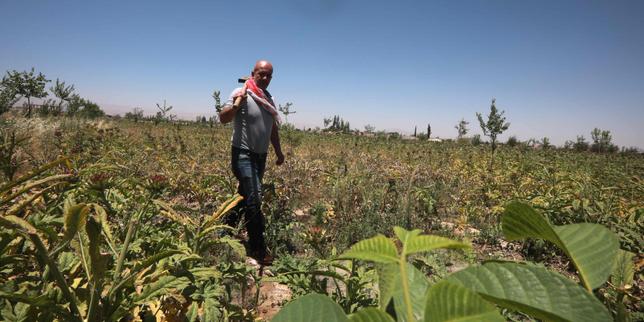
Syria’s current humanitarian state is not a temporary shortfall of resources but a complete structural collapse of its agricultural and economic systems. When over 13 million individuals face acute food insecurity, the crisis has moved past local logistical friction into a permanent state of macroeconomic failure. Resolving this requires looking past raw emergency aid metrics to analyze the structural bottlenecks across supply chains, currency mechanics, and agricultural degradation.
The Three Vectors of Food System Collapse
A nation’s capacity to feed its population relies on three operational pillars: domestic production velocity, import liquidity, and localized distribution networks. In Syria, all three vectors have sustained compounding damage over a decade of conflict and economic isolation.
1. Domestic Production Velocity and Input Degradation
The domestic agricultural base, primarily centered in the Euphrates basin and the northwest plains, faces a multi-front contraction. Agricultural output is governed by a strict production function reliant on capital inputs, labor, and predictable climate conditions. Every variable in this function has degraded.
- The Energy Deficit: Irrigation requires consistent electrical power or diesel fuel to run water pumps. The destruction of power plants and the redirection of oil revenues away from civic infrastructure mean farmers rely on black-market diesel. This drives the marginal cost of crop production above the purchasing power of the local population.
- Fertilizer and Seed Monopolies: Sanctions and broken domestic supply lines have eliminated access to high-yield seed varieties and phosphate-based fertilizers. Farmers rely on low-quality, uncertified seeds that reduce crop resilience against pests and shifting rainfall patterns.
- Soil Salinization and Infrastructure Decay: Neglected irrigation channels have led to poor drainage, increasing soil salinity in previously fertile zones. This causes a permanent reduction in arable land yield that cannot be reversed by a single favorable weather cycle.
2. Import Liquidity and Currency Devaluation
When domestic production fails to meet base caloric demands, a country must rely on international markets. This shift introduces a severe macroeconomic bottleneck: the requirement for foreign currency reserves.
The Syrian Pound has undergone a continuous devaluation spiral. This collapse strips both the state and private importers of the purchasing power needed to secure bulk grain shipments on the global market. Because international wheat trading operates on hard currencies, the domestic price of bread tracks the black-market exchange rate rather than local wage inflation. This creates an immediate divergence: while nominal wages remain stagnant, the real cost of staple foods increases exponentially.
3. Distribution Infrastructure Breakdown
The physical movement of food from fields and ports to urban centers requires functioning transit networks, cold storage, and secure trade routes. The current reality features a fragmented geography controlled by competing factions, check points with arbitrary transit fees, and a lack of refrigerated transport. Food rots at production sites because the cost of transport to high-demand urban centers exceeds the market value of the goods at delivery.
The Inflationary Spiral Mechanism
Food insecurity is amplified by hyperinflationary pressures that systematically destroy household purchasing power. The mechanism functions through three distinct feedback loops.
[Currency Depreciation] -> [Rising Cost of Imported Fuel/Fertilizer] -> [Higher Farm-gate Prices] -> [Market Price Exceeds Consumer Purchasing Power] -> [Demand Drops / Production Shrinks]
The first loop is driven by the elimination of state subsidies. Historically, the state stabilized bread prices through heavily subsidized bakeries. As fiscal deficits widened, the state reduced these subsidies and increased the official price of regulated bread. This pushed consumers toward private markets where prices are dictated entirely by global commodity indices and black-market exchange rates.
The second loop involves the dollarization of wholesale markets. Wholesalers price inputs in foreign currencies to protect themselves against local currency depreciation. Smallholder farmers must pay for fuel and seeds in stable currencies but are forced to sell their harvest to local consumers who earn rapidly depreciating Syrian Pounds. This mismatch forces farmers to compress their profit margins, eventually driving them out of business and reducing the next season's total planted acreage.
The third loop is the velocity of capital. Due to banking restrictions and a lack of institutional trust, transactions are settled almost exclusively in cash. This limits the scale of agricultural investments. Farmers cannot secure long-term loans to purchase machinery or modernize irrigation systems, locking the agricultural sector into low-efficiency, high-risk survival farming.
The Caloric Deficit Trap and Human Capital Degradation
The macroeconomic impacts of acute food insecurity extend far past immediate health crises. They structurally alter the future labor supply and economic potential of the state.
Long-Term Labor Contraction
Chronic malnutrition during early childhood development causes irreversible cognitive and physical stunting. This creates a long-term economic drag by reducing the future productivity of the workforce. When a population shifts its entire income allocation toward basic caloric survival, investment in education, technical skills, and healthcare drops to zero.
Household Asset Depletion
To maintain base caloric intake, households go through a predictable sequence of asset liquidation:
- Liquid Asset Exhaustion: Savings and jewelry are sold first to cover immediate food deficits.
- Productive Capital Liquidation: Livestock, transport vehicles, and agricultural tools are sold off. While this provides short-term cash for food, it permanently eliminates the household's capacity to generate future income.
- Migration and Dependency: Once productive assets are gone, families migrate to urban fringes or displacement camps, shifting from self-sustaining economic units to permanent dependents on external humanitarian aid.
This progression alters the broader market structure. As more households enter the asset depletion phase, aggregate demand for non-essential goods collapses. Retail, manufacturing, and service sectors contract, driving up unemployment and further accelerating the food insecurity cycle.
The Limitations of Current Humanitarian Interventions
The standard international response relies on direct food aid distribution. While vital for short-term survival, this framework has systemic limitations that can inadvertently prolong the structural crisis.
Direct food injections alter local market dynamics. When international agencies distribute free or heavily subsidized grain in regions where local farmers are attempting to sell their harvest, it creates downward price pressure. Local producers, unable to compete with free aid, cannot cover their operating costs. This disincentivizes future planting, making the region structurally dependent on foreign aid long after the immediate distribution cycle ends.
Furthermore, humanitarian supply lines are vulnerable to political interference and diversion. Aid distribution networks often rely on centralized hubs controlled by local authorities, allowing food access to be weaponized or manipulated for political leverage. The high bureaucratic cost of maintaining these aid corridors absorbs a significant portion of international funding that could otherwise be directed toward repairing agricultural infrastructure.
Strategic Shift toward Systemic Rehabilitation
Addressing a food crisis of this scale requires moving from emergency consumption support to infrastructure-level interventions. The objective must be the restoration of market self-sufficiency rather than the indefinite subsidization of a broken supply chain.
Decentralized Energy Solutions
Given the centralized power grid's collapse, agricultural recovery requires the immediate deployment of localized, off-grid energy networks. Installing solar-powered irrigation pumps at the community level decouples the agricultural sector from volatile fuel markets and state-level power deficits. This lowers the marginal cost of production and stabilizes water delivery schedules.
Value Chain Micro-Financing
Restoring agricultural velocity requires bypassed financial mechanisms that allow smallholders to secure inputs without relying on predatory local lenders or volatile cash transactions. Establishing localized seed and fertilizer registries, managed by independent agricultural cooperatives, can ensure fair distribution of inputs based on land capacity rather than immediate liquidity.
Micro-Scale Processing Networks
To mitigate transport bottlenecks, investments should target small-scale regional processing centers—such as local flour mills and solar-powered cold storage hubs—built close to production sites. Processing raw agricultural goods locally extends shelf life and reduces the volume of fresh produce lost during transport along insecure routes. This structural shift stabilizes the supply curve in neighboring regions and ensures that local production translates directly into regional food security.


