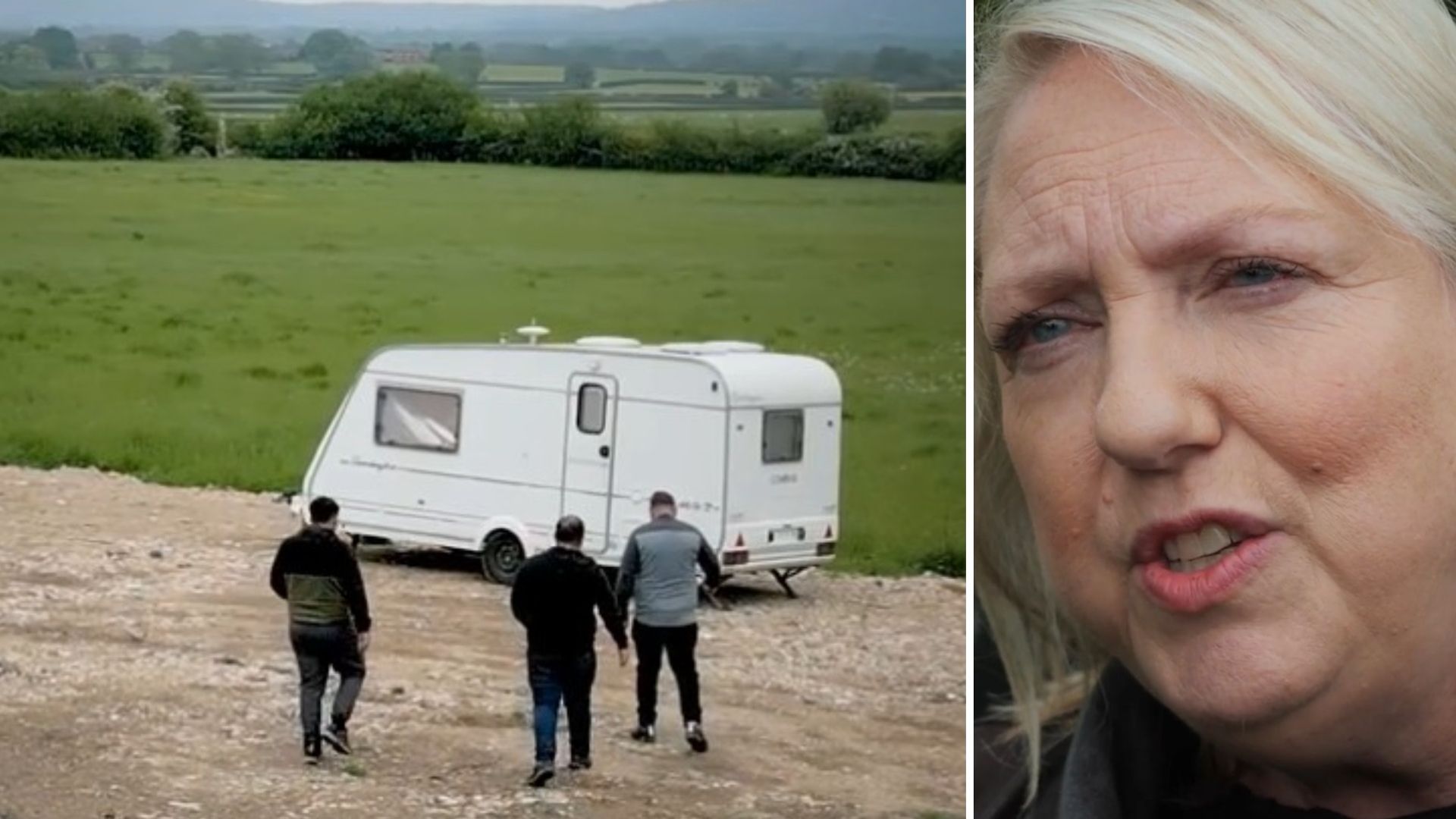
The standard British media narrative surrounding Gypsy, Roma, and Traveller communities follows a script so predictable you could code an algorithm to write it. Local newspapers run sensationalized headlines about illegal encampments on recreation grounds. National broadcasters swoop in with solemn, hand-wringing documentaries about ancient nomadic cultures clashing with twenty-first-century property laws.
Everyone plays their assigned roles perfectly. The settled population complains about fly-tipping and property values. Human rights advocates counter with lectures on systemic exclusion and historical romance.
Both sides are completely wrong.
The mainstream debate frames this tension as a tragic, inevitable clash between a romanticized, pre-industrial nomadic lifestyle and a rigid modern state. This framing is patronizing, historically inaccurate, and structurally blind. The tension gripping British towns and rural edges is not a cultural identity crisis. It is a manufactured crisis of state-enforced land scarcity, outdated planning policy, and economic protectionism.
We do not have a "Traveller problem" in Britain. We have a property-monopoly problem that weaponizes the legal system to eliminate alternative modes of living and working.
The Myth of the Romantic Nomad
Open any mainstream report on Traveller tensions and you will find an obsession with the open road. Journalists love to evoke images of horse-drawn wagons and boundless freedom. This historical romanticism does more harm than good. It traps real communities in an impossible standard of historical purity.
When the British legal system assesses Traveller identity in planning courts, it often relies on a deeply flawed definition of nomadism. For decades, to qualify for planning consideration as a Traveller, an individual had to prove they maintained an active, economically functional nomadic habit of life. If someone settled down temporarily to ensure their children received an education or an elderly relative accessed healthcare, the state used that stability to strip them of their status.
This creates a absurd paradox. The state punishes stability while criminalizing mobility.
The reality on the ground is starkly different from the media fantasy. The vast majority of British Travellers are not moving constantly out of a mystical urge to see what is over the next hill. Mobility is an economic strategy. It is an adaptive mechanism for running businesses, managing trade networks, and maintaining kinship structures in a country that has systematically closed off affordable living space.
By treating nomadism as a psychological trait rather than an economic reality, councils avoid the hard work of building infrastructure. They treat the presence of Travellers as a temporary weather event to be weathered or moved along, rather than a permanent feature of British demographic life.
The Planning System is Engineered for Conflict
The average citizen believes that when an unauthorized encampment appears on a local park, it is an act of deliberate provocation. They assume the occupiers simply refuse to use official sites.
Let us look at the raw mechanics of British planning law.
Under the Caravan Sites and Control of Development Act 1960 and subsequent legislation, local authorities were given the power to close down traditional, informal stopping places that had been used for centuries. For a brief window following the Caravan Sites Act 1968, councils were legally mandated to provide official sites. Where sites were built, tensions dropped.
Then came the Criminal Justice and Public Order Act 1994. The Conservative government abolished the duty for councils to provide sites. Instead, they advised Travellers to buy their own land and apply for planning permission, just like anyone else.
Imagine a scenario where a group of people follows that advice. They pool their resources, buy a plot of agricultural land on the edge of a village, and apply for permission to station residential caravans.
What happens next? The statistics are brutal. While roughly 70 to 80 percent of mainstream residential housing applications are approved across England and Wales, the rejection rate for Traveller-led planning applications routinely hovers above 80 percent on the first attempt.
Local planning committees, driven by electoral anxiety and pressure from settled residents, reject these applications overwhelmingly on grounds of "visual amenity" or "green belt protection." The very same committees frequently approve sprawling, car-dependent suburban housing developments on adjacent plots of land.
When private land ownership is denied through the planning system, and public site provision is abandoned by local authorities, where exactly are people supposed to go?
The unauthorized encampment on the village green is not a defiance of law; it is the direct, mathematical consequence of a planning system that has closed every legal avenue for survival.
The Police Act of 2022 and the Criminalization of Space
The legislative hostility reached its peak with the introduction of the Police, Crime, Sentencing and Courts Act 2022. This legislation transformed what was previously a civil matter—trespass—into a criminal offense under specific conditions.
Under these laws, if someone resides on land without consent with at least one vehicle, and the property owner or police allege that they have caused "significant disruption, damage, or distress," they face vehicle seizure and imprisonment.
Consider the implications of this shift. By criminalizing the act of stopping without providing a legal alternative where people can stop, the state has effectively criminalized the existence of an entire community. It is a strategy of erasure masquerading as public order.
The media covers the resulting enforcement actions as victories for local communities. They show footage of police escorts and towing operations. What they never show is the next day. The vehicles do not vanish into another dimension. They move five miles down the road into the next council's jurisdiction, triggering the exact same cycle of complaints, legal costs, and evictions.
This is a massive waste of taxpayer money. Local authorities spend millions of pounds annually on legal injunctions, physical barriers, and cleanup operations. This capital is entirely unproductive. It produces zero housing units, generates zero tax revenue, and resolves zero social friction. It is a recurring subscription fee paid by the public to maintain an unworkable status quo.
The Economic Hypocrisy of the Settled Counterpart
The friction between communities is frequently blamed on anti-social behavior and economic drain. The common refrain in local Facebook groups is that Travellers do not contribute to local economies or pay taxes.
This claim ignores how modern micro-economies function. The traditional trades associated with Traveller communities—landscaping, construction, roofing, scrap metal recycling, and tree surgery—are highly intensely localized service industries. They exist precisely because there is a massive, insatiable demand for cheap, flexible labor among the settled population.
The very homeowners who object to a temporary site down the road are often the ones hiring members of that site to repave their driveways or clear their gardens at competitive rates. The settled community wants the labor, but refuses to tolerate the presence of the laborer.
Furthermore, the tax argument is deeply flawed. Anyone purchasing fuel, commercial vehicles, tools, and material pays Value Added Tax (VAT). Anyone using local suppliers pumps cash directly into the regional economy. The state's failure to integrate these economic actors into formal taxation structures is a design flaw of the state's own making, driven by its refusal to grant legal addresses. Without a fixed address or a recognized secure site, registering a business, opening a commercial bank account, and navigating standard tax frameworks becomes a bureaucratic nightmare.
The Hypocrisy of the Environmental Argument
Whenever a new site is proposed, environmental objections dominate the discourse. Campaigners argue that caravans damage local biodiversity, ruin the character of the countryside, and put undue pressure on rural infrastructure.
This green-tinted nimbyism is intellectually dishonest.
A well-designed, serviced caravan site has a significantly lower environmental footprint than a standard brick-and-mortar suburban housing estate. The physical footprint is smaller. The consumption of concrete and carbon-heavy building materials is drastically lower. The units themselves are mobile and can be removed without permanently scarring the underlying topsoil.
Yet, the planning system treats a cluster of timber chalets and touring caravans as an ecological catastrophe, while approving massive logistics warehouses and concrete bypasses nearby. The environment is not being protected here; it is being used as an aesthetic shield to enforce class and cultural homogeneity.
Breaking the Cycle
If we want to end the cycles of eviction, public anger, and systemic exclusion, we must stop asking how to police unauthorized encampments and start asking why our land system cannot tolerate diversity of tenure.
The solution requires abandoning the failed policy of forced assimilation. The state must recognize that mobile and semi-mobile living forms are legitimate, permanent components of modern British society.
First, the mandatory duty for local authorities to provide and manage transit and permanent sites must be reinstated. This provision should not be treated as a charitable concession, but as essential infrastructure, no different from building roads, schools, or sewage networks. When adequate transit sites exist, unauthorized stopping on sensitive public spaces drops naturally because alternative options are available.
Second, the planning system must be stripped of its bias against private site development. If a family or consortium buys land and wishes to develop a low-impact caravan site at their own expense, the default planning presumption should favor approval, provided basic health, safety, and access criteria are met.
The current approach is a slow-motion disaster. It costs millions, traumatizes families, deepens community divisions, and solves absolutely nothing. It is time to stop viewing this issue through the lens of criminality and start viewing it through the lens of bad architecture, broken planning, and state-sponsored land exclusion. Turn off the television documentaries, ignore the sensationalist headlines, and look at the map. The crisis isn't the people on the land; it is the way we parcel out the land itself.