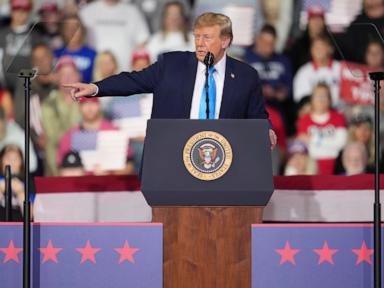
Every election cycle follows the exact same script. A politician steps onto a packed arena stage, music thumping, crowd roaring, and pundits declare that the momentum has officially shifted. The lazy consensus is that raw crowd size translates directly to legislative dominance and ballot box victory. It is a comforting narrative for campaigns that need to project strength, but it ignores the fundamental mechanics of modern political mobilization.
Crowds are not voters. They are superfans. Mistaking the loudest people in a Kentucky gymnasium for the median voter sitting quietly in a suburban kitchen is the fastest way to misread an entire political cycle.
For decades, strategists have treated mass rallies as barometers of electoral health. I have watched campaigns flush millions of dollars into arena rentals, logistical staging, and media tours just to chase the high of a standing ovation. The assumption is that enthusiasm is contagious, spreading outward from the venue to the broader electorate like a wave.
The data tells a completely different story. Political science research consistently demonstrates that rally attendance correlates poorly with turnout expansion among undecided or moderate voters. In fact, hyper-charged partisan rallies often do more to consolidate the opposition than to convert the uncommitted. When a campaign leans entirely into playing the hits for the base, it frequently alienates the exact swing demographics required to win tight congressional margins.
To understand why this happens, look at how attention is actually distributed. The people who drive hours to stand in line for a rally are already locked in. They are not making up their minds; they are participating in a tribal ritual. Treating their cheers as a proxy for broad public sentiment is an analytical error that stems from mistaking intensity for scale.
A more precise framework requires separating activation from persuasion. Activation gets your people through the door. Persuasion convinces someone else to cross party lines or show up for the first time. Rallies are almost entirely activation engines. When media outlets frame them as major strategic turning points, they are falling for the oldest theatrical trick in politics.
The real battleground of a midterm election is fought in low-propensity precincts, quiet text message threads, and localized economic grievances that have nothing to do with national stump speeches. Candidates who rely on arena bravado usually do so because the hard, unglamorous work of ground-game data analytics and targeted voter contact is far more difficult to televise.
Stop treating political theater as political strategy. The crowd is lying to you about the map.