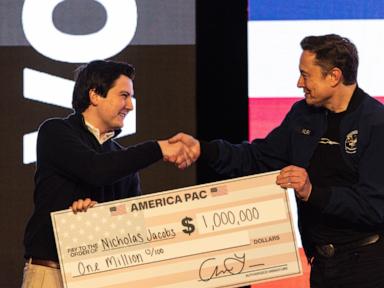
The prose was sloppy, the math was astronomical, and the legal defense rested on a twelve-hour tweet edit. Elon Musk will face no criminal charges in Wisconsin over a series of high-stakes financial incentives tied to a contentious 2025 state Supreme Court election. Tim Gruenke, the Democratic district attorney for La Crosse County, concluded that despite an initial social media post that strongly tied cash payouts to the act of casting a ballot, a jury would likely view the incident as clumsy phrasing rather than intentional electoral corruption.
That decision brings a sudden halt to a criminal referral generated by the Wisconsin Elections Commission, but it leaves a gaping structural question about how modern political spending interacts with twentieth-century state statutes. When billionaires can inject tens of millions of dollars into judicial races and scatter seven-figure checks under the guise of petition advocacy, the traditional boundaries of election law begin to buckle under the weight of digital-age maneuvering.
The Anatomy of a Twelve-Hour Pivot
The controversy traces back to the closing days of the 2025 Wisconsin Supreme Court election, an extraordinarily expensive judicial battle that drew national political machinery into local court politics. In March 2025, Musk utilized his social media platform, X, to announce a promotional event in Green Bay. The initial directive was remarkably direct. Attendance was restricted strictly to individuals who had already voted, and Musk pledged to hand out two $1 million checks directly to attendees.
Under Wisconsin law, offering financial inducements of more than one dollar to encourage citizens to go to the polls or cast a vote crosses a very bright legal line. State statutes are explicitly designed to prevent the monetization of the ballot box, operating on the principle that the franchise should remain uncorrupted by direct financial transactions.
Yet, within half a day, the narrative shifted. Musk amended the terms of the event. The requirement for proof of voting was quietly replaced by a requirement that attendees sign a political petition opposing judicial activism, and the cash payouts were recharacterized as stipends for individuals acting as spokespeople for that petition.
This twelve-hour pivot became the cornerstone of the defense. When prosecutors evaluated whether to bring charges following the state elections panel's probable cause finding, that textual correction provided just enough ambiguity to dismantle the state's burden of proof.
Why Prosecutors Blinked
Securing a conviction in a criminal trial requires proving intent beyond a reasonable doubt. For a district attorney looking at a heavily lawyered, high-profile defense, a poorly worded and subsequently edited social media post presents a formidable hurdle.
Gruenke's reasoning was grounded in evidentiary pragmatism. Strip away the famous name, remove the massive dollar figures, and the case reduces to an ambiguous public statement that was swiftly brought into technical compliance. Furthermore, investigators lacked concrete proof that any individual was ultimately compensated solely for the act of voting rather than signing the subsequent petition. Without a smoking gun linking cash directly to a verified ballot cast without the petition intermediary, the criminal standard proved too high to clear.
This outcome highlights a persistent vulnerability in statutory enforcement. Laws written decades or centuries ago often rely on clear, physical mechanisms of interaction. They assume a ward boss handing out cash outside a polling booth or a direct quid pro quo negotiated in person. They were never architected for algorithmic amplification, rapid-fire micro-blogging, and sophisticated super PAC operations that can pivot legal definitions in a single digital refresh.
The Civil Front Lines
While the criminal investigation has closed without charges, the legal friction surrounding these tactics is far from over. Civil accountability mechanisms are moving forward through separate channels. Organizations such as Law Forward, alongside local advocacy groups and affected voters, have pursued civil litigation in state circuit court.
These civil actions bypass the strict beyond-a-reasonable-doubt standard of criminal courts. Plaintiffs argue that regardless of whether the phrasing was corrected on X, the overarching scheme constituted an illegal inducement, violating both election bribery statutes and unauthorized lottery prohibitions under a civil conspiracy framework.
Civil courts operate under a preponderance of the evidence standard, which changes the strategic calculus entirely. Plaintiffs do not need to prove malicious criminal intent; they only need to demonstrate that the financial structure of the campaign more likely than not violated state statutes designed to protect the integrity of the electoral process.
As political campaigns increasingly lean on creative financial incentives, petition-gated giveaways, and hyper-targeted spending sprees, the legal battles are shifting from criminal indictments to civil liability. The decision in La Crosse County ensures that no prison time or criminal record will stem from this specific episode, but it leaves the broader question open as to whether civil courts will establish boundaries that prosecutors were hesitant to draw.
The boundaries of acceptable political influence remain defined as much by what enforcement agencies choose to overlook as by what the statute books explicitly forbid.
Wisconsin Officials Find Probable Cause Elon Musk Violated Election Bribery Laws
This archival video resource from local coverage examines the initial electoral commission proceedings and the underlying complaints that triggered the months-long legal scrutiny.