Salt. That is the first thing you remember. It cakes the corners of your eyes, sticks to your collar, and leaves a chalky residue on your lips long after the anchor drops.
My grandfather spent forty years on steel beasts that crawled across the Indian Ocean. He came home smelling of heavy bunker fuel and diesel smoke, hands scarred by heavy winch cables, carrying stories of typhoons that could snap a mast like a dry twig. He used to say the world runs on water, but it is steered by men who miss their children's birthdays.
Today, that ancient relationship between the Indian coastline and the global merchant navy is standing on the precipice of a monumental shift.
Mediterranean Shipping Company, better known as MSC, is setting its sights on India with an ambition that dwarfs ordinary corporate expansion. They are not merely looking at docks and office buildings. They are looking at people. Specifically, they see the domestic scope to absorb one million Indian seafarers. One million lives touched by the rhythm of the tides. One million families anchored by steady remittances.
To understand why this matters, you have to look past the spreadsheets of global logistics. You have to look at the global supply chain not as a network of digital ports, but as a living, breathing engine fueled entirely by human labor.
The Engine Room of the World
Ships do not sail themselves. Despite the quiet hum of autopilot and satellite navigation, a container vessel is a floating city of steel requiring constant vigilance. If you walk into an engine room, the heat hits you like an open oven door. The roar of the two-stroke diesel engine vibrates straight through the soles of your boots.
Right now, the world is facing a quiet crisis. Experienced officers are aging out. Recruitment pipelines in traditional maritime nations are drying up as younger generations look for desk jobs and Wi-Fi connections.
Enter India.
With a vast coastline, a deep maritime heritage, and a massive demographic dividend of young people hungry for meaningful work, India is the logical answer to a global shortage. But potential alone does not build competence. You cannot hand a teenager the helm of a four-hundred-meter container ship carrying ten thousand boxes of cargo and say, figure it out.
Training is the bottleneck. Real training. Not just reading manuals in a fluorescent-lit classroom, but learning how to fight a live fire in a smoke simulator, how to calculate stability when a ship is listing twenty degrees in heavy swells, and how to keep a cool head when the lights go out in the middle of the Pacific.
This is where the new MSC training facility comes into play.
Bridging the Gulf Between Ambition and Reality
Imagine Rajesh. (This is a hypothetical scenario to ground the math.) Rajesh is twenty-two years old, living in a small town three hours outside of Mumbai. He is smart, mathematically gifted, and his family's primary financial hope. He wants a career, not just a job.
Without access to world-class maritime academies, Rajesh's dream of going to sea hits a brick wall of exorbitant fees and outdated simulators. The gap between a coastal kid with potential and a certified third officer ready for international waters is vast.
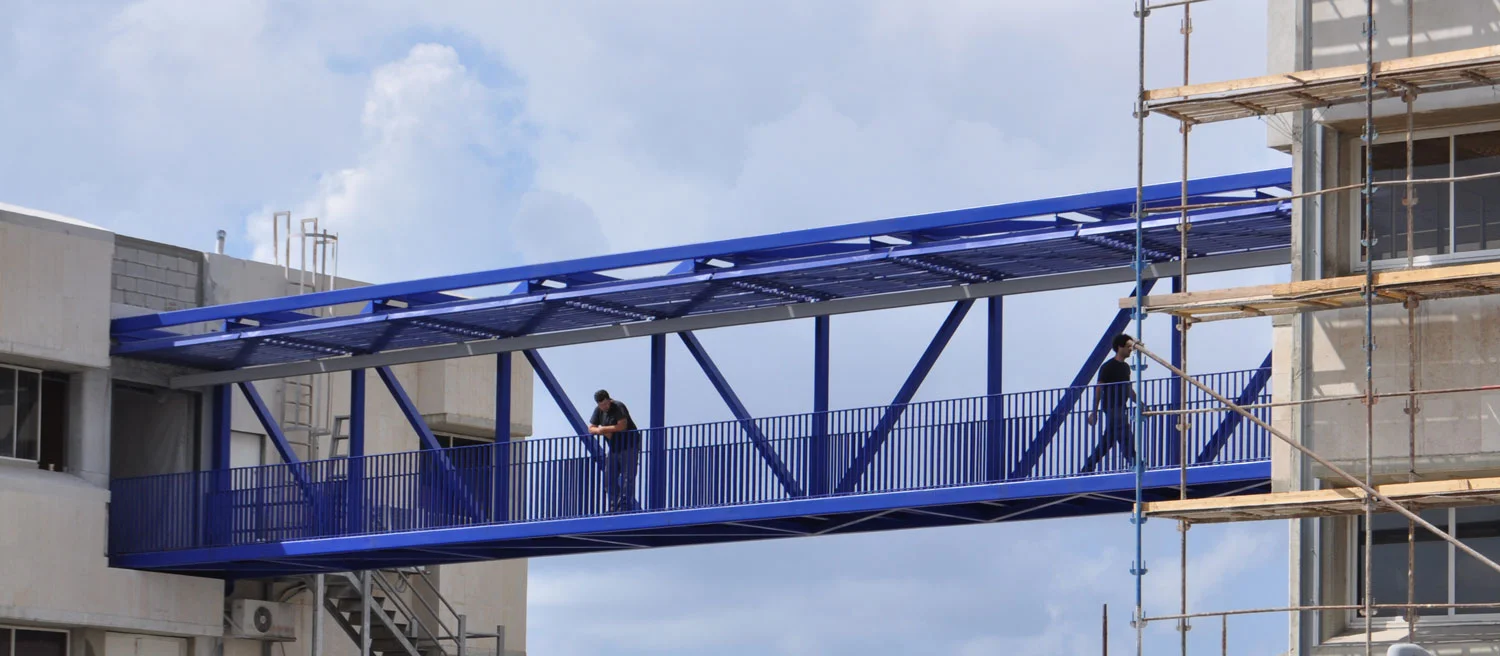
MSC’s proposed facility aims to bridge that exact gulf. By investing heavily in state-of-the-art simulation centers, firefighting grounds, and survival training pools, they are creating a pipeline. When a shipping giant builds infrastructure of this scale on Indian soil, it changes the local ecosystem entirely. It turns abstract shipping lanes into local career paths.
The numbers are staggering. Absorbing one million Indians into the maritime sector does not just mean putting people on ships. It means jobs in ship management, marine engineering, legal compliance, logistics coordination, and advanced safety training. It transforms coastal towns into global hubs of maritime excellence.
The Human Cost of the Horizon
Let us be entirely honest about what this life entails. It is not romantic sunset cruises.
My grandfather missed my mother's first steps because he was somewhere between Singapore and Suez. He spent six months away from home, surrounded by the same twenty faces, eating the same galley food, watching the horizon stretch infinitely in every direction. When he retired, his knees ached from climbing vertical ladder wells in rolling seas.
Yet, when he looked at his pension, and when he looked at the home he built for his family, there was no regret in his eyes.
The promise of this new training initiative is not just economic. It is generational mobility. For millions of young people across the subcontinent, the sea represents an escape from the crushing gravity of local underemployment. It offers wages that can pay off family debts, fund siblings' educations, and build secure futures.
But it requires resilience. The training facility will teach them how to handle a crane, how to plot a course, and how to maintain diesel generators. But no simulator can truly prepare you for the sudden, suffocating silence of a satellite phone call home when the connection drops out mid-sentence.
The Shifting Tides of Global Trade
Look at a map of global trade routes. The arteries connecting Asia to Europe and the Americas are choked with traffic. Delays cost millions. A single grounded ship can freeze the commerce of nations.
In this hyper-connected, fragile ecosystem, human error is the ultimate risk factor, and human excellence is the ultimate safeguard. Companies like MSC know that their future profitability depends entirely on the competence and reliability of the crews they deploy. By anchoring their training operations deeply within India, they are making a long-term bet on the country's human capital.
It is a symbiotic partnership. India supplies the ambition, the discipline, and the sheer volume of eager minds. The global maritime industry supplies the vessels, the capital, and the global reach.
As the construction blueprints turn into concrete foundations and simulation screens flicker to life across the subcontinent, a silent army of future captains, engineers, and deckhands is lacing up their boots. They are stepping out of small-town alleyways and onto the decks of the world.
The horizon is vast, grey, and indifferent. But for a million families waiting on the shore, it is shining with possibility.