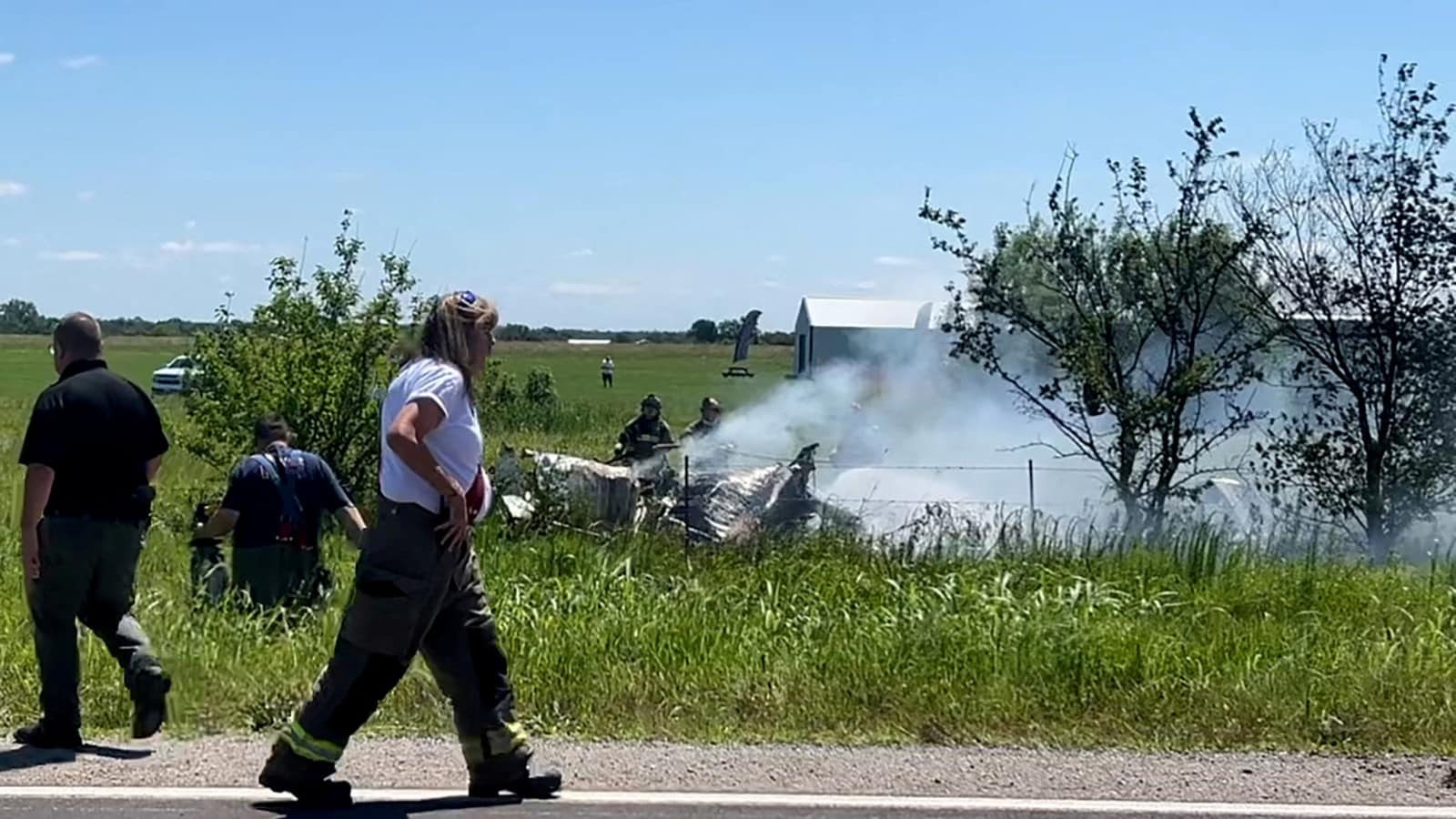
A horrific scene unfolded on a sunny Sunday morning at Butler Memorial Airport, a small municipal airstrip located roughly 60 miles south of Kansas City. At around 11:30 a.m. on June 14, 2026, a Pacific Aerospace P750 carrying 11 skydivers and one pilot took off for a routine jump. Seconds later, something went terribly wrong. The single-engine turboprop made a sharp left turn, lost power, and plunged nose-first into a field adjacent to Business 49 Highway.
The impact was brutal. A post-crash fire quickly engulfed the wreckage, leaving a mangled heap of blue and silver metal in the grass. All 12 people on board were killed. Making the tragedy even more harrowing, several family members of the skydivers were watching from the ground, witnessing the entire disaster unfold.
Local authorities, including the Missouri State Highway Patrol and the Bates County Sheriff's Office, swamped the area immediately. Clergy and crisis volunteers arrived shortly after to console the traumatized families. While federal investigators piece together what caused this specific Missouri plane crash, the incident shines a harsh light on a broader, systemic issue that aviation safety experts have warned about for years.
The Tragic Mechanics of the Flight
Data from flight-tracking service FlightAware reveals that the aircraft had already completed two successful flights earlier that same Sunday morning. It had also logged two flights on Saturday and five on Friday. To onlookers, nothing seemed amiss.
Dennis Jacobs, the acting airport manager and Bates County Emergency Management Agency director, noted that the plane carried seven single jumpers and two tandem pairs, alongside the pilot. He watched the aircraft ascend before it appeared to struggle. Jacobs stated that the plane seemed to lose power just after takeoff. He believes the pilot tried to steer toward the nearby highway to attempt an emergency landing, but the aircraft stalled, dipped its nose, and went down.
First responders meticulously searched the flight path to see if anyone managed to bail out before the impact. Nobody did. The aircraft type involved, a Pacific Aerospace 750XL built in 2010, is heavily favored in the skydiving industry. It can carry up to 17 jumpers, handles short runways beautifully, and is known as a rugged utility workhorse. Yet, no matter how reliable a machine is on paper, the thin margins of error during a maximum-weight takeoff leave zero room for mechanical hiccups or pilot hesitation.
The Regulation Loophole Most Jumpers Do Not Know About
When you book a commercial flight with Delta or United, you are protected by a mountain of strict Federal Aviation Administration (FAA) regulations known as Part 121. These rules dictate everything from mandatory pilot rest hours to hyper-specific maintenance schedules.
Skydiving operations do not run under those rules. Instead, they generally operate under general aviation regulations, which are the same rules applied to a private hobbyist flying a small Cessna on the weekend.
Aviation safety expert Jeff Guzzetti, a former accident investigator for both the NTSB and the FAA, points out that poor maintenance frequently resurfaces in skydiving disasters because these companies escape the rigorous oversight faced by charter operations and airlines. Guzzetti noted that the industry has a documented history of accidents stemming from inadequate maintenance and a deficient safety culture.
The National Transportation Safety Board (NTSB) has locked horns with the FAA over this exact regulatory gap before. Following a catastrophic 2019 skydiving crash in Hawaii that claimed 11 lives, the NTSB explicitly stated that the FAA's oversight system was fundamentally insufficient to ensure passenger safety on parachute flights. The FAA resisted making sweeping policy overhauls, maintaining that the sport is inherently risky and that current general aviation rules are adequate.
What Happens Next in the Investigation
The NTSB has assumed the lead role in the investigation, with teams arriving at the Butler site to document the wreckage and map the debris field. Over the coming weeks, investigators will scrutinize three core areas: the human element, the machine, and the environment.
The agency will pull the pilot’s medical records, flight history, and training logs. They will download radar data and local weather metrics, though initial reports indicate the weather was clear and sunny. Most importantly, investigators will dive into the maintenance history of the 2010 Pacific Aerospace airframe and its Pratt & Whitney turboprop engine to see if a mechanical failure triggered the sudden loss of power.
Do not expect answers overnight. While the NTSB aims to release a brief preliminary report within 30 days, the final determination of a probable cause will take anywhere from one to two years.
If you or someone you know frequents skydiving drop zones, you shouldn't just trust that a company is safe because they have a glossy website. Take your safety into your own hands. Ask the operator directly about their maintenance cycles and check if they are a United States Parachute Association (USPA) Group Member in good standing. Skydive Kansas City was a USPA member, showing that even compliant operations can suffer catastrophic failures, but vetting an operator's safety record remains your best line of defense before stepping into a jump plane.