The kitchen tile felt like ice beneath my bare feet. It was just past five in the morning, the hour when the world usually smells of damp grass and the faint, sweet promise of coffee. Instead, I opened the back door and choked.
My lungs seized. A metallic, acrid tang hit the back of my throat—the distinct, ancient smell of burning peat and scorched timber. Outside, the neighborhood was gone. It had not vanished into morning fog; it had been swallowed by an opaque, yellowish-gray shroud that turned the streetlights into sickly, bleeding eyes. The sun was up, somewhere out there, but you would never have known it. It was just a pale, bruised smear behind a ceiling of airborne ash.
Miles away, across the maritime border, the fires were breathing.
We forget how fragile our borders really are. We draw lines on maps with ink and treaties, pretending that mountains and oceans keep us safe, as if the air respects international law. But air has no use for passports. When thousands of square kilometers of Indonesian forest and agricultural land are put to the torch to clear ground for palm oil and pulp, the smoke does not stop at the Strait of Malacca. It drifts. It settles. It wraps around the throat of Kuala Lumpur and chokes the life out of cities millions of people call home.
Consider what happens inside the human body when the sky turns the color of a bruise.
Air quality index numbers are sterile things. They are digits on a glowing smartphone screen, cold and abstract. An API reading of 200 or 300 sounds like a score in a game. It is not a score. It is a physical weight.
Let me introduce you to Aminah, a hypothetical composite of the thousands of street vendors who keep the heart of the city beating. She wakes up at four in the morning to set up her stall, firing up her stove just as the midnight haze begins to thicken at street level. She does not have the luxury of working from a hermetically sealed glass tower with HEPA filtration humming in the ceiling. Her office is the open air. By noon, her eyes are red and weeping. By evening, a dry, persistent cough has settled into her chest, a rattling reminder that the air she breathes to earn a living is slowly poisoning her.
Invisible stakes. That is what this crisis is built on.
When PM2.5 particles—those microscopic murderers measuring less than two and a half micrometers across—drift into a city, they do not just irritate your nose. They are small enough to bypass the body's natural defenses. They slip past the hairs in your nose, navigate the winding corridors of your bronchial tubes, and cross directly into your bloodstream. They hitch a ride on your red blood cells, traveling to your heart, your brain, your kidneys.
To understand how terrifying this is, imagine a microscopic city. Your lungs are the docks. Normally, cargo is inspected, filtered, and regulated. But during a severe transboundary haze event, millions of tiny, toxic saboteurs storm the docks all at once. The security guards are overwhelmed. The gates are blown wide open. The saboteurs march straight into the financial district of your circulatory system.
Doctors see the aftermath in waiting rooms that smell faintly of cold sweat and nebulizers. Asthma attacks spike. Emergency room visits for cardiovascular distress surge. Children, whose lungs are still developing, and the elderly, whose reserves are running thin, pay the highest price. Schools close. Parks empty out. The laughter of children playing football in the late afternoon is replaced by the hum of indoor air purifiers running on maximum speed.
And yet, the reaction is often strangely muted.
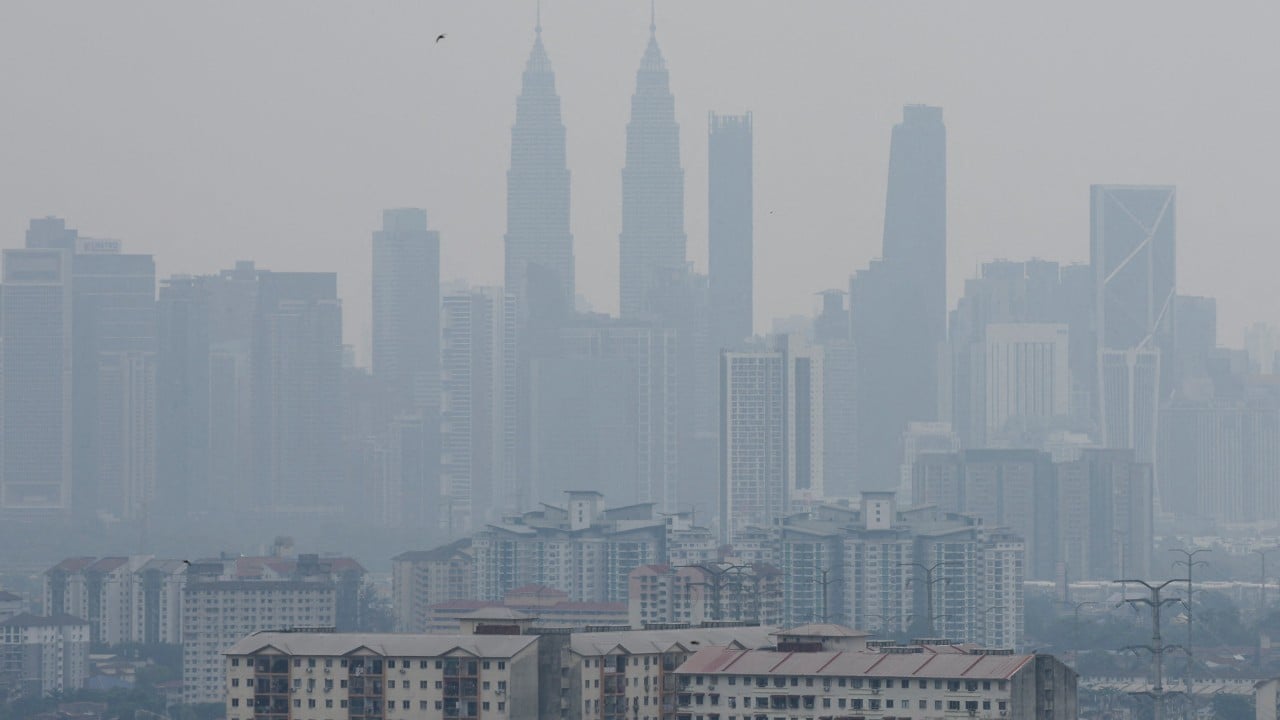
We shrug. We pull our cloth masks up over our noses—masks designed for viruses, utterly useless against micro-particles of carbon—and we keep walking. We complain about the visibility from our high-rise balconies. We share moody photographs of the Petronas Towers half-submerged in smog on social media, treating an environmental catastrophe like a filter setting on an app.
Why do we normalize the toxic?
Because the disaster unfolds slowly. If a bridge collapses, the horror is instantaneous, loud, and demanding of justice. But when the sky poisons you one microgram at a time, the violence is quiet. It lacks a dramatic explosion. It is just a dull ache behind the eyes, a shortness of breath walking up a single flight of stairs, a grandfather who passes away quietly from a stroke that doctors know was accelerated by weeks of breathing microscopic ash.
The root of the problem lies thousands of miles away, tangled in the complex economics of slash-and-burn agriculture. Smallholders and massive agribusiness conglomerates alike use fire as the cheapest, fastest tool to clear land. Why pay for heavy machinery when a match and a dry season will do the work for you?
Except the bill always comes due. It is just paid by someone else.
It is paid by the schoolchild in Johor Bahru wheezing through a nebulizer. It is paid by the fishermen who cannot navigate the murky, smoke-choked straits. It is paid by the tourism operators watching bewildered travelers cancel flights because the city looks like a post-apocalyptic movie set.
Regional diplomacy has danced around this issue for decades. Treaties are signed, agreements are ratified, finger-pointing happens every dry season, and then the monsoon rains arrive, wash the air clean, and collective amnesia sets in until the next El Nino cycle fans the flames once more. We wait for the wind to change. We pray for rain. We treat a chronic, systemic failure of environmental stewardship as if it were an act of God, an unpreventable natural disaster like an earthquake or a tsunami.
It is not an act of God. It is human choice, magnified by scale and fueled by indifference.
I stood back inside my kitchen, letting the door click shut against the amber gloom outside. The air purifier in the corner whined, its little LED light glowing an angry, accusing crimson. On the counter, a thin layer of grey dust had settled overnight, coating the coffee mugs and the fruit bowl in the ash of a forest burning a world away.
Outside, the silence of the smoke-locked morning was absolute. No birds sang. No dogs barked. There was only the low, mechanical hum of the city trying to breathe through a cloth it never asked to wear.