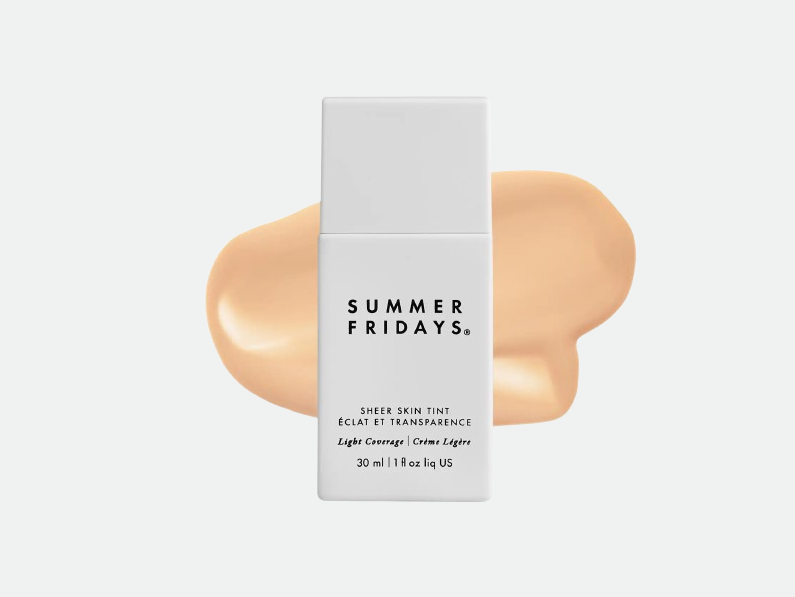
For years, the beauty industry has sold you a very specific, highly profitable fiction. You are told that a proper morning routine resembles a construction project. You start with a primer to fill your pores, layer a color-correcting CC cream to neutralize redness, apply a medium-coverage liquid foundation to unify your tone, and finish with a heavy-duty concealer to erase any remaining evidence that you are a living, breathing human being with blood vessels and texture.
It is a masterpiece of marketing psychology. By convincing you that natural skin is an unfinished draft, brands have turned routine maintenance into an expensive, multi-layered trap.
I have watched brands churn out endless variations of tinted moisturizers, whipped foundations, and luminous color-correctors, all while skin health metrics in consumer demographics quietly crater. People are spending more money, applying more product, and yet complaining more than ever about texture, dehydration, and chronic breakouts. The math does not add up because the premise is entirely false. You do not need a three-tier base makeup architecture to look polished. You need to stop suffocating your face.
The Chemistry of Suffocation
Let us look at what actually happens when you slap a full face of base makeup onto your epidermis every single day. Modern formulations rely heavily on volatile silicones, film-formers, and heavy emollients designed to create an artificial, glass-like surface tension.
When you layer a CC cream packed with SPF and chemical filters underneath a silicone-heavy liquid foundation, you create an occlusive seal. Your skin cannot breathe, sweat regulates improperly, and natural sebum production gets trapped in hair follicles. By mid-afternoon, that sebum mixes with the pigment and fillers in your foundation, turning your makeup into a literal breeding ground for anaerobic bacteria.
Then comes the evening ritual. You wipe off the armor with harsh micellar water or cleansing balms, stripping your lipid barrier in the process. Your skin wakes up dehydrated, irritated, and red. What is your immediate reaction? Reach for more color-corrector and a heavier foundation to hide the irritation caused by yesterday's foundation.
It is an infinite loop designed to protect profit margins, not your face.
Dismantling the Coverage Hierarchy
The beauty industrial complex loves to rank products by coverage level, as if you are moving up a video game skill tree. Tinted moisturizer at level one, CC cream at level two, liquid foundation at level three, full-coverage cream concealer at level four.
This hierarchy assumes that uniform, ghost-white or artificially warmed monochromatic flatness is the ultimate aesthetic goal. It treats texture as a moral failing. Real skin has micro-shadows, subtle discoloration around the eyes, faint freckles, and pores that actually dilate and contract based on temperature.
When you erase every single natural nuance with heavy pigment loads, you flatten your facial architecture. You end up looking two-dimensional, requiring bronzer and contour sticks just to trick the eye into seeing depth where your foundation flattened it out.
The obsession with complete opacity is driven by high-definition camera filters and ring lights, not real life. In daylight, heavy base makeup looks like what it is: a mask. And the harder you try to make it look invisible, the more obvious it becomes under direct sun.
The Minimalist Counter-Revolution
If you want better skin, stop trying to fake it with more tubes of product. The most liberating thing you can do for your morning routine is to perform a radical audit of your base makeup drawer.
Throw out the products that do three jobs poorly. A CC cream that tries to be a moisturizer, an SPF, and a color-corrector is usually mediocre at all three. Your chemical sunscreen should be a dedicated standalone product, applied in the proper quarter-teaspoon dose to actually protect you from UV radiation. Trying to get your SPF from a tinted cream means you are either applying way too much makeup or way too little sun protection. Both options are terrible.
Next, abandon the full-face foundation habit. Most people do not need coverage on their forehead, the bridge of their nose, or the outer perimeters of their face. The center of the face—around the nostrils and the inner cheeks—is where redness and discoloration naturally concentrate.
Spot treatment is the secret weapon that professional makeup artists use on editorial shoots, yet everyday consumers ignore it in favor of slathering liquid cement across their entire jawline.
The Precision Protocol
Instead of blanketing your entire face, change your mechanics.
First, invest in skincare that repairs the barrier rather than cosmetics that mask its failure. If your hydration levels are optimal, your skin reflects light naturally, eliminating the need for illuminating primers and light-reflecting highlighters.
Second, when you do want to even things out, use a tiny amount of high-pigment concealer or skin tint only where structural discoloration demands it. Use a small, dense brush to tap the product directly onto the spot, then feather the edges out into bare skin.
Do not powder your entire face into a matte desert. Let your natural oils do what they were biologically engineered to do, which is keep your skin supple. If you get oily in the T-zone during the afternoon, use a blotting paper instead of packing on another layer of translucent setting powder that binds with your sebum to create textured cakeiness.
The Real Cost of Complacency
People cling to their heavy base routines out of fear. They worry that walking out the door without a full face of foundation leaves them looking tired, sick, or unprofessional.
This anxiety is a manufactured symptom. The beauty industry created the disease so they could sell you the cure, year after year, formula after formula. Every time a brand releases a new base product promising a breakthrough texture or a miraculous finish, they are selling you the exact same chemical vehicle wrapped in a fresh marketing narrative.
Step away from the vanity. Look at your skin in natural daylight without a magnifying mirror. Notice the parts of your face that actually look healthy when they are free to function without a blanket of silicones and iron oxides suffocating them.
Stop treating your face like a renovation project. Clear the clutter, protect your barrier with actual science, and let your real skin finally see the light of day.