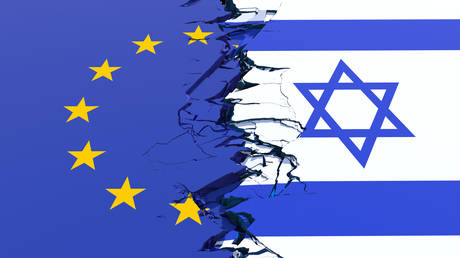
Foreign policy analysts love a tidy psychological narrative. For decades, the intellectual consensus has leaned heavily on a single, unshakeable premise: Western Europe’s diplomatic defense of Israel is a direct byproduct of post-World War II Holocaust guilt. Commentators look at Berlin or Paris, see a vote at the UN or a statement from a foreign ministry, and declare that the "shield of historical remorse" is finally cracking.
They are misreading the map.
The idea that European foreign policy runs on collective psychological trauma is a comforting fiction. It suggests that international relations are driven by morality, conscience, and historical reckoning. They are not. Europe’s alignment with Israel was never a product of emotional penance, and the shifting dynamics we see today have nothing to do with Europe suddenly "growing out" of its guilt.
If you want to understand the actual friction points in Mediterranean and Middle Eastern geopolitics, you have to strip away the sentimentalism. The relationship between Europe and Israel is—and always has been—a cold calculation of state survival, energy security, intelligence sharing, and shifting domestic demographics.
The Flawed Premise of Moral Geopolitics
The conventional argument goes like this: Europe, devastated by the horrors of the Holocaust, locked itself into an unconditional geopolitical alliance with the Jewish state as a form of generational repentance. Therefore, any current diplomatic rift must mean Europe is finally shedding its historical baggage.
This is lazy analysis. It confuses public monuments and political rhetoric with actual statecraft.
States do not have consciences; they have interests. If European policy toward the Middle East were dictated by pure moral guilt, the historical timeline would look completely different.
Consider the actual history. In the immediate aftermath of World War II, when historical guilt should have been at its absolute peak, the British Empire actively blocked Jewish refugees from entering mandatory Palestine. When Israel fought its war for independence in 1948, its primary arms supplier wasn't a guilt-ridden Western Europe; it was Czechoslovakia, acting with the blessing of the Soviet Union.
France became Israel’s main military benefactor in the 1950s—supplying the aircraft and the nuclear technology that built Israel’s strategic edge—not out of remorse for the Vichy regime, but because both nations shared a brutal common enemy: Algerian nationalism. The moment France exited Algeria and sought to repair its relations with the Arab world in the 1960s, Charles de Gaulle abruptly cut off Israel’s arms supply. It was a transactional pivot, executed without a hint of historical sentimentality.
The Real Drivers: Intelligence, Tech, and Gas
So what actually sustains the relationship today? It is a complex web of structural dependencies that the "guilt narrative" completely ignores.
1. The Intelligence Pipeline
European security agencies depend heavily on Israeli surveillance technology and human intelligence (HUMINT) networks in the Middle East. Over the last two decades, as Europe faced a wave of domestic terror threats, the intelligence sharing between Tel Aviv and major European capitals became a foundational element of continental security. You do not alienate the state providing early warnings about threats inside your own borders because of a shift in public opinion.
2. High-Tech Integration
The European tech sector is deeply intertwined with Israel’s Silicon Wadi. From automotive software to cybersecurity infrastructure, European enterprise relies on Israeli R&D. When a major German industrial titan acquires an Israeli automation startup, it isn't an act of historical restitution; it is a capitalistic hunt for yield and efficiency.
3. The Eastern Mediterranean Gas Equation
This is the hard math that commentators miss. Since the restructuring of the continental energy market following the 2022 invasion of Ukraine, Europe has been desperate to diversify away from Russian gas. The discovery of massive natural gas fields in the Levant Basin—like Leviathan and Tamar—has turned the Eastern Mediterranean into a vital energy corridor for Europe.
[Levant Basin Gas Reserves] ---> [European Energy Grid]
                                       |
                                       v
                        Reduces Reliance on Russian/Nordic Pipelines
The diplomatic maneuvering between Brussels, Nicosia, Athens, and Jerusalem is driven by pipelines, liquefaction terminals, and maritime border agreements. It is about keeping the lights on in Frankfurt, not feeling bad about events in 1944.
The Domestic Demographic Shift
When we see European states changing their voting patterns at the United Nations or taking a harder line on trade agreements, it isn't because diplomats have suddenly seen the light on human rights. It is a reflection of intense, volatile domestic political pressures.
Western Europe is undergoing a massive demographic and political transformation. Major electoral blocs within France, Germany, Belgium, and the UK are deeply unsympathetic to Israeli policy. In proportional representation systems, or in tight majoritarian districts, political parties must cater to these shifting constituencies to survive.
Simultaneously, the rise of populist right-wing parties across the continent has flipped the traditional script. Many of these parties, despite historical roots tangled in old-school European antisemitism, have adopted staunchly pro-Israel stances. Why? Because they view Israel as a frontline state against Islamic radicalism—a core tenet of their domestic anti-immigration platforms.
This creates a bizarre paradox that the mainstream analysis cannot explain:
- The European Left distances itself from Israel to secure younger, urban, and immigrant voting blocs.
- The European Right embraces Israel as an ideological ally in a broader civilizational narrative.
Neither of these positions is rooted in post-war guilt. Both are ruthless exercises in domestic political triangulation.
The Cost of the Wrong Analysis
Why does it matter if we get this right? Because treating international diplomacy as a therapy session leads to terrible predictions.
If you believe Europe’s alignment with Israel is built on guilt, you will constantly predict a total collapse of relations every time a European politician criticizes a military operation. You will look at campus protests in London or Paris and assume a systemic break is imminent.
But when you understand that the relationship is built on hard structural realities—energy, intelligence, and technology—you realize the floor is much higher than it looks. A European government can issue a stinging rebuke via its foreign ministry to satisfy domestic voters, while its security services continue to run joint counter-terrorism operations with their Israeli counterparts behind closed doors.
The downside of this reality is stark. It means that moral arguments hold very little water in the halls of power. Activists on both sides of the debate waste enormous amounts of energy trying to litigate historical trauma, assuming that changing the moral narrative will instantly alter state policy.
It won't. If you want to move the needle on foreign policy, you don't appeal to a nation's conscience. You alter its incentive structure.
Stop looking at Western diplomacy through the lens of historical psychology. Europe’s actions in the Middle East are not a decades-long penance project. They are the calculated movements of a continent trying to secure its energy supplies, protect its borders, and manage its fracturing domestic politics in an increasingly unstable world. The historical narrative is just the paint used to cover the structural steel. Strip it away, and the cold machinery of state interest is all that remains.