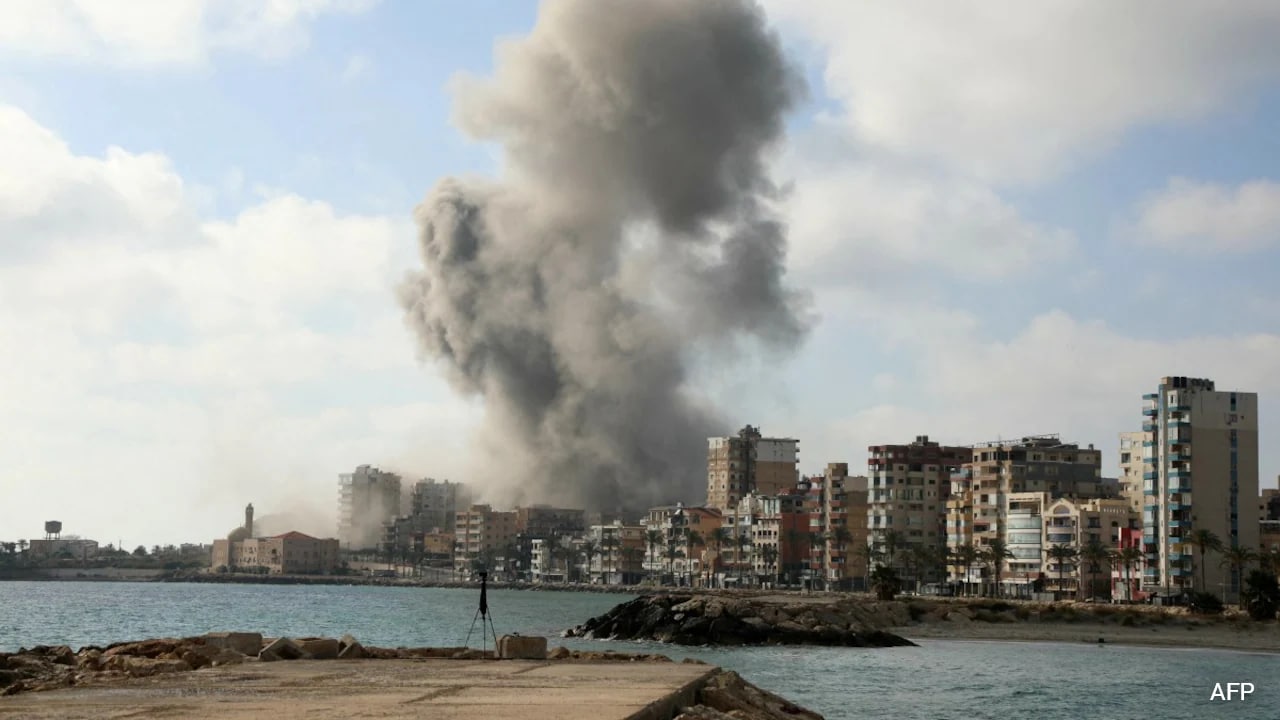
The headlines are screaming again. Cable news anchors are putting on their serious faces, pointing at maps of the Persian Gulf, and spinning a narrative of total regional meltdown. A minister makes a unhinged statement, missiles fly, and the media immediately rolls out the predictable script: we are on the brink of World War III, global energy markets are about to collapse, and total devastation is a foregone conclusion.
It is a compelling story. It is also entirely wrong. If you found value in this post, you might want to read: this related article.
What the mainstream analysis misses—largely because panic drives clicks while stability is boring—is the profound gap between wartime rhetoric and structural reality. The "lazy consensus" views every exchange of fire between major regional powers as an escalator ride straight to a global conflagration. In reality, what we are witnessing is not a chaotic slide into total war, but a highly choreographed, deeply cynical exercise in deterrence management.
The status quo isn’t breaking. It is working exactly as intended. For another angle on this event, refer to the recent coverage from Reuters.
The Theater of Brinkmanship
To understand why the apocalypse keeps getting rescheduled, you have to look at the math of survival for the regimes involved.
Mainstream commentators treat state actors like erratic teenagers driven by pure emotion. When an official yells that a rival "must burn," the media reports it as a literal statement of upcoming military policy. This ignores the foundational rule of geopolitical theater: the loudest statements are always meant for domestic consumption, not foreign battlefields.
Every missile strike, drone interception, and fiery speech is carefully calibrated. Look at the mechanics of the actual military exchanges. We see pre-announced flight paths, prolonged warning windows, and targets chosen specifically to minimize catastrophic casualties while maximizing visual impact. It is a violent dance, but it is a dance nonetheless.
Imagine a scenario where a nation actually wanted to launch a total, regime-ending war. You do not telegraph your moves three days in advance to allow international partners to set up an air defense umbrella. You do not target empty airbases or remote outposts. You strike hard, fast, and without warning. The fact that warning signs are practically flashing in neon before every escalation proves that neither side can afford the consequence of a real, unconstrained conflict.
The Economic Handcuffs Keeping the Peace
Let's talk about the variable the pundits always ignore: money.
The traditional fear-mongering narrative dictates that a direct conflict will instantly close the Strait of Hormuz, sending oil to $200 a barrel and crushing the global economy. This thesis treats the major players in the region as ideological fanatics who do not care about their checkbooks.
The reality is that the modern globalized economy has created a web of financial interdependence that acts as a structural straightjacket.
- The Drone Economy: Modern defense budgets are tied to international supply chains. You cannot sustain a high-intensity, multi-month conventional war when your critical components rely on foreign semiconductors and global shipping lanes that a total war would instantly destroy.
- Sovereign Wealth Imperatives: The major economic powers in the Gulf are currently executing massive, multi-decade economic diversification strategies. They are building mega-cities, investing in global tech firms, and trying to transition away from pure oil dependence. A total regional war doesn't just pause these plans; it permanently liquidates them.
- The Chinese Factor: Beijing is the largest buyer of crude from the region. A total disruption of the energy supply doesn't just anger Washington; it cripples China. No regional actor is willing to permanently alienate their primary economic lifeline just to satisfy a rhetorical grudge.
When you look at the ledger, the cost of a total war is infinite, while the benefit is zero. The current state of low-level, controlled friction, however, is highly profitable. It keeps defense budgets high, justifies domestic security crackdowns, and keeps oil prices at a comfortable premium without triggering a global recession that would destroy demand.
Dismantling the Falsely Posed Questions
If you look at the questions dominating the public discourse, you realize people are analyzing the wrong problem entirely.
Does this escalation mean deterrence has failed?
This is the classic question posed by traditional security analysts. The answer is brutally honest: no, it means deterrence is working perfectly. Deterrence is not the total absence of violence; it is the strict limitation of violence. The fact that both sides are using proxies and highly telegraphed direct strikes shows they respect the red lines of their opponents. They are testing the boundaries, not crossing the point of no return.
How do we fix the instability?
The premise of this question is fundamentally flawed. You don't "fix" a century of deeply entrenched ideological and territorial rivalries. The goal of international diplomacy isn't to create a utopian peace; it is to manage the friction so it doesn't disrupt global commerce. The current system of managed escalation is the solution. It is messy, it is tense, and it looks terrible on the evening news, but it prevents the systemic collapse that a true power vacuum would create.
The High Cost of the Contrarian View
It is easy to sit back and claim everything is under control, but true analysis requires admitting the structural flaws in your own thesis. The risk in a system built on calibrated brinkmanship isn't intentional war; it is a mechanical error.
When you operate a system at a constant state of high tension, the margin for error shrinks to near zero. A malfunctioning air defense system that accidentally shoots down a civilian airliner, a stray missile that hits a high-value cultural or political target by mistake, or a mid-level commander misinterpreting an order—these are the real threats.
The danger isn't a madman starting a war because they want to. The danger is a bureaucrat starting a war because their spreadsheet had a typo.
Stop Buying the Panic
The next time a headline tells you the sky is falling in the Middle East, look at the markets, look at the flight paths, and look at the actual targets. Ignore the rhetoric from ministers trying to score points with their base. Look at the structural incentives.
The actors on the global stage are not suicidal. They are hyper-rational entities operating in a high-stakes system where stability is maintained through the illusion of imminent madness.
Stop reacting to the theater. Start watching the wires.