Salt. Rust. Diesel.
Those are the first three things you smell when you step onto the wing of a bridge at four in the morning in the Persian Gulf, long before the sun bleeds orange across the water and turns the radar screen into a bowl of static. Down below, thirty thousand tons of steel plate groan against the swell, carrying energy from the desert floor to factories in Osaka, Rotterdam, or Mumbai that haven't even woken up yet.
When a projectile hits a hull out there, nobody on land hears the thud first. First comes the chime of an alarm on a console three thousand miles away. Then comes a sudden, jagged dip in a digital graph that a supply-chain analyst stares at over cold coffee. Only later—sometimes hours later, through fragmented radio traffic and satellite pings—do the cold headlines arrive: two vessels struck near the Strait of Hormuz, two hulls going down amid a sharp spike in regional attacks, another chapter in a maritime escalation that turns an everyday trade route into a kill zone.
A wire report gives you the skeleton. Two ships. Projectiles. A surge in attacks. A chokepoint.
It does not tell you what it feels like to stand on a listing deck when the bilge pumps start losing the argument with the sea. It does not show you the chef from Iloilo or the third engineer from Thessaloniki whose family only knows that a corridor on the news just lit up red. And it rarely makes you stop long enough to ask a quieter, sharper question: how did a twenty-one-mile stretch of warm water become the nerve ending of the global economy?
A Twenty-One-Mile Bottleneck
To understand why two sinking ships near Hormuz send tremors through groceries, freight rates, and central banks, look at a map of the Gulf. At its narrowest point, the Strait of Hormuz squeezes traffic between Iran to the north and Oman and the United Arab Emirates to the south. Only about twenty-one miles wide across, and split into inbound and outbound shipping lanes that are each barely two miles wide with a buffer zone between them.
Two miles. Think about a two-lane highway where every truck carries enough crude oil or liquefied natural gas to keep a city's lights burning, and there is no shoulder to pull onto if someone brakes hard in front of you.
If I draw a line from the oil fields of the Gulf to the turbine halls of East Asia or Europe, that line has to pass through this funnel. That is a structural reality of geography, not a metaphor. Where the metaphor begins is when we picture the global economy as a long-distance runner sprinting a marathon through a single revolving door. Everything moves smoothly at cruising speed until someone jams the door halfway shut. Even if the door doesn't lock completely, the pileup behind it changes everyone's stride.
I have spent enough time around ports and maritime logistics to know that ships do not move like cars. You cannot simply spin the wheel of a Very Large Crude Carrier and take a scenic detour around a neighborhood dispute. These vessels are floating cities built for scale and efficiency, not agility. Stopping one takes miles. Turning one around in confined waters takes nerve, tugboats, and room that isn't always there.
When attacks surge in and around the strait, the danger isn't only the blast itself. It is the fog of uncertainty that settles over every bridge team and every operations room. A radar blip can be a fishing skiff, a patrol craft, a decoy, or something carrying a warhead. Crews stand extra watches. Captains re-check charts by hand. Insurance underwriters start recalculating risk in real time, turning a routine transit into a high-stakes gamble.
Inside the Steel Hull
Let's construct a hypothetical scenario—purely illustrative, drawn from the real mechanics of merchant shipping—to trace what happens when a projectile finds its mark in those waters.
Picture Mateo, a chief mate in his late thirties who has spent fifteen years moving cargo across oceans that most people only see as blue space on a screen. On a warm night near the strait, the watch is tight. The air is thick and humid. Outside, the lights of other ships blink like low stars along the traffic separation scheme.
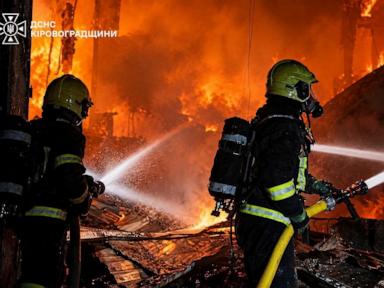
Suddenly, a sharp crack cuts through the hum of the engines—not the slow, rhythmic thrum Mateo knows in his bones, but a violent percussion that rattles the coffee mugs in the mess and trips alarms across the bridge panel. Smoke curls near a compartment that shouldn't have smoke. Lists are checked. Ballast is shifted. Within minutes, the conversation shifts from keeping schedule to saving the ship and getting everyone off safely.
Even when a crew escapes without loss of life—and maritime emergencies are a constant race to keep it that way—the aftermath is brutal. A vessel that sinks or takes severe damage near a busy waterway doesn't just vanish. It leaves behind wreckage, debris, potential pollution, and a shadow over every hull that follows.
Seafarers live with a quiet bargain. Most of the time, the job is long stretches of routine punctuated by boredom, missed birthdays, and spotty satellite calls home. Then, without warning, geopolitical friction thousands of miles from a diplomatic table turns into shrapnel, fire, and dark water outside your porthole.
Admittedly, from a comfortable chair far from the Persian Gulf, maritime security can feel abstract—like a chessboard where pieces move at the press of a button. That distance is deceptive. Every time projectiles fly near Hormuz, real people with real mortgages, aging parents, and small children are standing on steel decks trying to read the dark.
Why a Local Strike Becomes a Global Bill
Here is where the story widens from the water to your wallet.
A surge in attacks near Hormuz rarely stays confined to the coordinates where the projectiles land. Markets are wired to anticipate disruption long before physical shortages hit store shelves. When two ships go down or come under fire in a vital energy corridor, several dominoes start tipping at once.
First comes war risk insurance. Ships passing through tense waters rely on specialized coverage. When attacks spike, premiums can jump sharply or coverage terms tighten on short notice. For a shipowner or charterer, that isn't a rounding error; it can add hundreds of thousands of dollars—or more—to a single voyage.
Second comes freight and rerouting. Even when the strait remains open, fear changes behavior. Some operators slow down to reduce exposure or adjust schedules; others look for alternative routes or pipelines where capacity allows. Every extra day at sea ties up vessels, tightens supply elsewhere, and pushes charter rates higher.
Third comes energy pricing and inflation. Oil and gas are inputs into almost everything. They move freight trains, fuel agricultural machinery, power factories, and feed into petrochemicals used in plastics, packaging, and textiles. A risk premium baked into crude prices doesn't just show up at the pump. It creeps quietly into airfares, shipping costs, and food prices weeks later.
Consider what happens next when traders start pricing in a wider conflict. Even if actual physical barrels keep flowing most days, a market spooked by repeated strikes trades on fear and probability. A single rumor of a wider blockade or a third vessel hit can send prices jumping in minutes, only to whipsaw when diplomatic signals shift.
History shows us this pattern again and again in the Gulf—from the "tanker war" episodes of the 1980s to later waves of seizures, mines, and drone or missile strikes. Whenever violence targets commercial shipping in narrow waters, the immediate shock hits the crew and the hull, while the slower shock ripples outward through trade balances and household budgets.
The Illusion of Effortless Abundance
Modern economies have grown spoiled by frictionless logistics. We tap a screen, and a package arrives two days later. We turn a switch, and power hums. We rarely pause to think about the fragile chain of pipelines, ports, tankers, insurers, and sailors holding that convenience together.
Escalation near Hormuz strips away that illusion. It reminds us that globalization isn't an invisible cloud floating above the earth. It is heavy iron moving through narrow channels, guarded by fragile peace and tested whenever regional rivalries spill onto the sea.
Still, I want to be honest about what we don't know in the middle of a spike in attacks. Nobody outside the immediate operational and intelligence loop can predict with certainty whether two sunken ships mark a grim peak or the opening act of a broader campaign. Anyone claiming total clarity in the first hours—or even first days—of a maritime flare-up is selling confidence they haven't earned.
What we can see clearly is the vulnerability built into concentration. When so much energy and trade funnels through one tight bottleneck, a handful of projectiles can punch far above their physical weight. The damage isn't measured solely in twisted metal and lost cargo. It is measured in heightened alert levels across navies, frantic phone calls in shipping offices, and quiet anxiety in households watching prices climb without knowing why.
What Remains After the Smoke Clears
Out on the water, rescue boats eventually finish their sweeps. Salvage plans are debated in boardrooms and ministries. Analysts draw new arrows on maps, trying to guess where the next spark might fall.
Yet the truest measure of a crisis like this isn't found in a bar chart of crude futures or a tally of damaged hulls. It lives in the human ledger: the crew members who came home shaken, the families who spent sleepless nights refreshing news feeds, and the reminder that our interconnected world still rests on narrow strips of water where a single flash in the dark can stop time.
Watch the oil price if you want to track the market. Watch the shipping lanes if you want to track the strategy.
But if you want to understand what is really sinking when ships go down near Hormuz, look at the space between a calm horizon and a sudden roar in the night—and remember that the calm was never guaranteed.