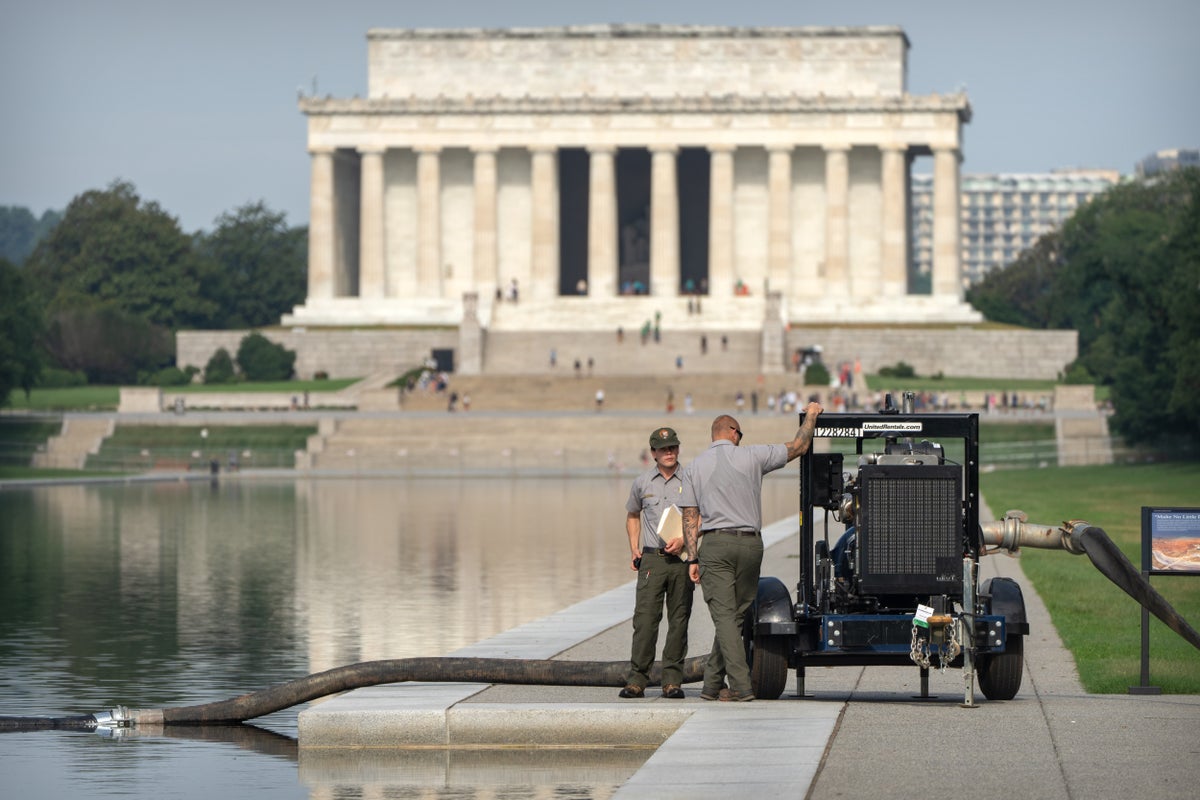
The media loves a predictable punchline. Every time the Lincoln Memorial Reflecting Pool turns into an opaque, pea-green soup of algae and duck excrement, the headlines write themselves. Political pundits jump at the chance to turn a basic water management issue into a sweeping metaphor for administrative incompetence. When the National Park Service drains all 6.75 million gallons of it for yet another "beautification" project, critics cheer the superficial cleanup while completely ignoring the underlying hydrological failure.
They are celebrating a systemic waste of time and money.
Draining the Reflecting Pool to scrub the bottom is the civic equivalent of painting over black mold. It looks pristine for the ribbon-cutting ceremony, but the root cause remains completely untouched. The lazy consensus insists that periodic draining and mechanical scraping is the only way to maintain dignity on the National Mall.
The consensus is wrong.
The endless cycle of emptying, power-washing, and refilling this historic water feature is an environmental absurdity and a logistical failure disguised as routine maintenance. We are treating a living, breathing aquatic ecosystem like a backyard swimming pool, and the taxpayer is footing the bill for our collective refusal to understand basic water chemistry.
The Chemistry of a Monumental Algae Bloom
To understand why the current approach is broken, you have to look at the anatomy of the pool itself. The Lincoln Memorial Reflecting Pool is massive, stretching over a third of a mile long and holding millions of gallons of water. It is also incredibly shallow, averaging only about three feet deep.
This design creates a perfect storm for biological growth:
- Maximum Sunlight Penetration: Because the water is shallow, sunlight heats the pool rapidly and penetrates straight to the bottom, supercharging photosynthesis.
- Stagnant Water Design: Despite a major $34 million overhaul completed in 2012 that linked the pool to the Potomac River filtration system, the circulation mechanics are fundamentally inadequate for the sheer volume and surface area.
- High Nutrient Loading: Thousands of migratory waterfowl use the pool as a giant toilet daily. Combine avian waste with urban runoff packed with nitrogen and phosphorus, and you have a hyper-eutrophic soup.
When the National Park Service shuts down the pumps and drains the water, they are entering a losing battle against biology. Algae spores are airborne and omnipresent. The second the fresh water hits the clean concrete, the clock starts ticking again. Within weeks, the nutrient load spikes, the summer sun beats down, and the green film returns.
I have analyzed large-scale municipal water projects for over a decade. Whenever an organization relies on "draining and scrubbing" as a primary maintenance strategy, it is an open admission that their filtration architecture is fundamentally broken. It means the engineering failed, and manual labor is being used to cover up the design flaws.
Why the $34 Million Overhaul Failed to Deliver
In 2012, the Reflecting Pool reopened after a massive, multi-year modernization project. The goal was to replace the old system—which used potable drinking water from the city supply—with a sustainable system that pumped water from the tidal basin, filtered it, and kept it circulating.
It was supposed to solve the algae problem permanently. It didn't.
The engineering team made a classic mistake: they underestimated the sheer volume of organic biomass introduced by external factors. A filtration system designed for a closed loop cannot cope with the sheer volume of detritus deposited by tens of thousands of birds and millions of tourists. The filters clog, the circulation zones develop dead spots, and the water stagnates.
Instead of upgrading the ozone treatment or introducing robust bio-filtration methods that leverage natural nutrient-devouring microbes, the management defaults to the primitive solution. They dump the water.
Consider the sheer waste of this process. Draining 6.75 million gallons of water into the D.C. sewer system puts immense strain on municipal infrastructure. Refilling it requires massive energy expenditure. And for what? A temporary aesthetic reset that lasts maybe forty-five days before the first green streaks reappear on the floor.
Dismantling the Cleanliness Illusion
Go to any online forum or read any local news piece about the capital, and you will find variations of the same flawed question: Why can't the government just keep the Reflecting Pool clean?
The premise of the question is completely wrong. You are asking for a sterile, chlorinated theme-park ride in the middle of a public park. The expectation of a perfectly blue, crystalline mirror in an open-air urban environment is an ecological impossibility unless you turn the National Mall into a toxic chemical dump.
If you want a crystal-clear pool, you have to pump it full of copper sulfate and chlorine. Doing so kills the algae, but it also poisons the local wildlife, kills the birds that drink from it, and releases toxic chemical vapors right next to major national monuments.
Since chemical warfare on the local duck population is out of the question, the only realistic alternative is to embrace nature or outsmart it. The current "beautification" projects do neither. They are performative maintenance—actions taken to show the public that "something is being done," even if that something is completely ineffective over a long time horizon.
The Unconventional Blueprint for Real Sustainability
If we want to stop wasting capital on endless draining cycles, we have to change the strategy entirely. Stop trying to keep the pool sterile. Instead, make it smart.
1. Deploy Floating Wetlands
The real enemy isn't the sun or the water; it is the nutrient load. If you do not remove the nitrogen and phosphorus, algae will do it for you. By introducing engineered, floating wetlands along the perimeter, we can use hyper-accumulating aquatic plants to suck the nutrients out of the water before the algae can touch them. This approach has worked brilliantly in urban rivers from Baltimore to Chicago. It alters the pristine, stark look of the 1920s design, but it solves the ecological problem permanently.
2. Implement Ultrasonic Algae Control
Instead of manual scrubbing, use sub-surface acoustic technology. Ultrasonic transducers emit specific sound waves that cause the internal gas vesicles of algae cells to rupture, causing them to sink and die without using a single drop of chemical sanitizer. It is low-energy, completely invisible to tourists, and runs continuously.
3. Redesign the Circulation Vectors
The 2012 upgrade failed to eliminate dead zones where water sits completely still. The pool needs high-volume, low-visibility subsurface mixing pumps to ensure that every gallon of water is constantly moving. Algae thrives in stagnation; it suffocates in high-flow environments.
The Cost of Maintaining the Lie
The downside to a real, permanent ecological solution is that it requires admitting the current design is flawed. It requires looking at a historic landmark and acknowledging that its 20th-century engineering cannot handle 21st-century environmental realities.
Politicians and administrators would rather approve a budget for a periodic "cleanup crew" because it provides an immediate, visible result before the next election cycle or tourist season. It allows them to stand in front of a sparkling reflection of the Washington Monument and claim a victory.
But the green always comes back.
Stop cheering for the drainage trucks. Stop believing that a power washer can fix a structural fluid-dynamics problem. The ongoing draining of the Reflecting Pool isn't a sign of care or preservation; it is a monument to our refusal to deploy modern ecological engineering where we need it most. Turn off the power washers, ditch the scrubbing brushes, and fix the actual system.

.webp)