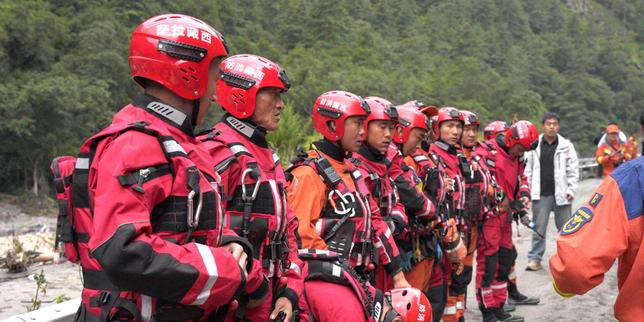
Rebuilding Nepal after catastrophic flash floods will require at least five billion dollars, punching a devastating hole into a forty-five-billion-dollar national economy. Finance Minister Swarnim Wagle and industrialist Binod Chaudhary have both confirmed that cumulative damages will eclipse initial estimates, threatening the financial stability of the entire Himalayan nation. Entire villages along the northern border region with China vanished in hours as torrents tore through roads, bridges, and critical hydropower infrastructure.
The raw math of the disaster exposes a terrifying vulnerability. Five billion dollars represents roughly eleven percent of the country's total annual economic output. When a nation this size absorbs a structural shock of that magnitude, traditional fiscal policies break down completely.
The Anatomy of a Himalayan Catastrophe
Water moves differently through extreme elevations. When intense rainfall batters fragile mountain terrain, steep slopes channel massive volumes of debris and liquid into narrow gorges with little warning.
Bridges designed to withstand century-level floods become simple toothpicks against walls of mud and boulders. Hydropower stations, which form the backbone of the domestic energy grid and export ambitions, sit precisely in these high-risk river corridors.
The human toll remains staggering, with hundreds dead and thousands displaced. Yet the secondary financial contagion poses an equal threat to survival. Power generation capacity has plummeted, forcing Kathmandu to look toward neighboring India just to keep the lights on.
External trade routes are fractured. Internal supply chains are choked by impassable terrain.
Why Traditional Relief Funding Fails
Governments usually respond to natural disasters by shuffling internal budget lines and appealing for discretionary foreign aid. That playbook will not work here.
Finance Minister Wagle noted that Kathmandu requires an entirely different kind of fundraising campaign to survive the coming years. Multilateral lenders are already scrambling to patch holes.
The World Bank has agreed to redirect ten percent of its undisbursed project allocations toward urgent humanitarian needs, releasing roughly one hundred sixty million dollars. The Asian Development Bank has added five million dollars.
These figures sound large in a press release. On the ground in a disaster zone spanning multiple rugged districts, they vanish like water on hot stone.
One hundred sixty million dollars covers a fraction of a single major highway restoration project through unstable Himalayan rock formations. Rebuilding demands heavy machinery, continuous supply logistics, and engineering feats that take years, not months.
The Geopolitical Scramble for Influence
Disaster recovery in South Asia rarely stays purely humanitarian. It quickly transforms into a quiet competition for regional leverage.
India moved swiftly, dispatching transport aircraft laden with tens of tons of emergency supplies, tents, solar lamps, and medical kits. Beijing maintains deep economic ties across the northern border regions and watches the infrastructure corridor developments closely.
Nepal sits squarely between two rising economic superpowers. Both capitals understand that funding the reconstruction of bridges, roads, and power grids translates directly into long-term strategic alignment.
For Kathmandu, managing these competing interests while trying to retain sovereign control over its own critical infrastructure is a high-stakes diplomatic tightrope walk. Accept too much from one neighbor, and you risk alienating the other. Accept too little, and the valleys remain unrepaired until the next monsoon brings another wave of destruction.
The Structural Trap of Repeat Disasters
Nepal is no stranger to geological trauma. The 2015 earthquake killed nearly nine thousand people and triggered a grueling, multi-billion-dollar recovery cycle that took a decade to stabilize.
Each major event resets economic progress by a generation. Capital that should fund schools, healthcare modernization, and industrial growth gets sucked into permanent disaster remediation.
Building back better is a wonderful slogan for international donor conferences. In practice, building back better on steep mountain grades requires materials and engineering standards that cost triple standard construction budgets.
If the government paves roads the exact same way they were built before the flood, the next heavy rain season will simply wash them away again. If they upgrade to climate-resilient engineering, the five-billion-dollar price tag might double before the first concrete cures.
Consultations with the International Monetary Fund are already underway to assess external financial stability and structural support. The danger is slipping into a permanent debt trap just to stay physically connected to the rest of the world.
The water has receded from the ruins of northern mountain villages, leaving behind a stark reality. A nation cannot borrow its way to permanent safety without fundamentally rethinking how it places its people and concrete in the path of the mountains.